Aldridge v Mordaunt Estates: Privy Council rejects director's bid to rely on unpleaded resolution
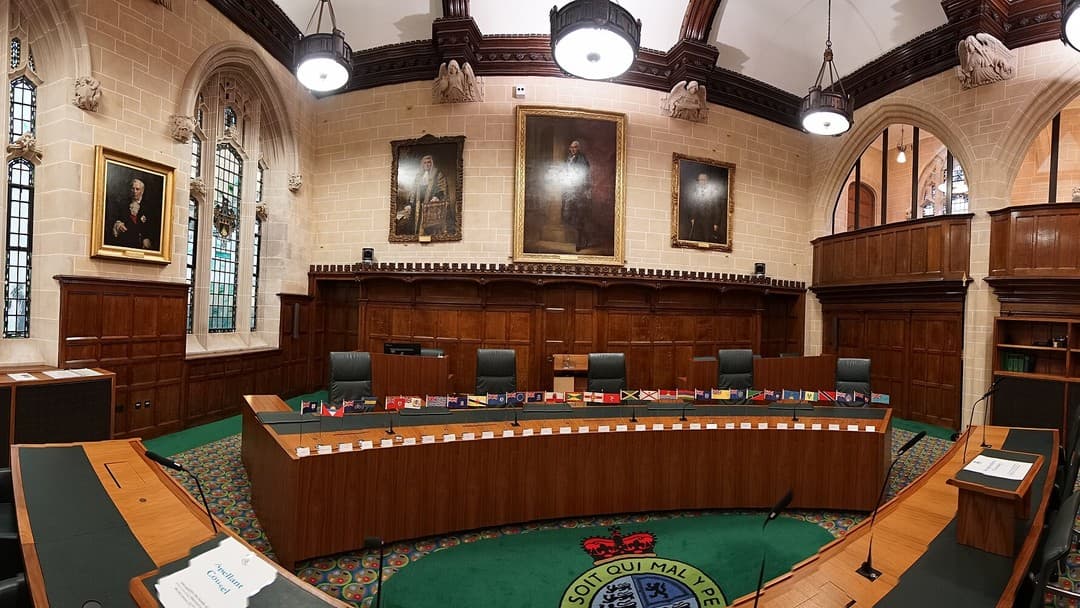
Privy Council dismisses director's appeal over £615,000 loan after unpleaded shareholder resolution.
A company director ordered to repay £615,000 to the business cannot rely on a shareholders' resolution he never pleaded, the Privy Council has held.
In Aldridge v Mordaunt Estates Ltd [2026] UKPC 34, the Board dismissed an appeal from Mauritius. Lord Burrows gave the judgement, with Lord Sales and Lord Hamblen.
Mordaunt Estates Ltd, now in liquidation, sued director Stephen Aldridge over £615,000 transferred to his personal account in four tranches between May 2008 and January 2009. It said the payments were a loan made in breach of section 159(5) of the Companies Act 2001, which bars loans to directors and, under section 159(7), makes them voidable and immediately repayable. The trial judge awarded 2 million rupees (about £31,500) as damages with interest, and the Court of Civil Appeal upheld that decision.
The liquidator's preliminary objection, that permission to pursue the appeal had been granted under the wrong provision of the Insolvency Act 2009 and without hearing the liquidator, failed. The remedy was an appeal in Mauritius. None was brought, so the order stood and the Board could not go behind it.
Two signed documents acknowledged that £615,000 was owed to the company. Mr Aldridge disputed one, which stated that repayment was due on demand, as a forgery. The trial judge treated this as a late fabrication, noting that he had held the document since the claim was served in 2011. With the auditor and company secretary also describing a loan, and both courts finding the same, the Board applied its long-standing practice, traced to Devi v Roy [1946] AC 508, of not departing from concurrent findings of fact.
The central argument concerned a shareholders' resolution of 15 February 2010. It set £615,000, which Mr Aldridge acknowledged receiving as drawings, as the price for selling 10% of his shares to an employee benefit trust, and released him from any obligation to repay. He said it amounted to retrospective approval under section 159(9), which permits a unanimous shareholders' resolution where there are reasonable grounds to believe the company will satisfy its solvency test.
He had not pleaded it, however, relying instead on a general denial. His counsel argued that the absence of approval formed part of the company's case. The Board disagreed. The cause of action was the loan to a director, and it was for him to establish a defence under section 159(9). A resolution passed more than a year later, and effectively waiving the debt, was a defence that had to be pleaded.
Fairness reinforced that conclusion. Had the resolution been pleaded, the company could have challenged it, for instance on solvency. The trial judge was entitled to refuse reliance on it, including in cross-examination, and the Board was reluctant to interfere with Mauritian court procedure. It found no contradiction or misleading of Mr Aldridge, who represented himself at trial.
The Board also rejected an allegation of apparent bias against the Court of Civil Appeal, applying the test in Porter v Magill [2001] UKHL 67: whether a fair-minded and informed observer would conclude there was a real possibility of bias. The appeal court had noted that Mr Aldridge had previously attacked judicial integrity and that his leave applications to the Judicial Committee had been dismissed, but it did not rely on those points. Remarks in a 2014 case describing him as a "serial litigator" arose in different proceedings, and judges are expected to distinguish between cases. No bias was alleged against the trial judge, whose findings were decisive.
On quantum, the trial judge was entitled to take a broad-brush approach to the company's loss from being deprived of the funds, and the award fell within her discretion. Counsel did not press the point at the hearing.
 Copyright & permissions
-cropped-6au25meu.jpg&w=3840&q=60)


.JPEG&w=3840&q=60)