Westminster City Council v Gems House: Court of Appeal settles timing of mortgagee exclusion in affordable housing agreement
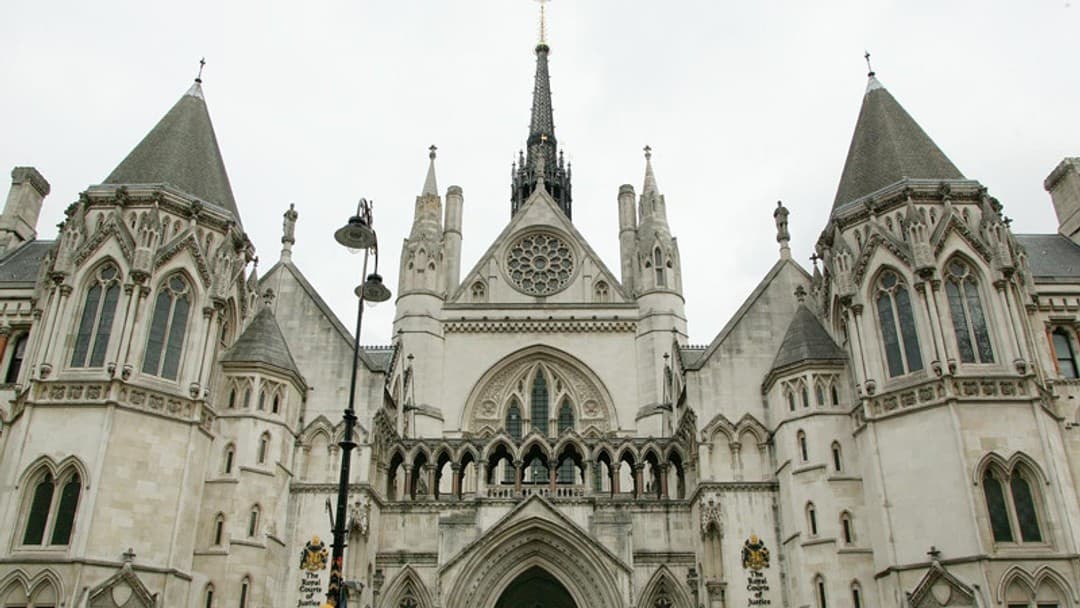
Court of Appeal rules mortgagee exemption in a section 106 agreement is fixed at the date the mortgage was created.
The Court of Appeal has dismissed Westminster City Council's appeal in a dispute over whether the purchaser of sixteen former affordable housing units in Marylebone can rely on a mortgagee exclusion clause to sell them as general market housing, upholding the High Court's construction of the relevant planning obligation.
The case concerned a section 106 agreement entered into in 2013 alongside planning permission for a mixed use development at Chiltern Street and Paddington Street, which required sixteen flats to be let as affordable housing through a registered social housing provider. The agreement contained a standard exclusion clause disapplying the affordable housing obligation as against any mortgagee of a registered provider, and against any person deriving title through such a mortgagee.
A registered provider, Kinsman Housing Limited, held long leases of the sixteen units and had granted a legal charge over them to secure development finance. Following a series of regulatory notices citing governance, viability and health and safety failures, the Regulator of Social Housing removed Kinsman from the register in September 2023. That deregistration constituted a default under the loan agreement, and the lender subsequently exercised its power of sale, assigning the leases to Gems House Residences Chiltern Street Limited in February 2024.
Westminster argued that the exclusion clause should be read as "ambulatory", meaning the housing provider had to remain registered under the Housing and Regeneration Act 2008 not only when the mortgage was granted but also at the later date when the mortgagee sold the leases. On that reading, because Kinsman had already been deregistered by the time of the sale, the purchaser would remain bound by the affordable housing restriction. HHJ Hodge KC rejected that construction at first instance, holding that the relevant status of the provider fell to be assessed only at the date the mortgage was created, and Westminster appealed with permission.
Giving the leading judgement, Lord Justice Holgate held that the natural reading of the clause's three linked limbs, covering the mortgagee itself, any receiver it appoints, and any subsequent purchaser, all depend on the same fixed reference point: the mortgage relationship as it existed when the charge was granted. He found nothing in the clause's language requiring the provider's registered status to be reassessed at any later transaction. Applying Westminster's interpretation, he noted, would also produce the anomalous result that a purchaser who bought the units at full market value while the provider remained registered could nonetheless find their own future disposals frustrated should deregistration occur afterwards.
The court gave weight to the practical consequences of each construction for lenders. Holgate LJ observed that commercial funders would be reluctant to lend against security whose value could collapse from market rate to affordable housing value due to a regulatory event entirely outside their control, a risk that Westminster's reading would create. He also found limited force in Westminster's argument that this construction allowed lenders to sidestep the statutory moratorium protecting registered providers, noting that the 2013 moratorium regime offered only a narrow 28 day window of protection in any event.
Lord Justice Miles and the Chancellor of the High Court, Sir Colin Birss, both agreed, and the appeal was dismissed accordingly.
 Copyright & permissions








.jpg&w=3840&q=60)