University of Sussex v Office for Students: High Court rejects costs reduction and protects Free Speech Union from costs order
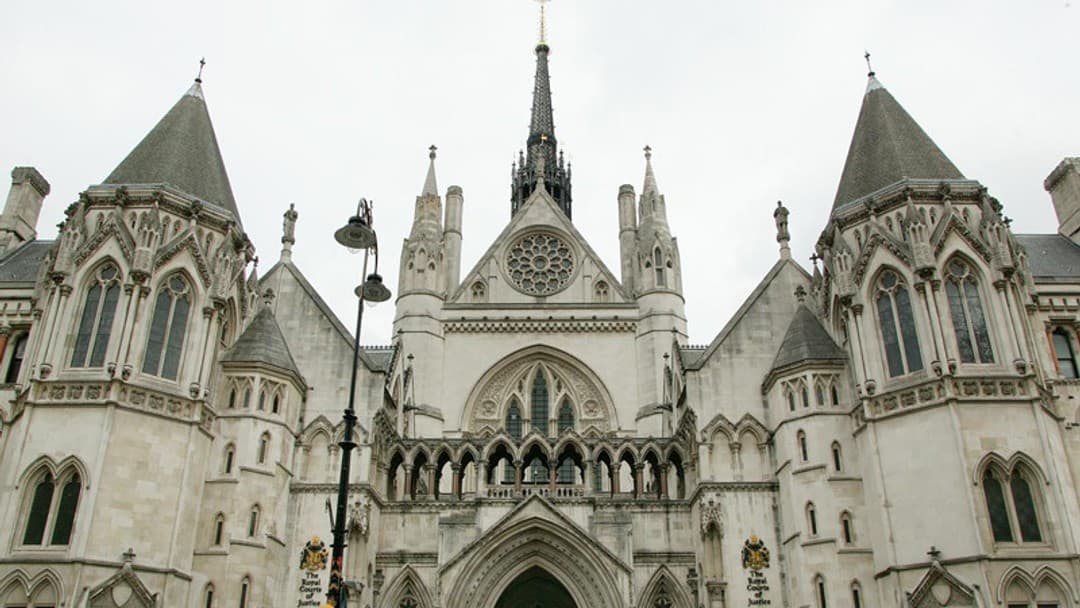
The High Court refused to reduce Sussex’s costs recovery or order the Free Speech Union to pay costs following a judicial review.
The High Court has ordered the Office for Students (OfS) to pay the University of Sussex’s costs in full following a successful judicial review, rejecting a proposed 10% reduction to reflect issues on which the regulator had prevailed. The court also declined to order the Free Speech Union (FSU) to pay the university’s costs arising from its intervention.
In The King (on the application of the University of Sussex) v Office for Students [2026] EWHC 2708 (Admin), Mrs Justice Lieven considered the costs consequences of the substantive judgement, [2026] EWHC 984 (Admin), which resulted in the quashing of the OfS’s decision in respect of both breaches identified.
The costs judgement addressed two questions: whether the university’s recovery should be reduced to account for the OfS’s partial success, and whether the FSU should be liable for costs attributable to its participation as an intervener.
The OfS accepted that costs should generally follow the event but argued for a 10% reduction. It had succeeded on Ground Two, concerning the extent of a university Visitor’s jurisdiction, and three further grounds, identified as Grounds 5B, 5E and 6A.
The regulator contended that the university’s arguments concerning the Visitor’s jurisdiction had been unreasonable, that its position had shifted during oral submissions, and that the statutory wording made the answer relatively clear. It also argued that the university’s reliance on historical materials had increased the resources required to address the issue.
Mrs Justice Lieven rejected those submissions. She considered the relationship between the Visitor’s jurisdiction and the OfS’s regulatory powers to be an important and arguable question arising from a relatively new statutory framework, with no directly applicable previous authority. Permission had been granted to pursue the ground, and the court had identified an insufficiently examined interface between the two jurisdictions.
Although the university had lost on that issue, the judge found nothing unreasonable in raising it or in the way the argument had been conducted. Given the university’s overall success and the arguable nature of the disputed ground, a reduction in its costs was not justified.
The court then considered whether the FSU should pay costs under section 87 of the Criminal Justice and Courts Act 2015. The provision permits costs orders against judicial review interveners in specified circumstances, including where their submissions provide no significant assistance, address unnecessary issues or involve unreasonable conduct.
The university argued that the FSU’s submissions had added little to the court’s reasoning, addressed matters that did not require determination and included unsolicited further submissions after the hearing. The FSU maintained that its intervention had addressed issues of wider significance, particularly the meaning of “freedom of speech within the law” and the relationship between free speech protections and Article 10 of the European Convention on Human Rights.
The judge accepted the FSU’s argument that section 87(5) limited any costs order to expenses incurred as a result of the intervention during the relevant stage of proceedings. Costs incurred before permission to intervene was granted could not be recovered under that provision.
More broadly, Mrs Justice Lieven held that the FSU’s submissions had provided significant assistance by explaining the wider legal context and potential implications of the arguments, even where they did not ultimately determine the outcome. The fact that particular submissions were rejected did not, in itself, mean they lacked value.
The judge also found no unreasonable conduct by the FSU. Given the case’s wider importance to higher education, including the scope of the OfS’s regulatory powers and the meaning of lawful freedom of speech, she considered that exceptional circumstances under section 87(7) independently justified refusing a costs order.
The university’s costs were therefore recoverable without the proposed reduction, and the FSU was not required to contribute towards them. The decision highlights the court’s discretion in assessing partial success and its recognition of the public interest served by interventions in significant judicial review proceedings.
 Copyright & permissions