UniCredit v Constitution Aircraft Leasing: UK Supreme Court rules on Russia sanctions and letters of credit
Payment obligations under aircraft leasing letters of credit were prohibited by UK sanctions until licences were obtained.
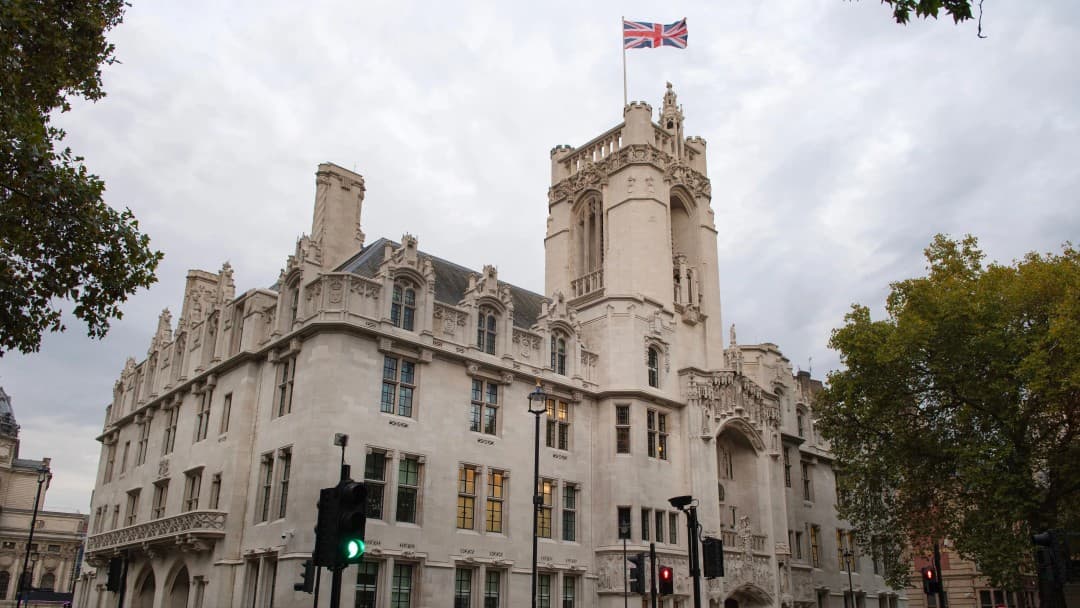
The UK Supreme Court has handed down its judgement in UniCredit Bank GmbH, London Branch v Constitution Aircraft Leasing (Ireland) 3 Ltd and another [2026] UKSC 10, resolving two significant questions arising from the post-invasion Russia sanctions regime: the scope of the financial prohibition in regulation 28(3)(c) of the Russia (Sanctions) (EU Exit) Regulations 2019, and the reach of the civil liability protection afforded by section 44 of the Sanctions and Anti-Money Laundering Act 2018 (SAMLA).
The dispute arose from standby letters of credit issued by Sberbank and confirmed by UniCredit's London branch, securing lessees' obligations under aircraft leases with two Russian airlines, AirBridge Cargo and Aurora. When Russia further invaded Ukraine in February 2022, the UK amended regulation 28(3)(c) with effect from 1 March 2022 to extend its financial prohibition to arrangements involving "restricted goods", a category that now encompassed civilian aircraft. UniCredit refused to honour demands made under the letters of credit, citing the prohibition. Licences to pay were not obtained until October 2022, by which point the principal sums owed had reached approximately US$69 million across the two actions.
At first instance, the judge held that the prohibition did not apply to the letters of credit payments, as the supply of aircraft had occurred well before the amended regulation took effect. The Court of Appeal reversed that decision, finding that payment under the letters of credit was indeed "in connection with" the aircraft leases, which remained arrangements whose object or effect was making aircraft available to persons connected with Russia. The Supreme Court unanimously dismissed the lessors' appeal.
Lord Stephens, delivering the judgement with which all members of the court agreed, rejected the argument that the provision required a causative link between the funding and the prohibited supply. The text of regulation 28(3)(c) requires only a connection between the provision of funds and an arrangement, not between the provision of funds and the supply itself. The phrase "in connection with", read alongside "in pursuance of", plainly extends the prohibition beyond funds provided under the terms of the arrangement; it captures anything factually connecting the provision of funds to the arrangement.
The court endorsed the view that the Amended Regulations deliberately cast a wide net, relying on the licensing regime to mitigate unintended consequences. Institutional competence for assessing whether payments fell within the mischief of the sanctions lay with the licensing authority, not with private parties attempting to make that assessment on incomplete information.
The appellants' further argument, that the aircraft leases ceased to be relevant arrangements once terminated, also failed. The object of an arrangement is fixed at inception and is not altered by its subsequent termination. The object of the leases was and remained the making available of aircraft to persons connected with Russia.
On the cross-appeal, the court departed from the Court of Appeal's obiter analysis. Section 44(2) provides that a person acting or omitting to act in the reasonable belief that it is complying with sanctions regulations "is not liable to any civil proceedings … in respect of the act". The court held that civil proceedings to recover a debt are brought in respect of the debtor's omission to pay, and that this omission falls squarely within section 44's language. Protection accordingly extends to the debt claim itself, to any award of interest on that debt, and to associated costs incurred during the period of the reasonable belief.
The cross-appeals were allowed on that basis, though the point was academic given the resolution of the regulation 28(3)(c) issue in the Bank's favour.
The judgement confirms that financial institutions exposed to existing contractual obligations, such as confirmed letters of credit, may find those obligations caught by new sanctions regimes even where the underlying transactions predate the amended prohibitions. The wide construction of "in connection with" places the burden firmly on affected parties to seek licences promptly rather than to argue that their payments fall outside the prohibition as a matter of interpretation. The section 44 ruling provides meaningful, if bounded, protection for those who withhold payment on reasonable grounds.
 Copyright & permissions