Three R Tourism v Orrick: High Court dismisses $73m negligence claim as time-barred
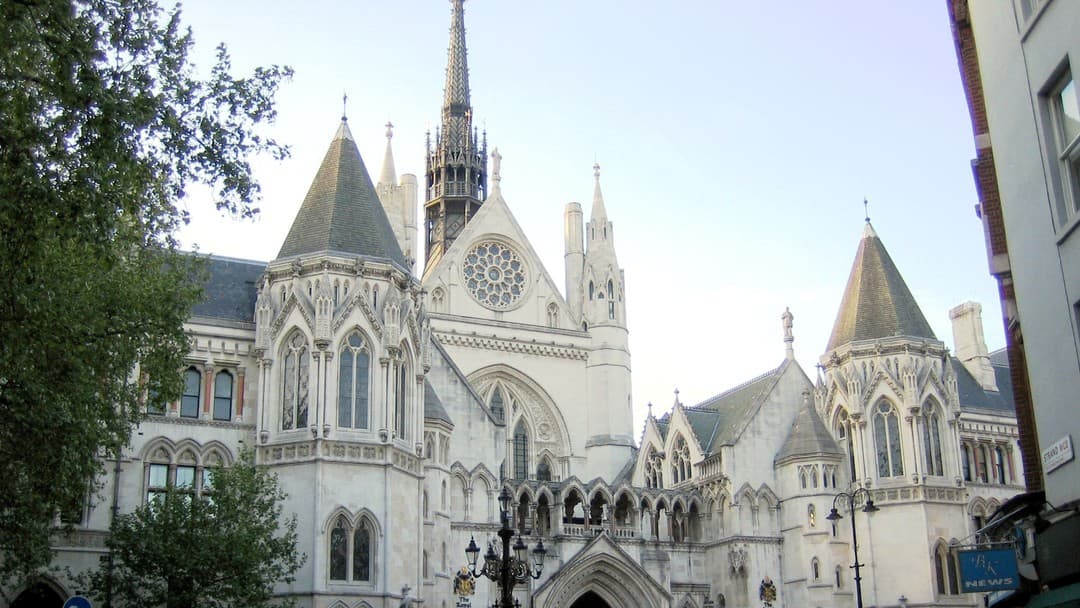
High Court grants summary judgement against Nigerian investors, finding their claim against law firm Orrick was out of time.
The High Court has granted summary judgement to law firm Orrick Herrington & Sutcliffe in a professional negligence claim worth over $73 million, ruling that the claimants had missed the limitation deadline by pursuing a claim years after they ought reasonably to have known they might have one.
Mr Justice Cotter's judgement concerned a claim brought by Nigerian travel company Three R Tourism and Hospitality Limited and its two founders, who alleged that Orrick had negligently advised them on a 2018 investment deal with entities in the Carlyle Group. Under the transaction, the claimants transferred their majority shareholding in online travel business Wakanow into a new holding structure in exchange for cash and preference shares, only for Carlyle to trigger a contractual mechanism within fifteen months that stripped them of their equity for nominal consideration, left them dismissed from their roles, and saddled them with $28.4 million in liabilities to third parties. The claimants argued Orrick failed to warn them how one-sided the deal terms were, particularly the preference share conversion mechanism that ultimately proved catastrophic.
Orrick's limitation defence turned on two questions: when actionable damage was first sustained, and when the claimants acquired the knowledge needed to trigger the alternative three year period under section 14A of the Limitation Act 1980. The claimants argued no loss crystallised until Carlyle served its conversion notice in January 2020, and that they lacked the knowledge required to bring a claim until September 2022, when correspondence from Carlyle's solicitors first raised the possibility that Orrick's advice may have been deficient.
The judge rejected both propositions. Drawing on the House of Lords' reasoning in Law Society v Sephton and the Court of Appeal's approach in Axa Insurance v Akther & Darby, he held that the claimants suffered measurable, actionable loss the moment they signed the 2018 agreements, because those agreements immediately saddled them with unconditional debt obligations to third parties and locked them into a structurally disadvantageous package of rights, rather than merely exposing them to a contingent risk of future loss. This placed the case within the "wrong transaction" category of authorities, where damage crystallises on entry into a flawed bargain rather than when its full consequences later materialise.
On constructive knowledge, the judge found the claimants' evidential account, that they had no reason to suspect anything might be attributable to Orrick's advice until nearly three years after losing their shareholding and being dismissed, difficult to accept. He described the gap in their evidence as an "unarguable" failure to explain why sophisticated businessmen, who had specifically retained specialist solicitors to protect them from precisely the outcome that materialised, took no steps to investigate what had gone wrong for over two and a half years after the conversion notice was served. Applying the objective test endorsed in Kay v Martineau Johnson, the judge concluded that a reasonable person in the claimants' position would have had sufficient grounds to investigate a possible claim shortly after being dismissed in October 2019, and certainly no later than receipt of the conversion notice in January 2020.
Since neither the primary six year limitation period nor the alternative three year knowledge-based period could be satisfied by the time proceedings were properly issued in November 2025, the judge held the claimants had no realistic prospect of resisting the limitation defence and granted summary judgement dismissing the claim in its entirety.
 Copyright & permissions








.jpg&w=3840&q=60)