Socar Trading SA v City Trade and Investment SA: Commercial Court awards $3m in diesel contract dispute
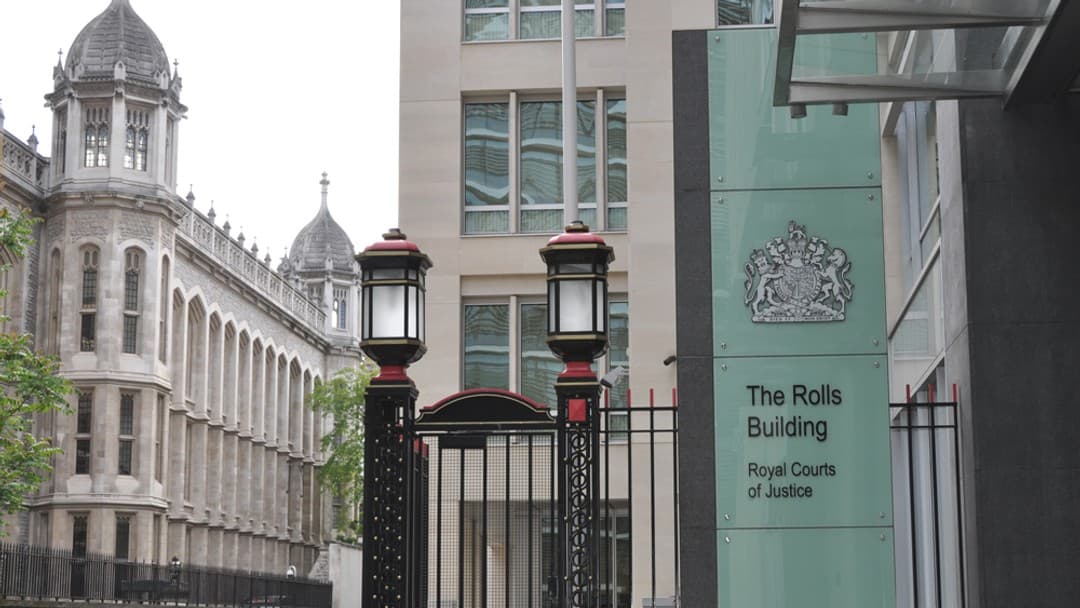
Buyer's "wash-out" defence rejected as Court upholds minimum quantity obligations in ULSD trial cargo contracts.
The Commercial Court has awarded Socar Trading SA over $3 million in damages following City Trade and Investment SA's failure to accept delivery of ultra low sulphur diesel ("ULSD") under two trial cargo contracts concluded in late 2019 and early 2020.
Recorder Janet Bignell KC, sitting as a judge of the High Court, found that City Trade had committed repudiatory breaches of both the Mersin Contract and the Samsun Contract by failing to accept and pay for agreed minimum quantities of ULSD within the contractually stipulated delivery periods and their permitted rollover months.
The contracts, concluded via email deal recaps, required City Trade to accept 15,000 metric tonnes ("kt") of ULSD at the Mersin Alpet Terminal under the first contract and 10,000kt at the Samsun Alpet Terminal under the second, in each case subject to a buyer's option of plus or minus 10%. Socar held storage capacity at both Turkish terminals via an agreement with Alpet, with deliveries to be effected by inter-tank transfer.
City Trade's central argument was that the contracts were trial arrangements only, under which it was obliged to pay solely for what it was able to lift and nothing more. On this construction, any unaccepted quantity at the end of the trial period would simply fall away. The recorder rejected that case comprehensively.
Applying the interpretive principles confirmed in Wood v Capita Insurance Services Ltd [2017] UKSC 24, the court held that the express quantity provisions and buyer's option tolerances were unambiguous. The buyer's option to take 10% less than the stated quantity was precisely designed to regulate City Trade's minimum commitment. Had the parties intended a wash-out arrangement, the negative tolerance would have been wholly redundant.
The recorder also found that the "Special" rollover provision in each contract applied to the trial cargo, despite City Trade's argument that it could only operate in the context of a long-term extension. The provision expressly committed buyers to perform for the entire agreed quantity, with any shortfall to be carried forward rather than extinguished. City Trade was therefore entitled to one rollover month under each contract, extending its obligations into February 2020 under the Mersin Contract and March 2020 under the Samsun Contract. Its failure to perform within those extended periods constituted repudiatory breach.
City Trade had disengaged entirely from proceedings by mid-April 2026, with its former solicitors DHM Stallard having come off the record. It was not represented at trial and made no contact with either the court or Socar's solicitors, Stephenson Harwood LLP, in the run-up to the hearing.
Damages were assessed under section 50 of the Sale of Goods Act 1979, with the market assessment dates fixed at 23 March 2020 for the Mersin Contract and 30 April 2020 for the Samsun Contract. The court accepted the uncontested expert evidence of Mr Ben Holt of Consilience Energy Advisory Group, awarding $2,312,636 in respect of the Mersin Contract and $712,558 in respect of the Samsun Contract.
Simple interest was awarded at 2.5% above US Dollar Prime Rate, producing further sums of $1,222,749.32 and $373,017.79 respectively. Costs were summarily assessed in the total sum of £324,751.86, with interest on costs awarded at the Bank of England base rate plus 2.5%.
Socar Trading SA was represented by Oliver Caplin KC and Lukas Swyton, instructed by Stephenson Harwood LLP. City Trade and Investment SA did not appear and was not represented.
 Copyright & permissions
.png&w=3840&q=60)








.jpg&w=3840&q=60)