Saxon Woods v Costa: Supreme Court rules directors must act, not merely think, in good faith
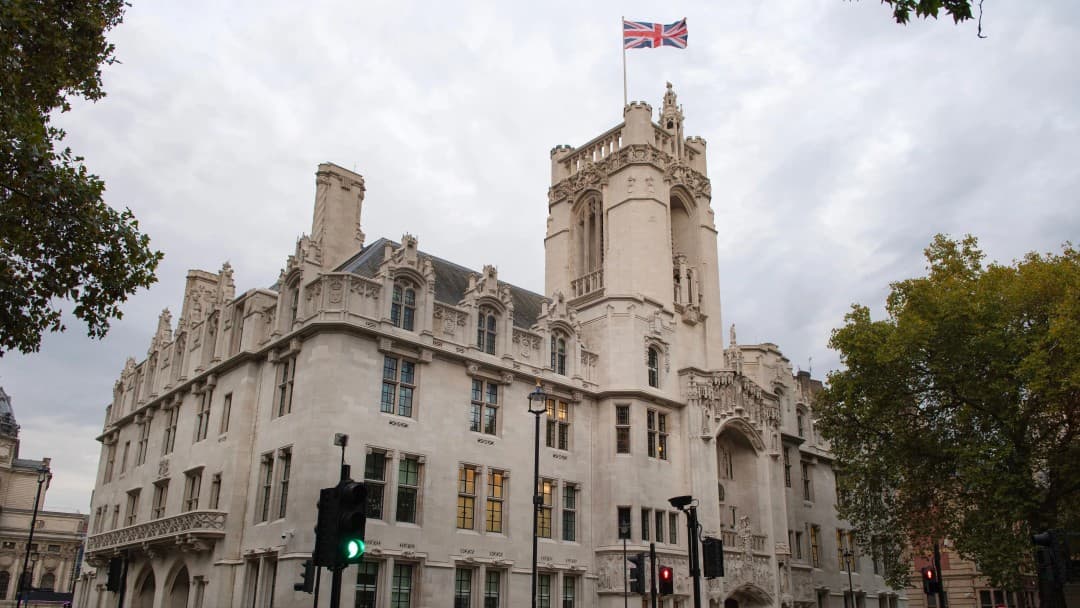
Supreme Court holds section 172 good faith governs a director's conduct, not only his beliefs.
The Supreme Court has dismissed Francesco Costa's appeal in Saxon Woods Investments Ltd and others v Costa [2026] UKSC 21, holding that the good faith requirement in section 172(1) of the Companies Act 2006 extends to a director's conduct and is not confined to his thought processes. Lord Briggs gave the judgement of the court, with Lord Sales, Lord Hamblen, Lord Burrows and Lady Rose agreeing.
The appeal arose from the collapse of an exit strategy at Spring Media Investments Limited, the holding company of a group providing creative services to fashion, beauty and luxury brands. Under a 2016 shareholders' agreement, the company and its investors agreed to work together in good faith towards an exit no later than 31 December 2019. Mr Costa, then chairman, was entrusted by the board with conducting the sale process. He believed a later sale would produce a materially better return.
The trial judge, Mr Simon Gleeson sitting as a deputy High Court judge, found that Mr Costa ensured no other director or shareholder had knowledge of or involvement in the exit process, aggressively rebuffed enquiries from fellow directors, gave the board the impression that the company was performing its obligations under the agreement when he knew it was not, withheld the fact that instructions to Jefferies and Sidley Austin did not encompass a 2019 exit, and employed delaying tactics. The judge nonetheless concluded that Mr Costa sincerely believed he was acting in the company's best interests, summarising his state of mind as a conviction that the others would object at the time but be grateful later. Applying Regentcrest, he found no breach of section 172(1). The delay succeeded; the pandemic then destroyed the prospect of a beneficial exit.
Saxon Woods, holding 22.33% of the shares, petitioned under sections 994 to 996. Unfair prejudice was established at first instance, but the judge made only a conditional buy-out order. The Court of Appeal (Edis, Snowden and Zacaroli LJJ) allowed Saxon Woods' appeal and substituted an unconditional buy-out at undiscounted pro rata value as at 31 December 2019, holding that Mr Costa's deception of the board was dishonest by reference to the objective test in Ivey v Genting Casinos.
Lord Briggs upheld that outcome on a broader footing. Although grammatical rigour might tie "in good faith" to what the director considers, the alternative construction was clearly to be preferred: it accorded with the pre-existing equitable principles that section 170(3) and (4) require the court to consult, it fitted the architecture of Chapter 2 of Part 10, and the contrary reading strained credulity. A construction permitting covert subversion of the board would be, in his words, a recipe for chaos and paralysis in corporate governance.
The court accepted that respect for business judgement remains, and that the test is subjective in the sense that the court will not substitute its own view of the company's interests where a director's belief is genuine. That respect does not confer carte blanche to implement a dissenting view by covert or disloyal means. Drawing on Item Software v Fassihi and Shepherds Investments v Walters, Lord Briggs treated the obligation of candour towards the board as an aspect of the loyalty duty now codified in section 172 rather than a freestanding duty.
The court declined to elaborate the duty by reference to Ivey, observing that where a fiduciary duty of loyalty already binds the defendant, that duty supplies the analytical framework and dishonesty is evidence rather than the test. It also expressed no concluded view on the Court of Appeal's second reason, that the shareholders' agreement itself fixed the route to success, noting that changed circumstances may properly prompt directors to reconsider a course to which the company is contractually committed.
Quantum falls to be determined at a further High Court hearing.
 Copyright & permissions






.jpg&w=3840&q=60)