Salinas Pliego v Astor Asset Management: Court of Appeal condemns covert Black Cube operation against opponent's solicitor
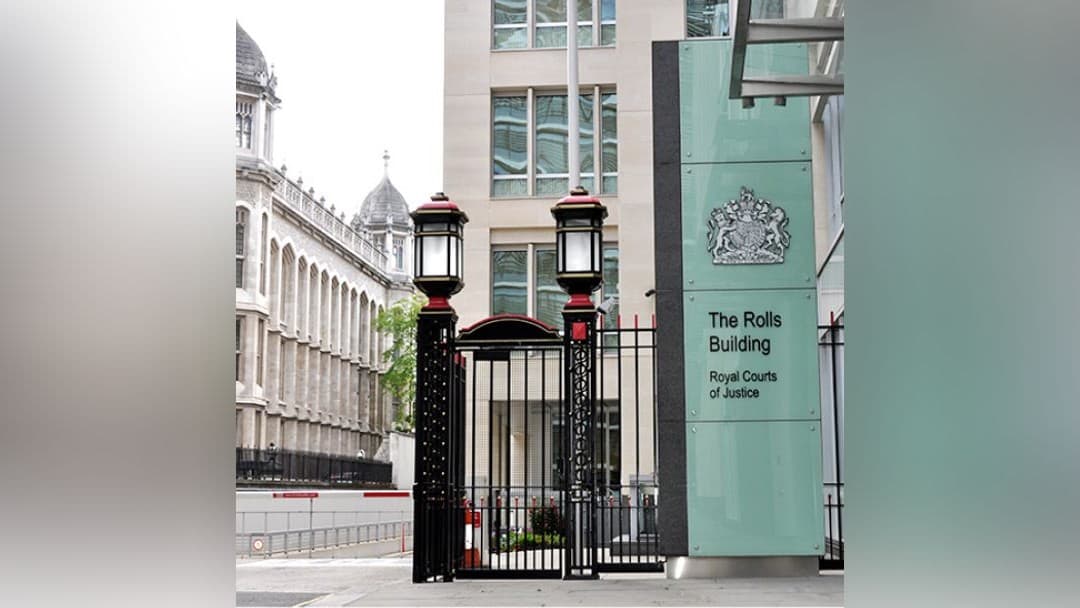
Court of Appeal finds covert intelligence operation targeting a rival solicitor was an abuse of process, but declines to strike out the claim.
The Court of Appeal has ruled that a covert operation in which private intelligence firm Black Cube tricked a solicitor into disclosing privileged information about his own client's litigation strategy amounted to an abuse of the court's process, though it stopped short of striking out the underlying fraud claim brought by Mexican businessman Ricardo Salinas Pliego.
Lord Justice Males, giving the leading judgement, upheld the finding of Stephen Houseman KC, sitting as a Deputy High Court Judge, that Mr Salinas Pliego and his co-claimant had sanctioned and benefited from a sting operation in which a Black Cube operative posed as a prospective client to lure a partner at the defendants' solicitors into a series of meetings in Amsterdam. Over roughly six and a half hours of covertly recorded conversation, the solicitor was steered into revealing litigation and settlement strategy, the impact of freezing orders obtained against the defendants, and perceived weaknesses in his own clients' case.
The underlying dispute concerns a stock lending agreement under which the claimants transferred shares in Grupo Elektra worth around $415 million as security for a $115 million loan, shares the claimants say were misappropriated by a network of companies controlled by Vladimir Sklarov, who is alleged to have traded under names invoking the Astor and Vanderbilt families to lend the scheme false credibility. Armed with the information obtained through the Amsterdam meetings, the claimants' new solicitors applied for summary judgement, prompting the defendants to seek to strike out the claim entirely as an abuse of process.
The Deputy Judge had found the conduct constituted a serious abuse but declined to strike out the claim itself, instead striking out only the summary judgement application. Both sides appealed, the claimants arguing there had been no abuse at all given the potential application of the iniquity exception to privilege, the defendants contending that nothing short of striking out the entire claim could properly mark the gravity of what had occurred.
Lord Justice Males rejected both positions. He held that deliberately targeting an opponent's solicitor through deception to extract confidential and privileged information was plainly an abuse of process, regardless of whether the material ultimately fell within the iniquity exception, and regardless of the solicitor's own culpability in disclosing more than he should have. He was critical of the Deputy Judge's reasoning that striking out only the summary judgement application was a sufficient response, finding this failed to reflect the seriousness of the misconduct and wrongly excluded consideration of discharging the freezing orders the claimants had obtained. Noting the close temporal proximity between the Black Cube operation and the claimants' pursuit and defence of those freezing orders, the court held that had the operation been disclosed to the judge who granted them, they would not have continued.
The Court of Appeal accordingly discharged the freezing orders in their entirety, while declining to strike out the claim itself, citing the strength of the claimants' case on the merits and the public interest in exposing fraud. Whether the claimants' conduct should ultimately affect their entitlement to equitable relief was left to the trial judge to determine following full disclosure and cross-examination.
 Copyright & permissions









.jpg&w=3840&q=60)