The Cypriot Court of Appeal's decision to order the extradition of Mikhail Ignatkin to Russia runs counter to English practice and sits uneasily with Strasbourg case law. Clients of Russian origin who may face prosecution at home should be cautioned against settling in Cyprus. Those who hold Russian investments through Cypriot structures, many of them administered or advised from London, should also consider whether Russian proceedings could follow them there. Until the Cypriot courts align with the approach taken in England and in Strasbourg, Cyprus cannot be assumed to offer the protection that English courts have consistently afforded.
Background
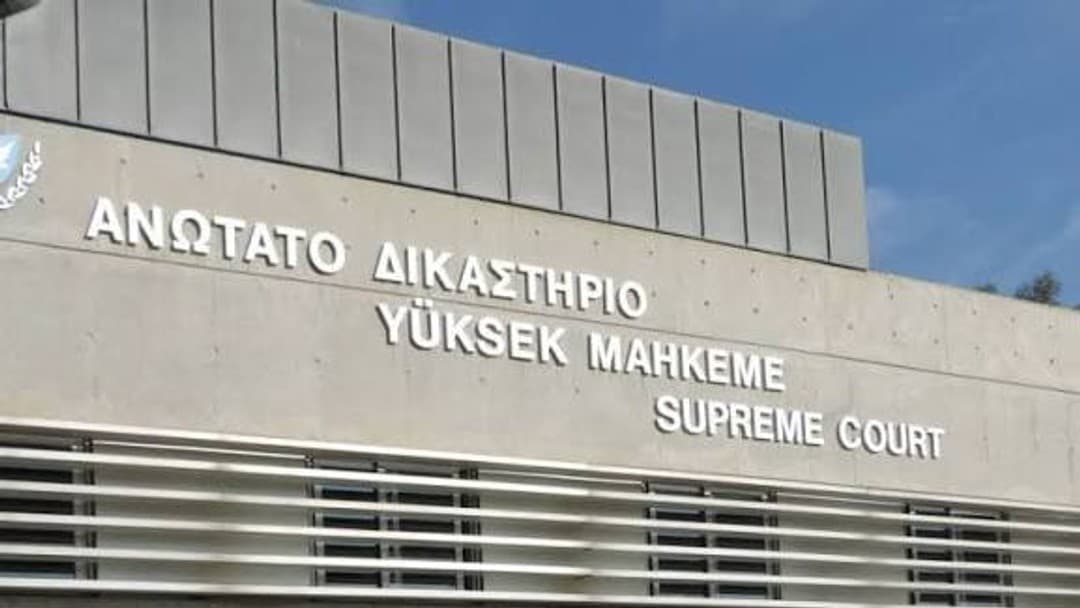
On 11 August 2026, the Court of Appeal set aside a refusal by the Paphos District Court and ordered Ignatkin's surrender. Russia alleges that between 2016 and 2017 Ignatkin, a decision-maker at a state-funded space company, helped a contractor win a contract without a proper tender at an inflated price and that RUB 840 million (approximately €7.8 million) was diverted. The charge is aggravated fraud under Article 159(4) of the Russian Criminal Code. Ignatkin was arrested in Cyprus in November 2024.
The Cypriot judgments
The Paphos court refused extradition on 25 November 2025 on a single ground. Article 12 of the European Convention on Extradition requires a valid arrest warrant, and the court was not satisfied that the Russian detention order of December 2020 remained in force. In the alternative, it tested Russia's assurances against the Othman (Abu Qatada) factors and found them unreliable, given Russia's exit from the Convention system and the absence of independent monitoring. It nonetheless held that unreliable assurances "do not eliminate the risk, but neither do they automatically create a risk" and required Ignatkin to show that he "and not merely the average detainee" was at risk.
The Attorney General appealed on the warrant alone. Adopting a "liberal interpretation" of the treaty, the Court of Appeal held that the order ran from Ignatkin's handover and so had not lapsed, noting an INTERPOL diffusion that recorded "no time limit". It dismissed a cross-appeal alleging that Russia had breached its duty of candour over material on proceedings against alleged accomplices. It endorsed the first-instance human rights analysis without updating it and stressed that comity is "pervasive" in extradition.
The tension with Strasbourg
The individual-risk test is hard to reconcile with Liu v Poland, where the European Court of Human Rights (ECtHR) held that an applicant who would be placed in a detention system carrying a general real risk is "relieved from showing specific personal grounds of fear". Ignatkin's detention on surrender is certain. The Paphos court also faulted him for producing no evidence about the specific facility in which he would be held, although Ananyev v Russia had already found a structural problem in Russian remand detention. The Committee for the Prevention of Torture (CPT) reported in November 2024 that Russia was refusing to cooperate ahead of Russia's withdrawal from the European Convention for the Prevention of Torture due to take effect on 1 November 2026. Neither Cypriot court cited Liu.
The English approach
English courts reached the opposite conclusion on similar material, and the difference lies mainly in where the burden falls. After the Ananyev judgment, the presumption that a Council of Europe state will honour its obligations no longer assisted Russia. In Shmatko v Russian Federation, the High Court refused extradition because Russia's assurances were not credible and there was no effective independent monitoring of prison conditions. It found the prosecutor's omission of a relevant Russian court decision "extremely disturbing" and declined to seek further assurances from the same source. It also saw "considerable force" in the view that there was good reason to reconsider the benefit of the doubt accorded to Russia after the Salisbury poisoning.
Westminster Magistrates' Court then applied that reasoning across the board. In Russian Federation v Egorova and others (2019), Senior District Judge (SDJ) Arbuthnot discharged four requested persons because neither Russia's Public Monitoring Commissions nor its Commissioners for Human Rights could independently monitor the assurances, and the High Court refused permission to appeal. In Russian Federation v Shulgin and Zhuravleva (2022), SDJ Goldspring discharged both requested persons, rejecting assurances on broadly similar terms to those refused in earlier cases. No extradition from the UK to Russia is reported to have taken place since 2017.
Two features of the English cases stand out in contrast to Ignatkin. First, the requesting state carries the practical burden of making its assurances credible and verifiable, and where monitoring is absent, the requested person need not show that he is singled out. Second, the court treats Russia's conduct in the proceedings, including non-disclosure, as weighing against everything else Russia says. The Cypriot Court of Appeal disposed of the candour complaint by reference to comity.
Why Cyprus parted company
In our view, three factors explain the outcome.
First, the Cypriot courts treat Russia as a continuing treaty partner under the European Convention on Extradition, which Russia has not denounced, and give comity and the "fight against crime" decisive weight.
Second, the Paphos court, endorsed on appeal, treated the case as an ordinary financial prosecution. Ignatkin showed no political activity or prior conflict with the authorities, and the Paphos court treated the charge as "an offence of a financial nature". He relied instead on a commercial dispute. His Russian legal expert gave evidence that a Moscow commercial court had rejected the expert report underpinning the prosecution and that a Russian criminal court had held the same expertise inadmissible against his alleged accomplices. The Paphos court found no "objective evidence" of a commercial motive and held that these rulings "demonstrate, rather than refute, the functioning of judicial review mechanisms" in Russia. The Court of Appeal agreed. The result is circular. The Cypriot test demands an individual factor, yet the one Ignatkin offered was read as proof that he would receive a fair trial. The defence had placed Egorova and Shmatko before the court, but the judgment does not engage with them.
Third, the Attorney General's appeal concerned the warrant and the human rights assessment survived only as an endorsement of the first-instance reasoning. That reasoning treated the European Convention for the Prevention of Torture as continuing to apply to Russia, without noting that Russia had already given notice of withdrawal, effective from 1 November 2026. The Court of Appeal, as the first court to order surrender, therefore never revisited the risk in light of Russia's departure from the last European mechanism with a mandate to monitor its places of detention. This is at odds with Strasbourg's requirement that the risk be assessed on the facts known, or which ought to have been known, at the time of extradition, drawing on the most recent information from international bodies.
Implications for practitioners
Ignatkin confirms that Cyprus is very much open to Russian extradition requests, even where the requested person argues that a commercial dispute lies behind the charge. That has implications beyond this case. Russia's Prosecutor General reports that assets worth more than RUB 4 trillion (approximately €37 billion) have been returned to the state since 2022, and analysts note that such seizures are often accompanied by dubious criminal proceedings against former owners. Some of those owners, as noted earlier, live in London and hold their interests through Cypriot companies. If a Russian prosecution of such an owner leads to a request to Cyprus, Ignatkin suggests that the Cypriot courts will treat it as an ordinary criminal matter unless the owner can show a risk specific to him.
Whether Cyprus would also assist Russia in seizing the assets remains untested. Advisers to clients with Cypriot structures and exposure in Russia should plan for both possibilities.





 Copyright & permissions




.jpg&w=3840&q=60)