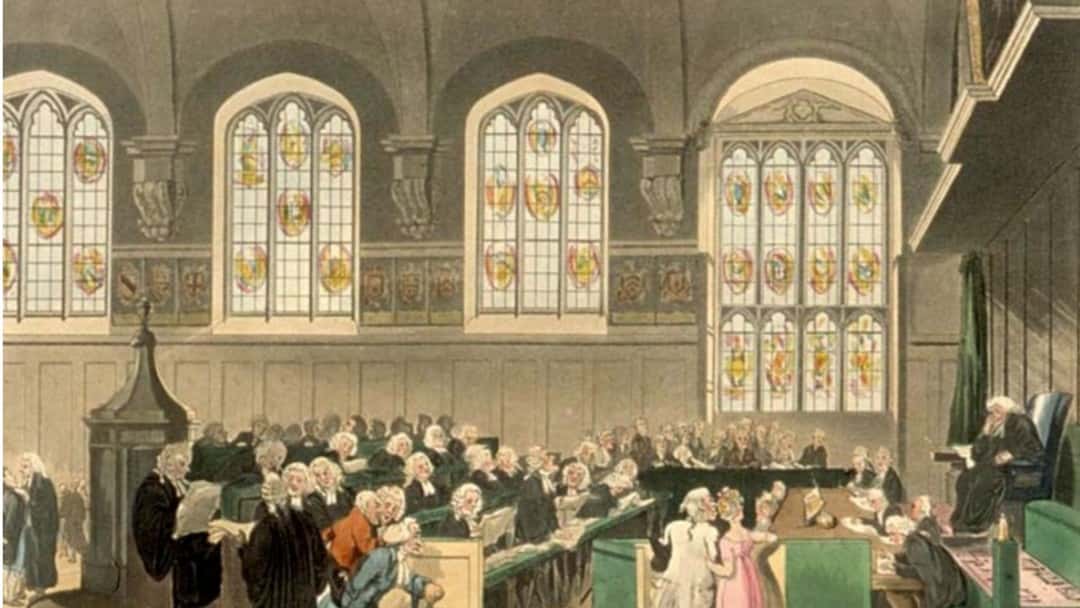
The scope and definition of the term ‘open justice’ is contested. In the Supreme Court case of Dring, the principal purposes of open justice are said to be (1) holding individual courts and judges to account, and (2) enabling the public to understand how the justice system works and why decisions are taken. In X & Y v BBC [2025] the Court of Appeal made it clear that the second limb needs to be interpreted narrowly.
Incidental scrutiny of the decision-making of parties to proceedings is not itself a purpose which requires or justifies disclosure of documentation under the open justice principle. According to Dring, the principle applies to proceedings where there is an exercise of judicial power on behalf of State but would not extend to private dispute resolution processes.
There are many facets to the open justice principle, but this article concentrates on the access to court documents by non-parties. Those documents could include statements of case, skeleton arguments, witness statements, expert evidence or disclosure material. The basic idea is that non-parties require access to this material to give full effect to the open justice purposes identified above.
Are there any exceptions?
The courts have long acknowledged that the type and subject matter of the legal proceedings will influence decision-making around access to court documents. The likely impact of disclosure on the subject matter of proceedings and the timing of the access request may also be important factors for the court to consider. Typical subject matter exceptions focus on the fact that disclosure is likely to cause harm to the administration of justice or to the legitimate and weighty interests of others. Relevant examples include the protection of national security interests or the interests of children (See Abassi -v- Newcastle upon Tyne Hospitals NHS Foundation Trust [2025] UKSC 15 [117]-[119] (Lord Reed and Lord Briggs)) or mentally disabled adults.
The Transparency and Open Justice Board has made it clear that ‘derogations from the general principle can only be justified in exceptional circumstances, when they are strictly necessary as measures to secure the proper administration of justice. They are wholly exceptional. Derogations should, where justified, be no more than strictly necessary to achieve their purpose.’ The Board has also made it clear that the ‘burden of establishing any derogation from the general principle lies on the person seeking it.’
Where does the burden rest?
The preceding analysis suggests that the person or entity wishing to restrict access to a court document should bear the primary burden in terms of court process. However, the issue of derogation or exception only arises if the non-party can persuade the court that the open justice principle is engaged. Dring and subsequent case law have made it abundantly clear that ‘non-parties should not seek access unless they can show a good reason why this will advance the open justice principle.’ In Moss, Coulson LJ stated that ‘the first step in the process, therefore, is for the non-party to show a good reason for seeking disclosure, and that test needs to be satisfied in every case.’ In X & Y v BBC the court made it clear that ‘ (i)t is incumbent on the person seeking access to documents under the open justice principle to explain (i) why he seeks access and (ii) “how granting him access would advance the open justice principle.’ In that case, the BBC was unable to clear this initial hurdle.
Despite these clear statements, there has been a worrying shift toward a default approach to non-party access to court documents. For example, the Key Objectives of the Transparency and Open Justice Board indicate that ‘save where the Court or Tribunal is satisfied that the relevant document (in whole or in part) must be withheld, timely and effective access to the core documents relating to the proceedings that are held by the Court or Tribunal’ should be granted (this rule does not apply in proceedings where a party is unrepresented and has not already filed a document in those proceedings using CE-File). This statement is uncontroversial if the principle of open justice is already engaged, but not as a default position requiring access. Similarly, PD51ZH introduces a new scheme - the Access to Public Domain Documents pilot - designed to evaluate a common process for accessing certain court documents which enter the public domain.
The pilot operates via the CE-File system and is being evaluated in the Commercial Court, London Circuit Commercial Court of the King’s Bench Division, and the Financial List only. There is a general requirement to file public domain documents. Parties and those that are named or referred in a document may apply for a Filing Modification Order (FMO) to alter the default CE filing requirements. A court may also make an FMO on its own motion.
However, the real sting is at paragraph 12 which states ‘(s)ubject to any order which may be made under paragraph 13, any person, including a Non-party, may obtain copies from Public Access CE-File of any Public Domain Document which has been filed pursuant to the provisions of this Pilot Scheme’. Once again, the objection is that the pilot is setting up a default access arrangement without any prior need for the non-party applicant to satisfy the court that the open justice principle is already engaged. At first blush, this appears to circumnavigate the principles clearly articulated in Dring and subsequent case law.
Open justice and the issue of choice?
The Transparency and Open Justice Board states that for ‘litigants who wish to have their disputes resolved completely in private, there may be other dispute resolution options available.’ If that is correct, open justice may drive some cases into private dispute resolution domains where the courts have little or no power. That may not be a positive outcome for transparency and openness.
The Board suggests that the burden of open justice is the ‘price to be paid’. However, it is one thing to apply the open justice principle to a litigant who commences civil proceedings or to a person convicted of a serious criminal offence, quite another where it is a third party mentioned in family proceedings or to defendants who are acquitted or found not liable in court proceedings.
The latter persons are not exercising voluntary choice in terms of their involvement or citation in a legal case. The proper exercise of a legal right of defence is not a truly voluntary choice. Yes, they can choose not to exercise or enforce a right/interest but why should open justice compel someone to waive a legal right when they prefer to maintain privacy. In some cases, individuals may be identified in court documents that are not directly involved in the exercise of their legal rights or interests.
Again, it is one thing to allow access to identifying information about someone who has directly contributed to a legal action, quite another if they are just a peripheral character in the background.
Whilst it may be permissible for those individuals to take active steps to attempt to restrict disclosure to identifying information – if they have requisite knowledge of the proceedings and any non-party request for access – it places a burden on someone who has not made any active choices in relation to the subject matter of the dispute.
Why should persons who are not directly involved in court proceedings or the core of a dispute pay the price for open justice where there is an adverse impact on their own interests? The rationale in those cases must surely expand to consideration of a broader set of public interests and entail the balancing of relevant interests and considerations.
These cases clearly warrant a different approach to non-party access requests and one where the default should be that the non-party bears the burden of justification and the price for open justice.
Conclusion
The development of mechanisms for non‑party access to court documents underscores the need for a carefully calibrated approach to open justice. While transparency remains a core constitutional principle, recent shifts toward default document access risk undermining the balance established in leading authorities. A principled framework—requiring clear justification, proportionality, and attention to the position of individuals and entities indirectly affected by disclosure—offers a more coherent and sustainable basis for future reform.


.jpg&w=256&q=75)


 Copyright & permissions
-cropped-6au25meu.jpg&w=3840&q=60)


.JPEG&w=3840&q=60)