R (LMN and EFG) v Work and Pensions Secretary: Court of Appeal upholds two-child limit exceptions against discrimination challenge
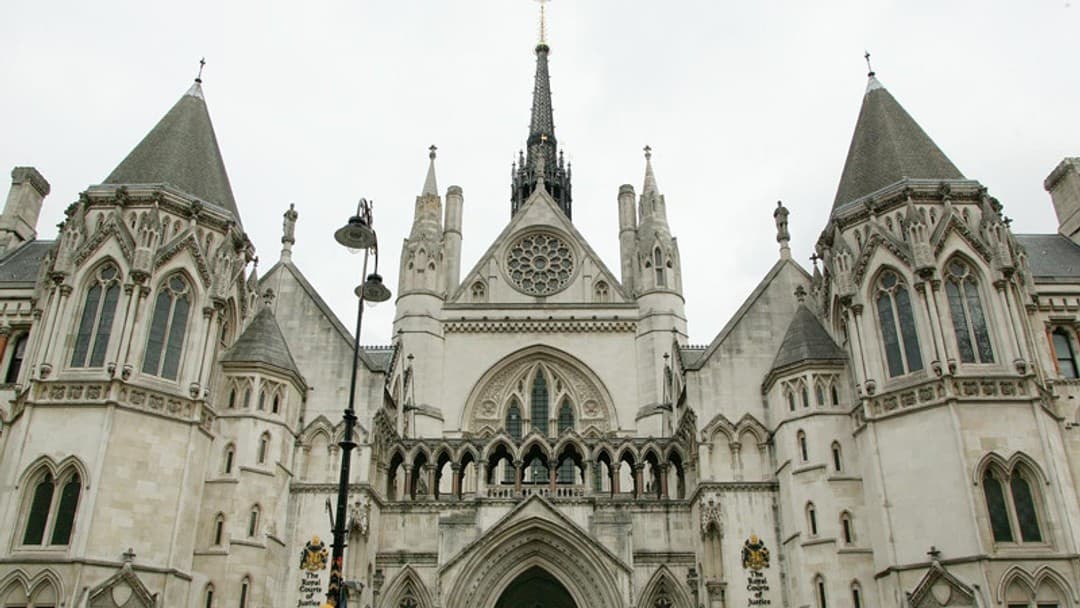
The Court of Appeal finds the universal credit two-child limit exceptions justified and compatible with Article 14.
The Court of Appeal has dismissed a challenge by two survivors of prolonged domestic and sexual abuse to the exceptions carved out of the now-repealed two-child limit on universal credit, holding that the regime did not discriminate contrary to Article 14 of the European Convention on Human Rights.
In R (LMN and EFG) v Secretary of State for Work and Pensions [2026] EWCA Civ 846, Lord Justice Lewis, with whom Andrews LJ and the President of the Family Division agreed, conducted a fresh proportionality assessment and concluded that the arrangements were justified.
Background
Until its repeal on 5 April 2025, the child element of universal credit was payable only for the first two children in a household, subject to exceptions. Two were central to the appeal: parents who adopted or cared for a child under non-parental arrangements could claim outside the limit and without regard to birth order, while a mother could claim for a third or subsequent child conceived non-consensually.
The appellants, EFG and LMN, had each endured sustained violence, including repeated rape. EFG had two children conceived non-consensually, followed by two conceived consensually in a later relationship, for whom no child element was payable. LMN's circumstances were more tangled, involving children across three abusive relationships and a child returning from local authority care after her youngest was born. Because the non-consensual conception exception turns on the birth order of the child at conception, neither woman qualified for the additional element that a differently ordered family would have received.
The claim below
Collins Rice J had dismissed the judicial review, finding differential treatment based on status but concluding the measures were objectively justified. Much of her reasoning emphasised that the competing conceptions of fairness were political and socioeconomic rather than legal, and that the matter touched fundamental questions of parental responsibility unsuited to resolution through a discrimination challenge.
The appeal
A preliminary question was whether the Court of Appeal should review the judge's assessment or decide proportionality afresh. Applying Shvidler v Secretary of State for Foreign, Commonwealth and Development Affairs [2025] UKSC 30, Lewis LJ held this was a case for a fresh assessment, given that it concerned secondary legislation of wide application, raised an issue of high importance for a particularly vulnerable group, and had not previously been considered by the court.
On the merits, the court accepted that the claim fell within Article 8 and, probably, Article 1 of the First Protocol, and that the relevant status was that of a mother of a non-consensually conceived child. Lewis LJ doubted that the appellants were in a materially analogous position either to adoptive parents and non-parental carers, who are not the biological parents and assume responsibility for another's child, or to mothers whose third child is non-consensually conceived, since the operation of the exception depends on whether there was choice at the point of conception. He nonetheless assumed analogous positions and tested justification.
Applying Bank Mellat v HM Treasury (No 2) [2014] AC 700 and the aims endorsed by the Supreme Court in R (SC) v Secretary of State for Work and Pensions [2021] UKSC 26, he held there were very weighty reasons for both exceptions. The carer exception avoided deterring people from assuming responsibility for children who would otherwise fall to the state, while the non-consensual conception exception recognised the absence of choice. Extending either to the appellants would cut against the scheme's economic logic.
The court also found no material error by the judge, who had carried out a proportionality assessment and had not abdicated her role.
 Copyright & permissions