Privatbank v Kolomoisky: ring-fenced funds released to bank on dismissal of appeal, rules High Court
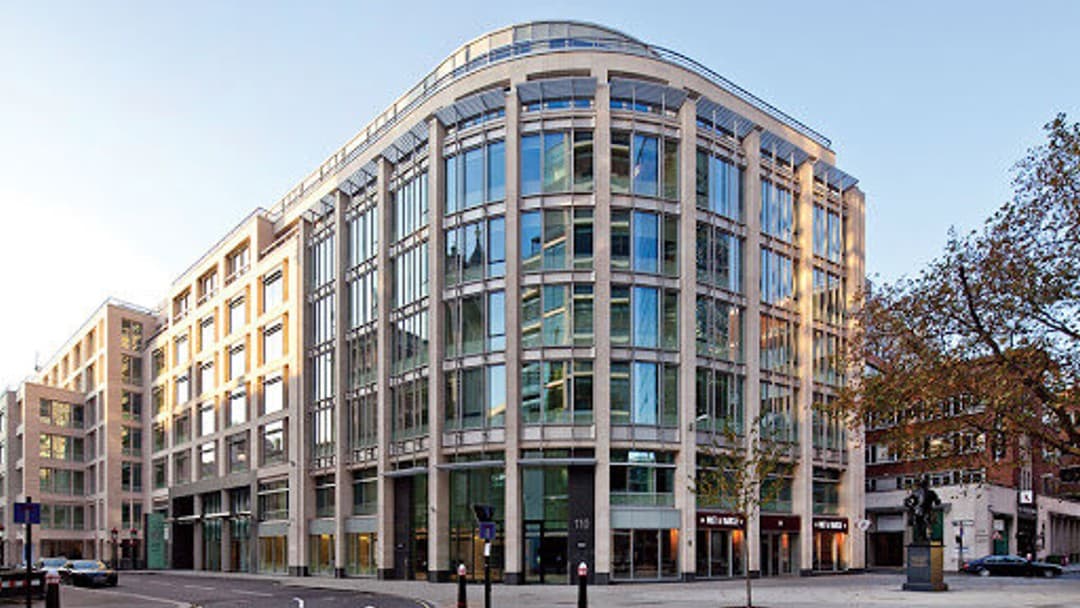
Costs incurred but unpaid before the Court of Appeal dismissed the appeal cannot be drawn from ring-fenced accounts.
The High Court has ruled that a ring-fencing regime established to protect a defendant's ability to fund an appeal against a near US$3 billion judgement ceased to operate at the moment the Court of Appeal dismissed that appeal, with the result that legal costs incurred before dismissal but not yet paid could not subsequently be drawn from the ring-fenced accounts.
In JSC Commercial Bank Privatbank v Igor Valeryevich Kolomoisky and others [2026] EWHC 1617 (Ch), Mr Justice Trower resolved a dispute arising from the post-appeal enforcement framework he had put in place on 10 November 2025 following his substantive judgement against the first and second defendants, Igor Kolomoisky and Gennadiy Bogolyubov respectively.
Background
The November 2025 consent order ("CO") required D1 and D2 to pay the Bank approximately US$3 billion. To prevent the defendants' ability to appeal being stifled, the CO included a ring-fencing regime under paragraph 3E, permitting certain assets, including sums held in three designated deposit accounts maintained by D2's solicitors, Enyo Law ("the New Enyo Accounts"), to be applied towards defined categories of expenditure including living expenses, tax liabilities, and legal fees for both the appeal and compliance with court orders. A deed of charge executed on 1 December 2025 granted the Bank a first fixed charge over the New Enyo Accounts, becoming enforceable upon any "disapplication event" under sub-paragraph 3E(6).
Sub-paragraph 3E(6) provided that, upon dismissal of D2's appeal, the ring-fencing provisions "shall no longer apply" and the Bank would be at liberty to take any enforcement steps it considered appropriate against the ring-fenced funds.
The Court of Appeal dismissed both appeals on 22 May 2026. By that date, sums exceeding £950,000 in legal costs had been incurred but not paid. A further £682,246 in proposed payments was also disputed on the separate ground that the expenditure did not qualify as reasonable legal fees or disbursements under the worldwide freezing order ("WFO").
The issues
Two questions required determination. The first was when the disapplication event occurred: at the date of the Court of Appeal's judgement (22 May 2026) or the date of its formal order (10 June 2026). Trower J had no difficulty in concluding it was the former, noting that the Court of Appeal itself had ruled on 4 June that "paragraph 3E(6) of Trower J's order has come to end" following dismissal of the appeal, a ruling given before the order was perfected.
The more substantive question was whether unpaid costs incurred before dismissal could still be drawn from the New Enyo Accounts after the Bank had become entitled to enforce against them.
Construction of the order
Applying the principles in Sans Souci Ltd v VRL Services Ltd [2012] UKPC 6, Trower J rejected D2's submission that the forward-looking phrase "shall no longer apply" preserved the ring-fencing regime in respect of obligations already incurred. The natural meaning of sub-paragraph 3E(6) was that both limbs operated together: the termination of the ring-fencing purpose and the grant of liberty to enforce were inseparable and simultaneous. Nothing in the language conditioned the Bank's right to enforce on a deduction for fees incurred but unpaid. To read in such a limitation would be to introduce a qualification that the parties had not expressed and that was inconsistent with the Bank's unqualified right to take any enforcement steps it considered appropriate.
The argument that D2's lawyers would inevitably have acted on the understanding that the ring-fencing covered unpaid work in progress was characterised by the judge as giving insufficient weight to the Bank's legitimate interest in having certainty as to the assets against which enforcement crystallised at the disapplication moment. The existence of other assets outside the jurisdiction from which D2 could have met his legal costs was a further consideration that undermined the contention that the New Enyo Accounts were the only viable payment source.
On the separately disputed second category of costs, Trower J declined to allow a £500,000 fee to Linkilaw, holding that £250,000 was the reasonable ceiling for Supreme Court permission work. Claims in respect of Austrian firm Legal Dynamics and Coulant Capital, through which Mr Alex van der Zwaan was engaged, were also refused, the latter on the grounds that there was insufficient evidence that Mr van der Zwaan was a regulated lawyer or that Coulant Capital was an appropriate recipient of a litigation disbursement.
Relief sought in D2's application notice of 10 June 2026 was refused.
Daniel Saoul KC and Conor McLaughlin (instructed by Hogan Lovells International LLP) appeared for the Claimant. Charles Béar KC (instructed by Fieldfisher LLP) appeared for the First Defendant. Craig Morrison KC and Geoffrey Kuehne (instructed by Enyo Law LLP) appeared for the Second Defendant.
 Copyright & permissions