Patents Court rejects MSD's bid for wider Mayne Pharma disclosure in Halozyme hyaluronidase dispute
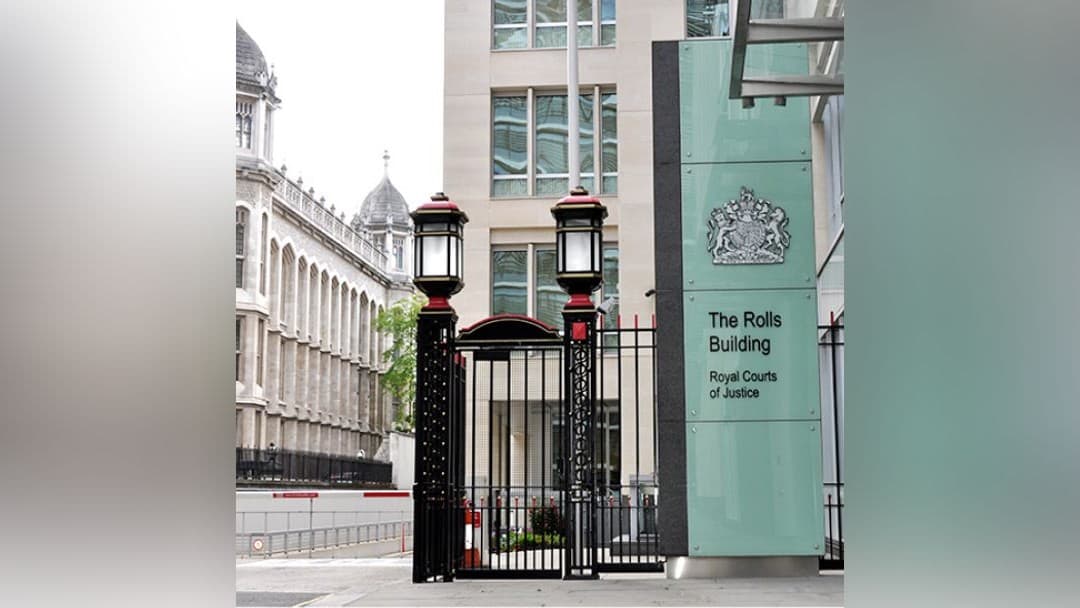
Mr Justice Mellor confirms a cautious approach to privilege waiver over patent litigation experiments.
The Patents Court has dismissed an application by Merck Sharp & Dohme (UK) Limited seeking further disclosure of experimental material from Halozyme, Inc, reaffirming a restrictive approach to the consequential waiver of privilege that arises when a party relies on experiments in patent litigation, in a judgement handed down on 20 July 2026.
The case, Merck Sharp & Dohme (UK) Limited v Halozyme, Inc [2026] EWHC 1838 (Pat), arose from a dispute over Halozyme's European Patent EP(UK) 3 130 347, which relates to modified human PH20 hyaluronidase enzymes used to enable subcutaneous delivery of drugs in larger volumes. A related patent, EP 622, had already been the subject of a submission to revocation shortly before the hearing, narrowing the action to EP 347 alone. Halozyme alleged that MSD's subcutaneous formulation of its cancer therapy Keytruda, which contains a recombinant enzyme known as berahyaluronidase alfa, infringed EP 347.
Following an earlier case management conference, Halozyme served a Notice of Experiments directed to whether MSD's enzyme exhibited the increased hyaluronidase activity required by the patent's claims, comparing it against a reference enzyme sourced from Creative Biomart. Alongside the notice, Halozyme provided what is known as Mayne Pharma disclosure, the body of work-up material that a party relying on experiments in patent proceedings must typically disclose as a consequence of waiving privilege, together with a statement identifying categories of material it maintained remained privileged.
MSD argued that this disclosure was manifestly deficient, seeking production of material relating to any attempts by Halozyme to produce or test alternative comparator polypeptides, including one identified by the sequence reference SEQ ID NO: 35, which had featured in an earlier, since-abandoned version of Halozyme's pleaded case. MSD pointed to correspondence in which Halozyme had sought successive extensions of time to serve its Notice of Experiments, citing difficulties producing comparator polypeptides and, later, an unexplained technical issue with a laboratory reagent, and invited the court to infer that Halozyme had attempted and failed to use other comparators before settling on the Creative Biomart product.
Mr Justice Mellor held that the scope of any consequential waiver of privilege had to be assessed by reference to the specific experiment relied upon in the Notice of Experiments, rather than the pleaded case on infringement or validity more broadly. Applying the principles set out in Magnesium Elektron v Neo Chemicals and the earlier authority of Mayne Pharma Pty Ltd v Debiopharm SA, he held that a cautious and restrictive approach to waiver was appropriate outside the established categories of "inevitable result" and "completeness of data" cases. Since Halozyme's evidence confirmed that no experiments had in fact been conducted comparing MSD's enzyme against any comparator other than the Creative Biomart product, and that no comparison had been made between different candidate comparators to determine a preference, the judge concluded that MSD's invited inferences were unsupported and that the disclosure already provided represented the whole of the material properly relevant to the experiment relied upon. The fact that difficulties in producing comparator polypeptides also underpinned a separate insufficiency plea did not, he held, extend the scope of the waiver.
A related dispute over redactions to work-up documents for two earlier experiments was also rejected. The judge accepted Halozyme's unchallenged evidence that the redacted material fell outside the protocols actually used in the notified experiment, and rejected MSD's suggestion that the redactions were connected to a separate costs appeal concerning the revoked EP 622, finding no basis for that inference once the grounds of that appeal were examined.
MSD's application was dismissed in full, with the remaining procedural matters agreed between the parties.
 Copyright & permissions