Nord Stream v Lloyd's: war exclusion defeats pipeline sabotage claim
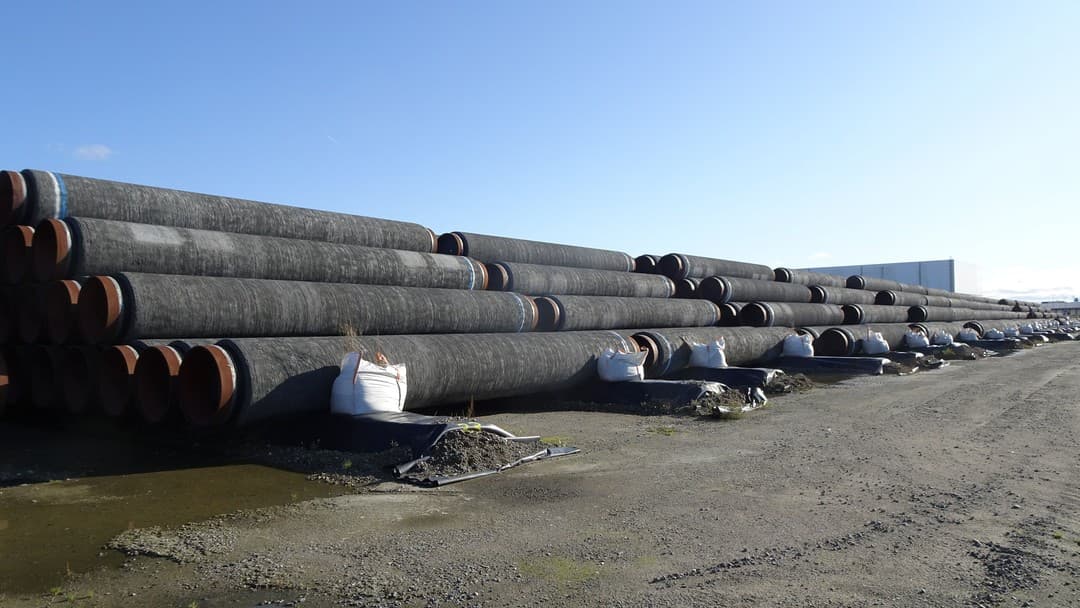
Commercial Court rules Baltic pipeline damage fell within the policy war exclusion, however the sabotage was carried out.
The Commercial Court has dismissed Nord Stream AG's claim against its insurers over the September 2022 explosions that crippled the NS1 pipelines in the Baltic Sea, finding the damage was excluded as loss occasioned by, or in consequence of, the war between Russia and Ukraine.
In Nord Stream AG v Lloyd's Insurance Company S.A. and Arch Insurance (EU) DAC [2026] EWHC 1685 (Comm), Dame Clare Moulder DBE, sitting as a judge of the High Court, held that Exclusion 2.i of the Offshore Operating All Risks policies applied irrespective of which of the potential perpetrators struck the pipelines. Her judgement, handed down on 6 July 2026, followed a six-week trial featuring expert evidence in geopolitics, energy insurance market practice, materials and explosives science, subsea operations and quantum.
Nord Stream, the Swiss operator majority-owned through a Gazprom entity, argued that cover was provided by the incorporated Institute War Clauses Builders' Risks and that the war exclusion did not bite. The judge rejected that construction. The Institute Clauses for Builders' Risks, as incorporated, were confined to property under construction or repair, and the war clauses were confined to floating assets. Neither supplied the primary insuring clause, which she found was implied on an all-risks basis consistent with the policy's own description.
Central to the decision was the causal test in the exclusion, which covered loss "directly or indirectly occasioned by, happening through, or in consequence of war". The judge accepted this connoted a broad connection looser than proximate cause. Drawing on Spinney's (1948) Ltd v Royal Insurance, Coxe v Employers' Liability and Crowden v QBE, she held that war need only be a "significant" cause, in the sense of being noticeable or specifically accountable, without any requirement that the pipelines present a "special danger" or that the perpetrator be a belligerent.
The geopolitical experts agreed on only three or four candidate perpetrators: Russia, the United States, Ukraine or a Ukrainian sub-state actor. The judge preferred the evidence of the defendants' expert, Dr Dominick Donald, over that of the claimant's expert, Dr Timothy Less, whom she found had sought to minimise the connection between the war and the attacks. Examining each candidate in turn, she concluded that in every scenario the February 2022 invasion supplied a significant cause, whether by removing the fear of Russian retaliation, motivating retribution, or targeting the gas revenues funding the Russian war effort. On that basis it was unnecessary to determine who was responsible.
The court also found, in the alternative, that had any state been the perpetrator the damage would have been caused "by" a government, the armed forces being an instrument of the state. Following AerCap Ireland v AIG Europe, the word "by" captured deprivation brought about by direct agency, and journalistic accounts alongside a German Federal Court of Justice ruling indicated any Ukrainian operation was likely sanctioned within the military command.
On the disputed indentation to NS1 Line 2, the judge applied Rhesa Shipping (The Popi M) and Ide v ATB Sales, eliminated the "extremely unlikely" anchor-drop theory advanced by the claimant's expert, and relying on Professor Sam Rigby's evidence found it more likely than not that the dent resulted from a shaped charge that had fallen from its placement.
The result confirms the reach of broadly drafted war exclusions and the utility, in causation disputes, of establishing a sufficient connection across all plausible perpetrators rather than identifying a single culprit.
 Copyright & permissions

.jpg&w=3840&q=60)