

Nexans France v London Array: Court of Appeal refuses permission in power cables follow-on damages claim
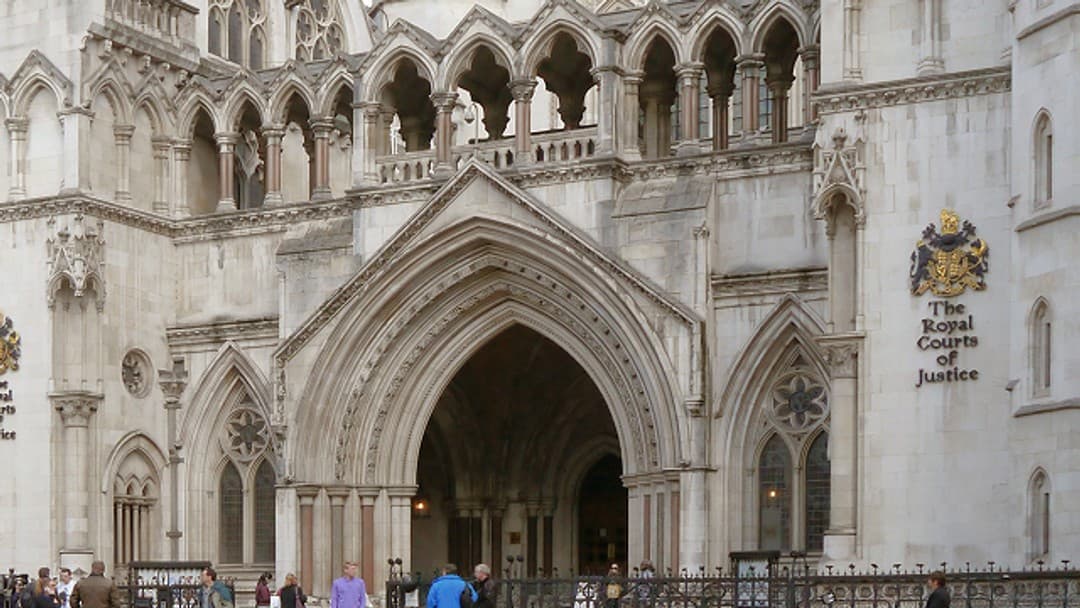
Green LJ upholds CAT findings on leniency conduct, adverse inferences and counterfactual bidders.
A cartelist who declines to explain how its cartel worked cannot complain when a tribunal draws adverse inferences. Nor can a leniency applicant's continued participation in cartel conduct, sanctioned by the European Commission to protect the integrity of its investigation, be relied upon as an inconsistency in the Commission's decision.
In Nexans France SAS and Nexans SA v London Array Ltd and others [2026] EWCA Civ 887, handed down on 10 July 2026, Lord Justice Green refused permission to appeal against a judgement of the Competition Appeal Tribunal finding that the London Array joint venture had paid an unlawful overcharge on export cables supplied by Nexans Norway.
Playing along after immunity
The claim followed the Commission's 2014 decision in Power Cables, which found eleven undertakings had operated a worldwide bid-rigging cartel. ABB applied for leniency on 17 October 2008, the date on which its participation formally ceased. The dawn raids came on 28 January 2009.
Between 5 and 7 November 2008, in the window between those dates, a Nexans representative telephoned ABB twice to discuss the price level for the London Array bid. The Commission recorded that exchange, and characterised it as the establishment of a floor price or coordination of price levels.
Nexans argued that a finding of collusion by ABB after 17 October 2008 was inconsistent with the operative part of the decision and could not stand. Green LJ found no inconsistency. Infringing behaviour can occur without regulatory liability where undertaken by a leniency applicant and where behaving otherwise would compromise the investigation. A footnote to the decision expressly caveated ABB's non-involvement with what was reasonably necessary to preserve the integrity of the inspections. Had ABB broken cover in October, the judgement observes, all cartel activity would have ceased at once and the raids three months later would have found nothing.
The pleading objection also failed. The amended claim form cited the relevant recital, which named ABB in the unredacted decision Nexans had seen. The issues were squarely on the table. As for ABB and Prysmian not having been heard, neither was a defendant and no finding of liability was made against either.
The cost of staying silent
The tribunal had drawn adverse inferences from Nexans's failure to adduce any evidence on how the cartel operated in practice, or on whether those preparing the Nexans Norway bid interacted with those who knew of it. Green LJ endorsed the approach. There is no rule that an adverse inference will necessarily follow, but the evidential burden lies with the party holding the information, and cartel defendants who withhold it and then cry foul receive little sympathy. The tribunal's finding that there was no good reason for the absence of evidence was one of fact.
No need to name the bidder
Nexans contended that causation required findings on the balance of probabilities about each potential counterfactual bidder. The tribunal had found only that, while no particular manufacturer could be identified, it was entirely likely that some manufacturer would have bid lower absent the cartel.
That was enough. The counterfactual exercise is evaluative and involves unavoidable hypothesis. Had the tribunal instead named which cartelists would in fact have bid in 2008, Green LJ remarked, the ground of appeal would presumably now be that the conclusion was remote and speculative.
The final ground, that reliance on group-to-group averaging in the econometric evidence conflicted with BritNed Development Ltd v ABB AB [2019] Bus LR 718, met the same fate. BritNed preferred one approach on its own facts, the equivalent estimate there being unreliable for evidential reasons. Here the tribunal declined to choose between the experts' methodologies, treating both as containing relevant evidence and proceeding issue by issue. Questions of comparator selection, sample periods and the treatment of turnkey projects were quintessentially factual, and appellate restraint applies to expert evidence no less than to witnesses of fact.
 Copyright & permissions





.jpg&w=3840&q=60)







.jpg&w=3840&q=60)