Kounis v Critchlow: when "in principle" is not enough to preserve standing
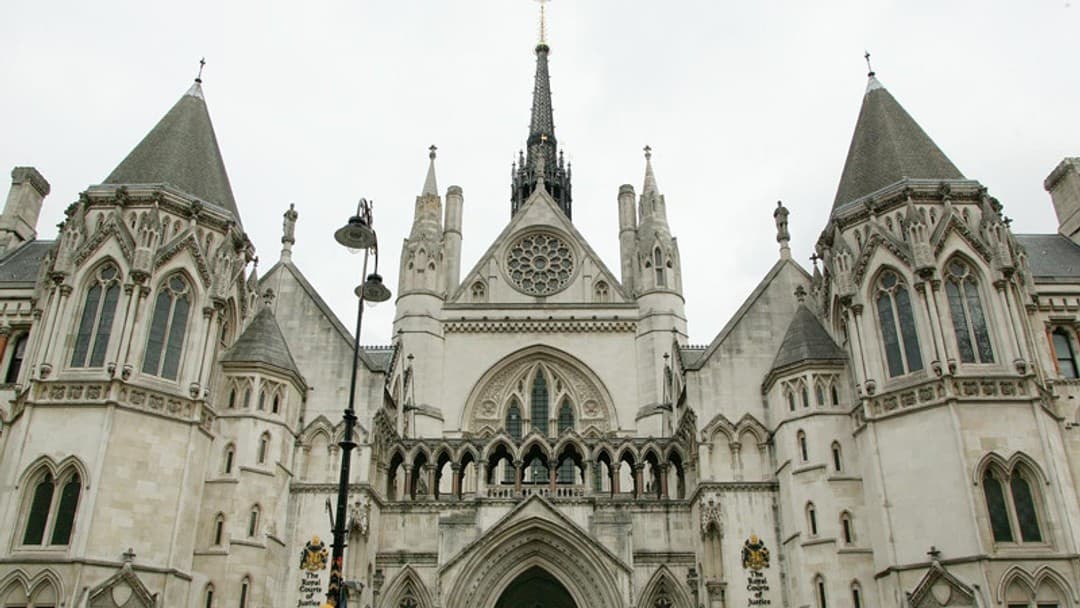
A High Court appeal examines whether an informal email exchange can extend a contractual assignment deadline.
The High Court has allowed an appeal in Kounis v Critchlow and Associates Limited [2026] EWHC 693 (KB), finding that an exchange of emails on 15 May 2023 did not amount to a concluded agreement to extend a contractual deadline, with significant consequences for the claimant's standing to sue.
The underlying dispute concerned a professional negligence claim brought by Mr Kounis against his former solicitors. The procedural complexity arose from a 2019 settlement agreement under which Mr Kounis had assigned his causes of action against Critchlow to his opponent's insurer, Amtrust Europe Limited, in lieu of paying a costs liability. A 2021 variation agreement assigned those rights back to Mr Kounis, subject to a condition: if he had not issued proceedings by a specified date, the assignment would revert automatically to Amtrust. That deadline was extended on several occasions, most recently to 16 May 2023. When Mr Kounis sought a further extension, Ms Engel of DAC Beachcroft replied that Amtrust had "no objection in principle to agreeing an extension." Proceedings were not issued until December 2023.
Mr Justice Cotter, sitting in the King's Bench Division, held that the phrase "in principle" carried its ordinary and natural meaning: consensus in outline, with scope for further consideration of detail upon which the proposed agreement may yet flounder. The words could not simply be treated as surplusage. The judge noted that Ms Engel, as a solicitor communicating on behalf of a client, must be taken to have understood the clear effect of the language used. Mr Kounis had not put forward a specific proposal in response, and his acknowledgement — "I will let you know as soon as I get a response from the other side" — indicated he did not consider the matter closed. No concluded agreement was reached, and the cause of action automatically revested in Amtrust.
The respondent argued in the alternative that subsequent emails in October 2023, in which Amtrust stated it was "not interested in being assigned this prospective claim nor will it seek to pursue the claim," gave rise to an estoppel by convention, a waiver, or a variation of the existing agreement. Cotter J rejected each of these routes. Estoppel, being a shield rather than a sword, could not avail the defendant if Amtrust were later to issue proceedings in its own right. The October exchanges could not be strained to establish an agreement to assign back rights which, at the time, neither party understood Amtrust to hold. There was accordingly no arguable variation.
The judge drew on the principles in Three Rivers DC v Bank of England [1996] QB 292, confirming that where there has been an equitable assignment of a cause of action, an assignor who sues without joining the assignee cannot maintain the action. No "gloss" could be placed on that principle by reference to the remote practical likelihood of double jeopardy or by the parties' shared (but mistaken) belief that the assignment had not revested.
However, following the approach adopted in Three Rivers at first instance, the court declined to strike out the claim outright. Instead, Mr Kounis was given a defined period in which to apply to join Amtrust as a party to the proceedings, failing which the claim would be struck out. The court noted that the November 2025 email from Amtrust confirming it had no intention of bringing proceedings or joining the claim did not, without more, provide sufficiently binding protection to dispense with that requirement.
The case is a timely reminder that "in principle" agreement language in time-sensitive commercial correspondence will not ordinarily be construed as a concluded contract, and that parties relying on informal extensions to assignment clauses should ensure any agreed variation is recorded in unambiguous terms.
 Copyright & permissions
.jpg&w=3840&q=60)

-cropped-6au25meu.jpg&w=3840&q=60)




.JPEG&w=3840&q=60)