Kakar v London Borough of Harrow: appeal dismissed despite council tax time limit questions
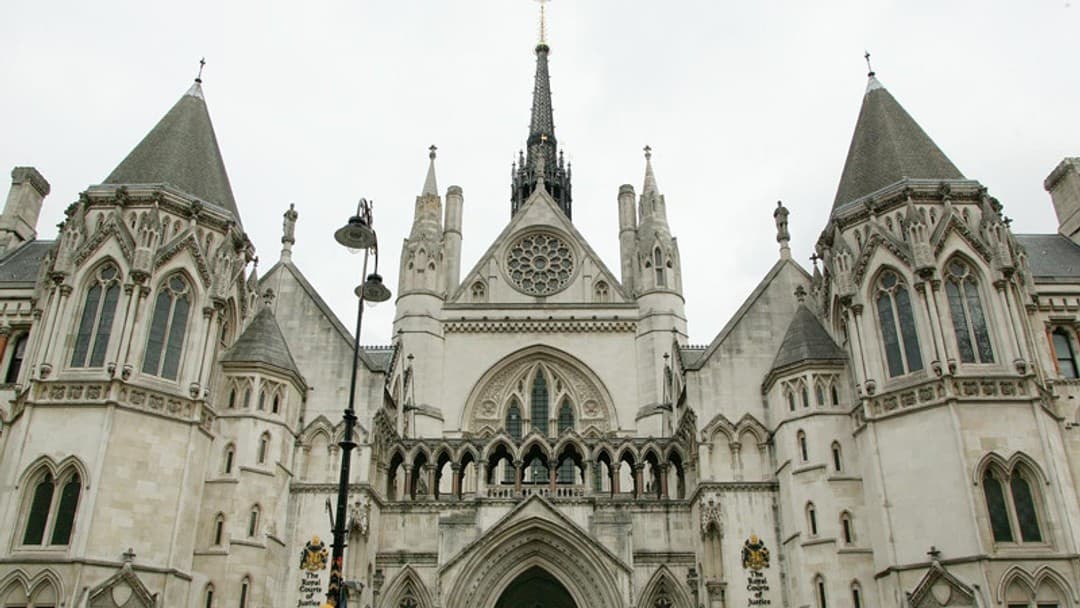
A resident's council tax appeal failed not on the merits, but because there was no evidence to justify the late filing.
The High Court has dismissed a council tax appeal by a South Harrow resident, finding that even if the Valuation Tribunal for England had erred in law over when the two-month limitation period began to run, the absence of any adequate evidence to support an extension of time was fatal to the claim.
In a judgement handed down on 26 May 2026, David Pievsky KC, sitting as a Deputy Judge of the High Court, rejected Rita Kakar's appeal against a December 2024 Tribunal decision. Ms Kakar had sought discounts on her council tax bill on two grounds: that her son, suspended from his studies on medical grounds, should nonetheless have been treated as a qualifying full-time student; and that she was his carer. The London Borough of Harrow had only resolved both grounds together in a decision of 27 August 2024, but the Tribunal found that time had begun to run from an earlier council email of 5 February 2024, making her October 2024 appeal nearly seven months out of time.
The Deputy Judge took the pragmatic step of addressing proportionality first, describing it as "critical". Even accepting, for the sake of argument, that Ms Kakar was right on either of her legal arguments about when time began to run, her appeal had still been filed late by her own concession. Regulation 21(6) of the Valuation Tribunal for England (Council Tax and Rating Appeals) (Procedure) Regulations 2009 permits the Tribunal President to allow a late appeal only where the delay arose from circumstances beyond the appellant's control. No witness statement had been filed, and neither the grounds of appeal nor the skeleton argument addressed the question in any substantive way. The court noted only "very brief and general comments about stress and needing help from her son" in the papers.
Counsel for Ms Kakar, Becket Bedford, argued that a near-miss of just one day, with the appeal allegedly submitted electronically five minutes after the deadline, was disproportionate to refuse, invoking the right of access to justice by analogy with Article 1 Protocol 1 of the ECHR. He drew on the Court of Appeal's recent decision in Eskander v General Medical Council [2026] EWCA Civ 372. Pievsky KC distinguished that case, noting the Court of Appeal's focus there on detailed evidence of what the appellant had personally done to comply with the time limit. No equivalent evidence existed here.
The court also observed that the council tax context is materially different from the professional regulatory appeals in which the Adesina line of authority developed, where a person's livelihood was at stake. The two-month time limit, combined with the safety valve in Regulation 21(6), was "a reasonable and proportionate balance" between access to justice and legal certainty.
On the two substantive legal issues, the Deputy Judge offered provisional views without formally ruling, noting that the Respondent had not appeared to defend the Tribunal's analysis. He considered that the February 2024 email, which neither accepted nor definitively rejected the student exemption and invited further documentation, may not have constituted a notification that the council believed the grievance to be "not well founded" within section 16(7)(a) of the Local Government Finance Act 1992. On the second issue, he was "inclined to think" there was force in the argument that time could not begin running until the council had resolved the grievance on both grounds, which it only did in August 2024.
Those observations, though, were ultimately obiter. The appeal was dismissed.
In a postscript, Pievsky KC noted that the hearing bundle was filed the day before the hearing, was poorly ordered, and contained no helpful indexing. Numerous authorities cited in the skeleton argument proved irrelevant, and further cases were emailed to the court during and after oral argument. The court stressed that while the strict bundle requirements of Part 52 Practice Directions may not technically apply to this type of appeal, its expectations around timely and orderly preparation of materials remain unchanged.
 Copyright & permissions
.png&w=3840&q=60)








.jpg&w=3840&q=60)