Janssen-Cilag v United States: UKIPO address for service constitutes consent to be sued
High Court rules US government validly served via UKIPO register despite state immunity challenge.
The United States government is not accustomed to being sued in the English Patents Court. Yet that is precisely where it finds itself following a revocation claim brought by Janssen-Cilag targeting a CAR-T cell therapy patent that threatens the continued commercialisation of Carvykti, its multiple myeloma treatment.
The judgement of Mr Justice Mellor in Janssen-Cilag Limited v The United States of America [2026] EWHC 1532 (Pat) resolves a service dispute with consequences that extend well beyond pharmaceutical litigation. The central question is deceptively straightforward: does a foreign state that voluntarily registers a UK address for service at the Intellectual Property Office thereby agree to be sued there?
State immunity and the diplomatic service default
Under section 12(1) of the State Immunity Act 1978, proceedings against foreign states must ordinarily be served through diplomatic channels via the Foreign, Commonwealth and Development Office, a route the Supreme Court confirmed in General Dynamics to be both exclusive and mandatory where it applies. Janssen-Cilag, a Johnson & Johnson subsidiary, had two routes around that obstacle.
The first was to characterise patent revocation as an "action in rem" under section 12(7), which carves such actions out of the diplomatic service requirement. The argument drew support from the Supreme Court's recognition in Virgin Atlantic v Zodiac [2013] that a revocation judgement has in rem effect, binding the world at large.
Mellor J rejected this limb. The distinction he drew is between an action in rem and a judgement in rem. A true action in rem is commenced by service on the res itself, the paradigm being Admiralty claims against ships or cargo. The fact that a successful revocation claim produces a judgement binding the world does not transform the character of the underlying proceedings. Earlier orders by HHJ Hacon permitting alternative service were therefore made without jurisdiction.
A register entry with real consequences
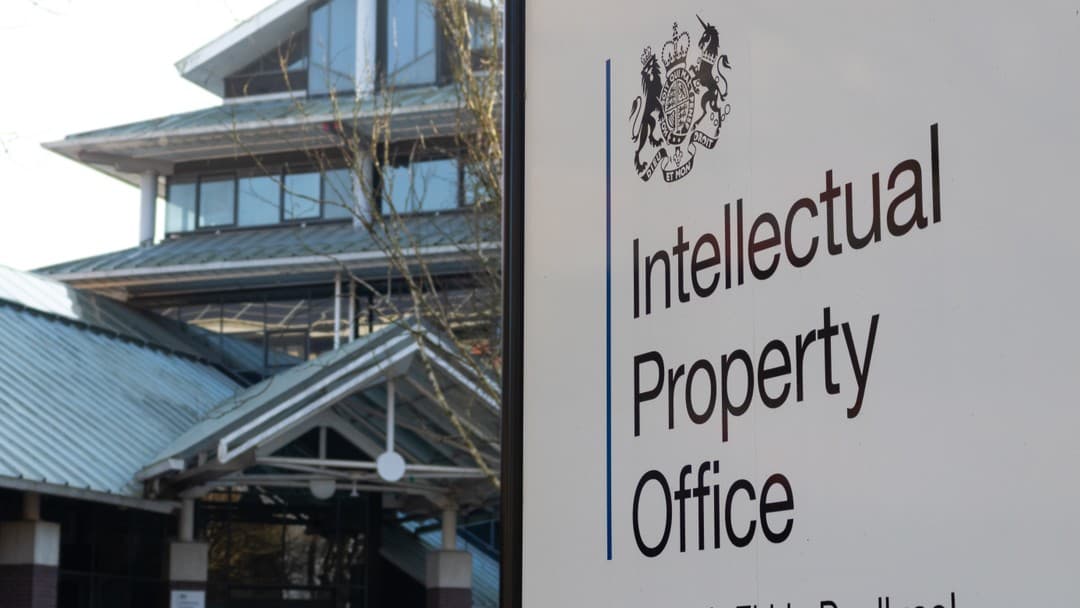
The second route proved decisive. After proceedings were issued, J&J discovered that the National Institutes of Health had instructed German patent attorneys Grünecker to register a London address for service at the UKIPO. Proceedings were served at that address. Under section 12(6), the diplomatic service requirement falls away where the state has agreed to another method.
The USA argued the registration was made for "validation purposes only" and that the NIH lacked authority to bind the government. Both arguments failed. Mellor J found that registering a UK address at the UKIPO without limitation constitutes an agreement to service by that means. CPR 63.14 expressly provides for service of patent claims at registered addresses for service, and Grünecker, as experienced patent attorneys, would have been fully aware of that provision. The authority argument was further undermined by the USA's own conduct at the Unified Patent Court, where it had willingly accepted service through a nominated representative without difficulty.
The message is significant. Foreign states holding UK patents that have registered a domestic address at the UKIPO should not treat that step as a purely administrative formality. It carries real procedural exposure. For those contemplating revocation proceedings against a foreign state patent proprietor, checking the register before navigating diplomatic service channels may save considerable time and cost.
A trial date of March 2027 is provisionally pencilled in, with the expedition application to be listed before the end of July.
Janssen-Cilag Limited v The United States of America [2026] EWHC 1532 (Pat). Mr Justice Mellor. Judgement handed down 22 June 2026. Justin Turner KC and Michael Conway (Herbert Smith Freehills Kramer LLP) for the claimant; Professor Dan Sarooshi KC and Ian McDonald (Bristows LLP) for the defendant.
 Copyright & permissions