

IlliquidX v Altana Wealth: Court of Appeal upholds equitable meaning of "public domain" in commercial NDA
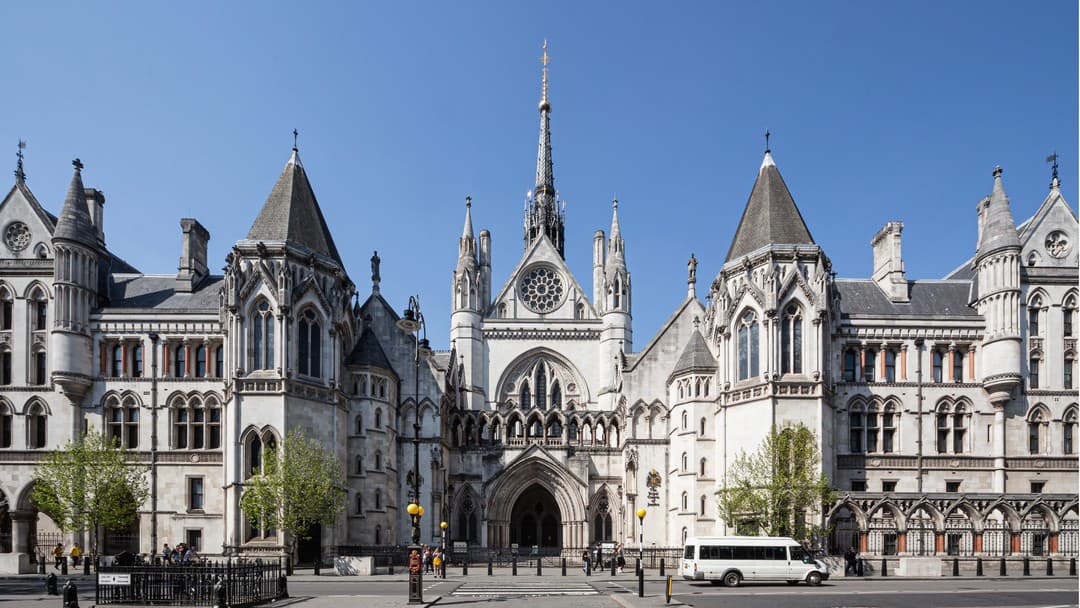
Arnold LJ confirms inaccessibility, not secrecy, is the test where a professionally drafted NDA borrows the term.
Where a professionally drafted confidentiality agreement uses an expression with a settled legal meaning, the parties are taken to have intended that meaning. The Court of Appeal has applied that principle to the phrase "public domain" in a non-disclosure and non-circumvention agreement, dismissing an appeal by an investment manager found to have misused a boutique adviser's information.
In IlliquidX Ltd v Altana Wealth and others [2026] EWCA Civ 874, handed down on 10 July 2026, Lord Justice Arnold, with whom Zacaroli and Miles LJJ agreed, upheld the order of Rajah J granting judgement to IlliquidX on its claims for breach of confidence and misuse of trade secrets.
A fund that could exist despite sanctions
By 2019 most Venezuelan sovereign debt was in default and OFAC sanctions had shut US persons out of the secondary market, depressing prices. Non-US persons could still buy 38 listed bonds from US sellers and clear them through Euroclear. IlliquidX, an illiquid investments boutique, saw a fund structured to be sanctions compliant as the means of unlocking that value, and pitched a joint venture to Altana and its consultant Brevent. The venture collapsed in November 2019 without a launch. Altana established its own Venezuelan distressed debt fund in July 2020.
The judge found Lee Robinson, Altana's founder, not to be a credible witness and rejected his evidence that he had contemplated a Venezuelan fund independently. Steffen Kastner, by contrast, was found honest, and accepted that Venezuela had not been on his radar until IlliquidX made contact.
Relative inaccessibility suffices
The appellants argued that "public domain" in clauses 1.1(a) and (b) of the NDA should mean any information available or disclosed without a duty of confidence, so that a single free recipient would suffice. Arnold LJ rejected the construction on six counts.
The expression carries the meaning given by Lord Goff in Attorney-General v Observer Ltd [1990] 1 AC 109, namely information so generally accessible that it cannot be regarded as confidential. Confidentiality is relative, not absolute (Franchi v Franchi; Racing Partnership Ltd v Done Bros [2021] Ch 233). Nothing in the NDA or the factual matrix displaced that meaning. The breadth of the definition of Confidential Information did not require a correspondingly broad carve-out, since the breadth of each provision turns on the words chosen. Fact sensitivity is not unworkability. Clause 3(b), preserving freedom to compete, retained utility. And on the appellants' own reading, clause 1.1(d) would be near impossible to apply.
An attempt to invoke clauses 1.1(c) and (d) on appeal attracted a sharper response. Clause 1.1(d) had not been mentioned in closing submissions at all, and two of the three items now relied upon had not been raised. The judge could not be criticised for failing to make findings he was never asked to make, though the points were addressed and rejected on their merits.
Circulation to investors is not publication
The remaining ground challenged the finding that the Business Opportunity was not in the public domain in 2019, a finding of fact or evaluative assessment. The appellants could point to no single public document disclosing it. Marketing materials sent to selected investors, marked confidential and withheld from websites and newsletter lists, remained relatively secret and were never available to competitors. A Bloomberg bulletin of July 2019, described as the appellants' best evidence, showed European and Latin American funds bidding for the debt but did not establish that the idea of a sanctions-compliant vehicle was widely known.
Even had the high-level Business Opportunity been in the public domain, the judge's conclusions on the package of documents he defined as the Fund Detail would have stood.
 Copyright & permissions





.jpg&w=3840&q=60)







.jpg&w=3840&q=60)