Hughes v Kirklees Council: Court of Appeal upholds dementia care home sale despite outdated cost figures
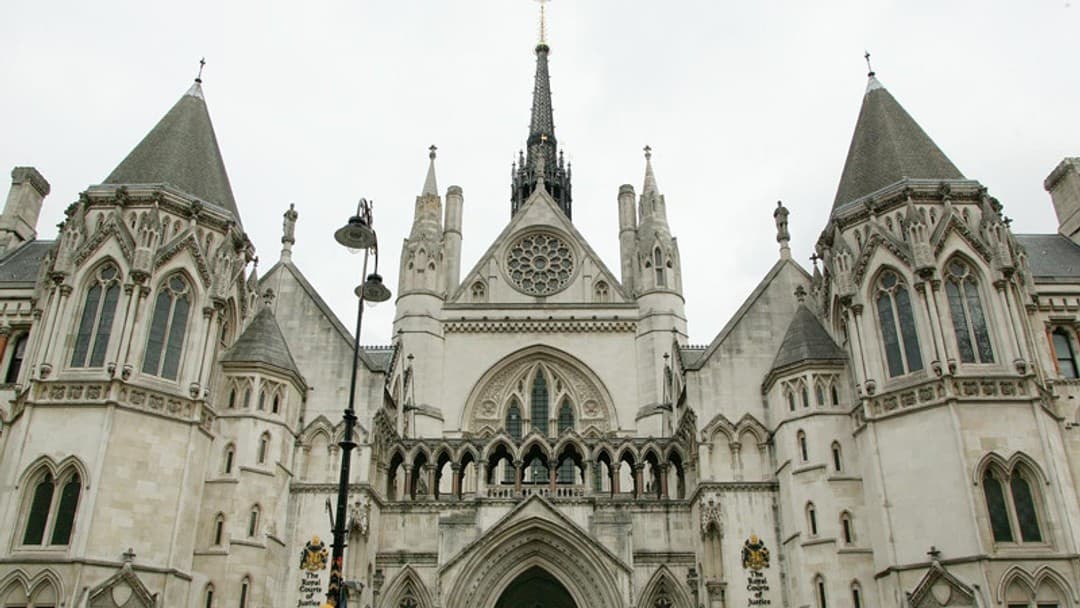
Court of Appeal confirms Council acted lawfully in selling two specialist dementia care homes, rejecting irrationality challenge.
The Court of Appeal has dismissed a judicial review challenge brought by a resident of a publicly owned dementia care home against Kirklees Council's decision to sell its last two specialist dementia care facilities. In R (Hughes) v Kirklees Council [2026] EWCA Civ 308, handed down on 17 March 2026, Lord Justice Zacaroli (with whom Lady Justice May and Lord Justice Dove agreed) held that the Council had acted rationally notwithstanding its use of a cost-comparison figure that was two financial years out of date.
The Council's Cabinet approved the sale of Castle Grange and Claremont House — the only two care homes remaining in public ownership across the Kirklees area — in February 2025. The decision formed part of a wider strategic withdrawal from the residential care market, where the Council considered the independent sector well placed to meet demand. The claimant, Brenda Hughes, a resident in her early 90s suffering from advanced dementia, challenged the decision on grounds of irrationality, represented by her litigation friend.
The cost-comparison error
Central to the appeal was the Council's continued use of a per-unit weekly cost figure of £852.69 for independent sector provision — a figure drawn from early 2024 and used unchanged through to the February 2025 Cabinet report. The judge below, Upper Tribunal Judge Ward sitting as a deputy High Court judge, found this constituted a logical error: applying an updated figure of 10.7% higher would have reduced the projected annual budgeted savings from approximately £867,000 to around £524,000, a reduction of roughly 40%. He nonetheless declined permission, concluding under section 31(2A) of the Senior Courts Act 1981 that it was highly likely the outcome would not have been substantially different.
The Court of Appeal declined to address that question directly. Instead, it accepted the Council's respondent's notice argument: the judge had been wrong to find irrationality in the first place.
Zacaroli LJ emphasised that the Cabinet was not kept in the dark. The December 2024 report had expressly acknowledged that the cost figures were based on values from 2024–25 and that actual 2025–26 values might vary, though not materially so. Members had also seen the figure deployed in earlier reports and were aware of its origin. Crucially, the Council's overall strategic rationale — concentrating resources away from a care sector adequately served by private providers — meant the decision was not reducible to a simple arithmetical calculation of savings. Even on the corrected figures, savings in excess of £500,000 per year, alongside avoided overspend, unbudgeted capital expenditure of £1.4 million over five years, and a prospective capital receipt on sale, plainly remained "substantial" in context.
Failure to explore alternative options
The first ground — that the Council acted irrationally in failing to model the financial consequences of continuing to run the homes more efficiently — was also dismissed. Zacaroli LJ characterised it as an attempt to re-frame a Tameside inquiry duty point that the claimant had already conceded below. The judge had held that officers were entitled to sift out options they considered unrealistic before presenting recommendations to members, and there was no appeal from that conclusion.
The Court endorsed the reasoning in Mansell v Tonbridge & Malling BC [2017] EWCA Civ 1314, applying its principles beyond planning contexts to local authority decision-making more broadly: officers' reports should not be read with undue rigour, and the question is whether the report as a whole materially misled members in a way that affected the outcome. No such misdirection was made out.
Significance
The case underlines the narrow scope of irrationality review in decisions involving financial predictions and local resource allocation. It confirms that where a decision-maker is expressly made aware that a figure is approximate or potentially outdated, and the overall context supports the conclusion reached, reliance on that figure will not without more constitute a public law error. The judgement also offers useful restatement of how the Mansell principles extend beyond planning law to analogous quasi-executive decisions by public bodies.
 Copyright & permissions











.jpg&w=3840&q=60)