High Court rejects Safe Passage International challenge to refugee family reunion suspension
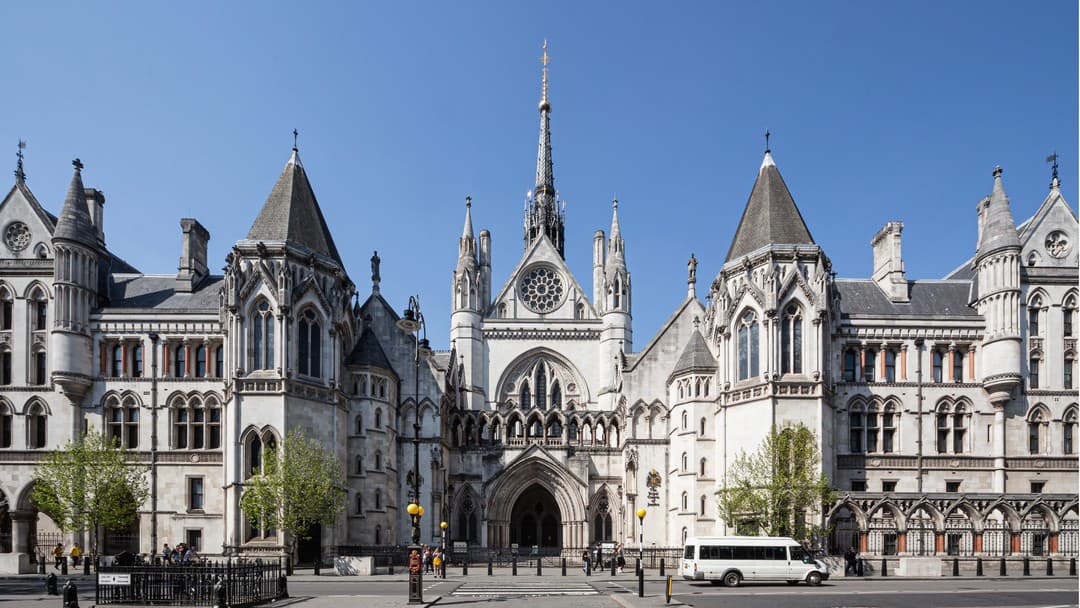
Coppel J dismisses all grounds against the Home Secretary's suspension of Appendix FRP for refugees.
The Administrative Court has dismissed a consolidated triple judicial review challenge to the Home Secretary's suspension of the dedicated refugee family reunion route, in a judgement that narrows the reach of the public sector equality duty over changes to the Immigration Rules.
In Safe Passage International, AXY and BSZ, and ESH v Secretary of State for the Home Department [2026] EWHC 1705 (Admin), Mr Justice Coppel rejected every ground advanced against the decision, announced on 1 September 2025 and implemented three days later, to close Appendix Family Reunion (Sponsors with Protection) to new applications and to route refugees' pre-flight spouses and children through Appendix FM instead.
The claimants were a refugee charity and three recognised refugees separated from spouses and minor children in Afghanistan, India and the Kurdistan region of Iran. They contended the measure was irrational, breached the section 55 duty owed to children in the UK, offended the PSED, and discriminated against refugees contrary to Article 14 ECHR read with Article 8. The Home Secretary defended the suspension as a temporary step, pending wider reform of family migration, intended to relieve mounting pressure on local authority housing and homelessness services.
Coppel J accepted that greater numbers of family reunion grants would, as a matter of logic and common sense, increase demand on local authorities, and held that the evidence base, though incomplete, was sufficient for a rational decision in August 2025. He declined to apply the "anxious scrutiny" standard, finding the case attracted the least intensive review: it concerned immigration policy, the allocation of scarce public resources, a polycentric weighing of incommensurable factors, and rule changes subject to parliamentary scrutiny. The reasoning in R (DM) v SSHD [2025] EWCA Civ 1273 was applied, and R (Asylum Aid) v SSHD [2025] EWHC 316 (Admin) distinguished on the basis that the present suspension was temporary and pending reform, rather than a permanent closure.
The most consequential aspect of the judgement concerns the equality grounds. Coppel J held, following post-hearing argument, that the making of a statement of changes to the Immigration Rules is the preparation of "an instrument made under an enactment by a Minister of the Crown", excepted from section 29(6) of the Equality Act 2010 by paragraph 2(3) of Schedule 3. Drawing on R (Staff Side of the Police Negotiating Board) v SSWP [2011] EWHC 3175 (Admin) and R (A) v SSHD [2022] EWHC 360 (Admin), he found the exception extends to the departmental steps preceding laying, not merely the drafting of text. The consequence was that the standalone discrimination claim fell away entirely, and the first limb of the PSED, directed at eliminating unlawful discrimination, was not engaged.
On Article 14, the court found Thlimmenos discrimination but held it justified. Affording a broad margin of appreciation, and applying the Bank Mellat test, Coppel J concluded the suspension pursued a legitimate objective, was rationally connected to it, and struck a fair balance, noting that detriment to refugees was far from clear-cut given the delays inherent in the route even absent suspension. The Strasbourg authorities, including BF v Switzerland (2024) 78 EHRR 14, set a relatively high bar unlikely to be met here.
The section 55 assessment was described as "unimpressive in some respects" but lawful, and the apparent bias ground failed on the established distinction between lawful predisposition and unlawful predetermination. Coppel J also found the Home Secretary had breached the duty of candour by disclosing material relevant to the March 2026 submissions only days before the hearing.
 Copyright & permissions