Guilliey v OCAPAC Mauritius: Privy Council dismisses appeal over end-of-year gratuity dispute
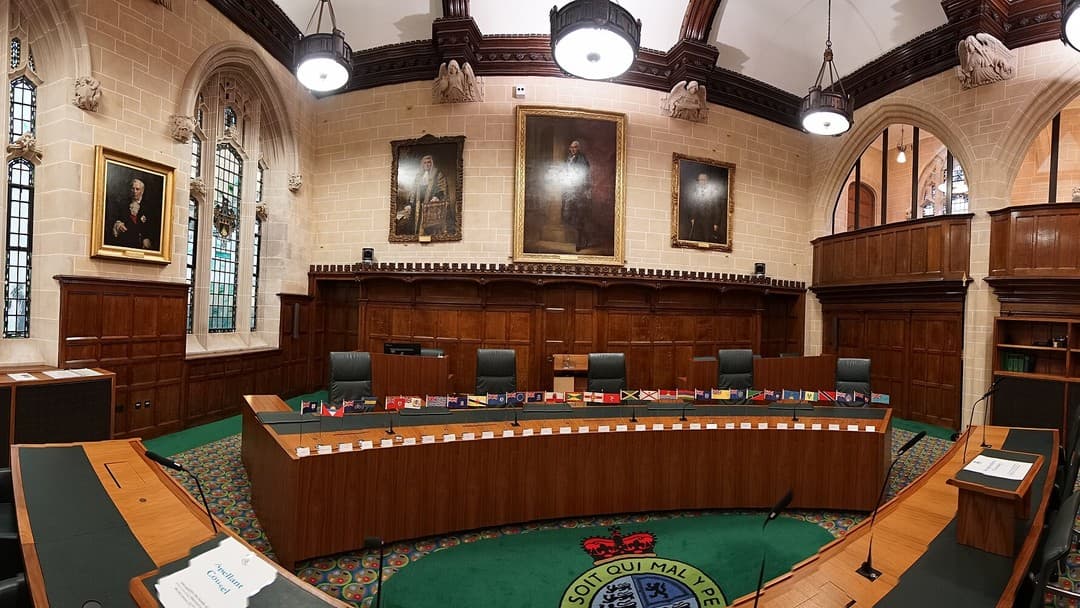
Employer's 13-instalment salary structure held compliant with Mauritius's End of the Year Gratuity Act 2001.
The Judicial Committee of the Privy Council has dismissed an appeal by a French national employed in Mauritius who contended that his employer had structured his remuneration so as to evade its statutory obligation to pay a separate end-of-year gratuity.
In Guilliey v OCAPAC Mauritius Holding Ltd [2026] UKPC 25, the Board upheld the Supreme Court of Mauritius's ruling that the appellant's employment contract was consistent with the End of the Year Gratuity Act 2001 ("the Act"), and that the respondent had duly discharged its statutory obligations. The appellant's consequent claim for constructive unfair dismissal therefore failed.
Background
Luc Guilliey had been employed by OCAPAC Mauritius Holding Ltd as a Territory Sales Representative under a contract comprising a Terms and Conditions document and a Country Annex, the latter taking priority in the event of any inconsistency. The Terms defined "Annual Basic Salary" as annual fixed pay excluding allowances, commission, bonus, and other fluctuating earnings. The Country Annex provided that annual basic salary would be paid in 13 instalments: 12 monthly payments of basic salary and a thirteenth payment described as "a statutory end of year gratuity equivalent to one month's salary in accordance with applicable laws", payable each December.
Guilliey argued that this structure was a device to avoid paying him a statutory gratuity under the Act over and above the fixed sums already received. In May 2016, he notified the respondent that he considered the arrangement a breach of contract, purported to treat the contract as terminated, and subsequently brought a claim for constructive unfair dismissal. His claim was initially dismissed by the Industrial Court and, following a successful appeal to the Supreme Court of Mauritius on procedural grounds, was ultimately rejected on the merits by that court in August 2024. He appealed to the Privy Council as of right under section 81(1)(b) of the Constitution of Mauritius.
The Privy Council's analysis
Delivering the judgement of the Board, Lady Simler held that the Terms and Country Annex were neither ambiguous nor inconsistent. The Terms identified the total annual basic salary figure, and the Country Annex plainly divided that figure into 13 equal instalments: 12 monthly salary payments and a thirteenth equivalent to one month's salary, constituting the statutory gratuity paid in December. The Board described the Country Annex as "clear and unambiguous", and confirmed that it expressly took priority over the Terms in any event.
The Board rejected the appellant's arithmetical argument that because the statutory gratuity under section 3(2)(a) of the Act must be calculated by reference to "monthly basic wage or salary", the gratuity necessarily falls outside and above the basic salary. Lady Simler drew a clear distinction between "annual basic salary" as a contractual term and "basic wage or salary" as a statutory concept. The monthly instalments paid as salary in the 12 preceding months constituted the relevant "basic wage or salary" for statutory purposes, and the thirteenth payment was the gratuity calculated in accordance with the statutory formula. There was no violation of the Act.
Section 3(3)(c) of the Act expressly contemplates that an employer may contractually agree to pay an end-of-year bonus or gratuity, with the employee receiving whichever sum is the higher. The Board confirmed that there is nothing objectionable in a contract providing a contractual mechanism for discharging a statutory obligation, provided the contractual sum meets the statutory minimum.
Contractual interpretation and extrinsic evidence
The Board also addressed the appellant's reliance on Mauritian Civil Code articles governing contractual interpretation, including Article 1156's requirement to ascertain the common intention of the parties. Since the contract was clear and unambiguous, there was no warrant for recourse to extrinsic evidence of intention. The Board held that applying article 1156 in such circumstances would amount to rewriting the contract rather than interpreting it.
Similarly, the argument that the contract was a contrat d'adhésion attracting construction against the drafter was rejected, partly on the ground that this point had not been raised before the courts below, and partly because the Supreme Court had found that the respondent had not misled the appellant, who was fully aware of the 13-instalment structure at the time of contracting.
The appeal was dismissed.
 Copyright & permissions








.png&w=3840&q=60)

.jpg&w=3840&q=60)