Free Church of England Central Trust v Hanna: High Court rules on church property trusts after congregation split
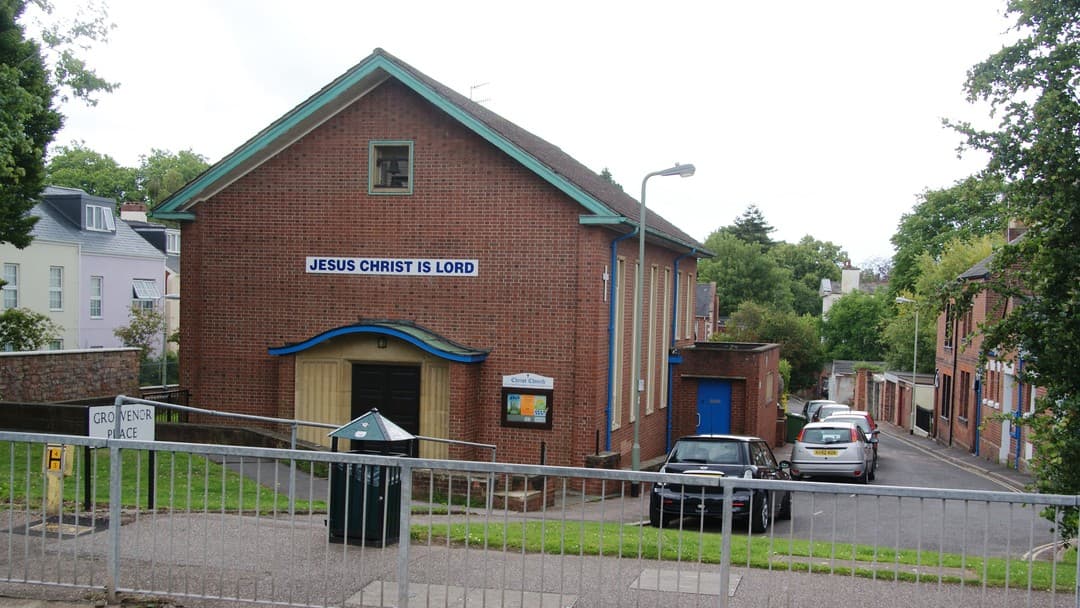
High Court determines ownership of Exeter church buildings following congregation's departure from denomination.
The High Court has ruled that a breakaway Exeter congregation's parish trustees hold no independent claim to church buildings after the congregation left the Free Church of England (FCE), in a judgement examining more than a century of trust deeds governing nonconformist church property.
In The Free Church of England Central Trust v Revd Steven Hanna & Ors [2026] EWHC 2260 (Ch), Master Brightwell considered a dispute arising after the congregation of Christ Church Exeter voted in 2023, for the second time, to leave the FCE, a denomination formed in the mid-nineteenth century out of the evangelical Connexion associated with the Countess of Huntingdon. The claimant, the corporation acting as the FCE's central trustee, sought a ruling on the ownership of the buildings the congregation continued to occupy, comprising the church itself at Grosvenor Place, an adjoining schoolrooms building now used as a nursery, and a former manse.
The first defendant, Revd Steven Hanna, had been appointed minister of Christ Church Exeter in 2020, though his appointment was later revoked and his permission to officiate withdrawn in 2022. He continued to lead the congregation, which the third and fourth defendants, trustees of the locally registered charity Christ Church Exeter, described as being in good standing and numbering more than thirty worshippers.
The central legal question concerned the effect of a chain of nineteenth and twentieth century instruments, beginning with an 1863 deed poll establishing the FCE's doctrinal basis, followed by trust deeds from 1908, 1911 and a 1962 Charity Commission scheme, on the terms upon which the properties were held. The defendants argued that the claimant acted merely as custodian trustee, with management resting instead with the trustees of Christ Church Exeter under a constitution adopted in 2010 when the congregation registered separately as required by charity law reforms.
Master Brightwell rejected that argument, finding that the claimant held the Original Church Site, the adjoining Laburnum Cottage Site and the schoolrooms as charity trustee rather than mere custodian, given the extensive management powers, including powers to demolish, rebuild and mortgage, conferred by the 1908 deed. He further held that the 2010 constitution, silent as to any specific property, had no effect on the pre-existing trusts. The position regarding the former manse on Pinhoe Road was left open pending further submissions, after late disclosure suggested it may have been acquired using proceeds from the sale of a separate FCE property.
A significant portion of the judgement addressed the proper construction of the phrase "in union with" in the 2010 constitution's objects clause, which required the charity to advance the Christian faith "in union with and according to the Principles and practices" of the FCE. The defendants contended that adherence to the FCE's founding principles, which they said the denomination's bishops had since abandoned in an Anglo-Catholic direction, satisfied that requirement even without formal membership of the FCE's structures. Master Brightwell disagreed, holding that the clause imposed two distinct requirements, including continuing membership of the FCE as an organisational body, and that the defendants' construction would render extensive references to FCE governance throughout the constitution meaningless.
The judge declined to resolve the wider theological dispute over whether the FCE's leadership had departed from the denomination's fundamental doctrines, a question raised by reference to Shergill v Khaira [2015] AC 359, noting that no such issue arose for determination on the preliminary issues before him, though the point remains open for further argument.
 Copyright & permissions




.jpg&w=3840&q=60)