
Europe’s anti-corruption alliance: a shift in global enforcement leadership?
By Lloyd Firth
Lloyd Firth examines the UK, France and Switzerland's new anti-bribery taskforce and what it signals about shifting global enforcement priorities
The UK, France and Switzerland’s respective anti-corruption agencies have long been active in Europe and have a track record of working closely and well together.
High-profile bribery settlements with companies on which the Serious Fraud Office (SFO) and Parquet National Financier (PNF) have collaborated include Rolls Royce in 2017 and Airbus in 2020. A joint investigation into the Thales Group by the SFO and PNF was announced in November 2024.
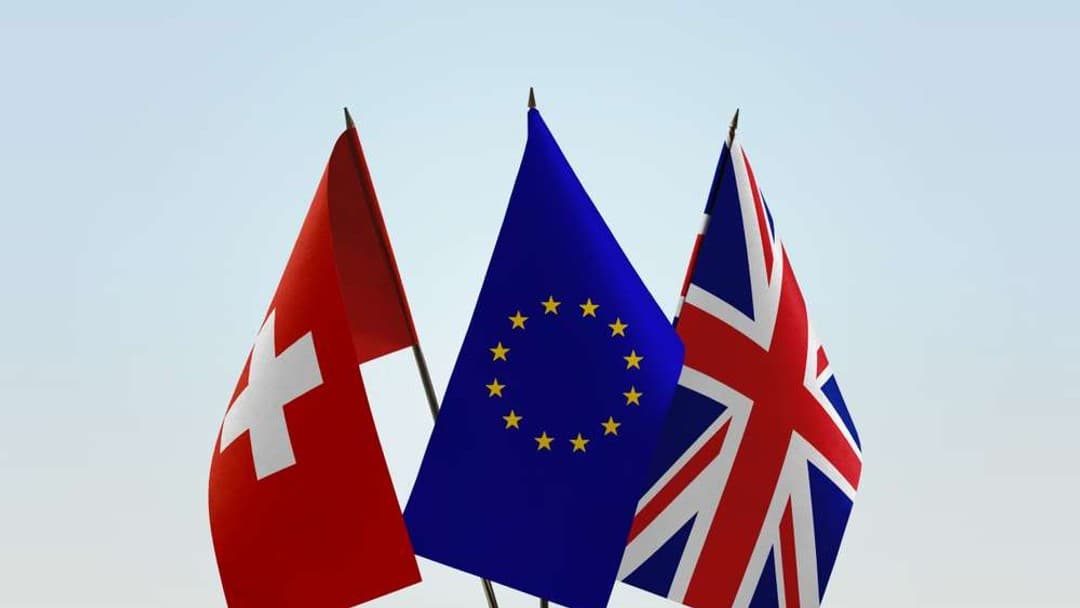
On 20 March 2025, the agencies announced a shared commitment to tackling international bribery and corruption, by establishing a new taskforce intended to strengthen collaboration. The Taskforce’s founding statement recognises “the significant threat of bribery and corruption”, that “the threat is complex and international in nature” and that its members recognise that “success relies on us working closely and effectively together”. It intends to deliver a leaders’ group focused on the exchange of insight and strategy and a working group for case cooperation, increased best practice sharing and seizing opportunities for operational collaboration.
The Taskforce’s creation follows efforts in recent years by European agencies to develop a broader toolkit of enforcement powers such as deferred prosecution agreements, long available in the United States and the UK, more recently introduced in France, and builds upon increasing collaboration among these agencies over recent years.
The alliance highlights the increasing role of European regulators in leading multi-jurisdictional bribery cases, potentially reducing the US Department of Justice (DOJ)’s historical dominance in such investigations.
The founding statement is clear that this initial tripartite Taskforce is only the start of an anticipated broader alliance, expressly leaving open the possibility of “other like-minded agencies” being invited to join the Taskforce by mutual agreement.
The Director of the SFO, Nick Ephgrave, said that this commitment “reaffirms our individual and collective commitment to tackling the pernicious threat of international bribery and corruption, wherever it occurs.” Sounding a note of caution to companies operating in Europe he went on, “We will make use of every power and partnership available to confront this criminality.” His comments were echoed by Jean-François Bohnert, Head of the PNF, who said that the Taskforce will “strengthen our current cooperation in order to fight more efficiently against bribery and corruption in individual cases.”
The announcement is light on implementing detail, which is likely a reflection of the Taskforce’s significance being more in its symbolism and its timing rather than its practical effect. The Taskforce announcement is evidently an attempt to positively distinguish the anti-corruption enforcement dynamic in each of the UK, France, and Switzerland from that of the United States with regards to the DOJ’s current enforcement posture on the Foreign Corrupt Practices Act (FCPA).
 Copyright & permissions
.jpg&w=3840&q=60)

-cropped-6au25meu.jpg&w=3840&q=60)


.JPEG&w=3840&q=60)