Dillon and others v Secretary of State for Northern Ireland: Supreme Court rules on the Legacy Act's compatibility with the Windsor Framework and ECHR
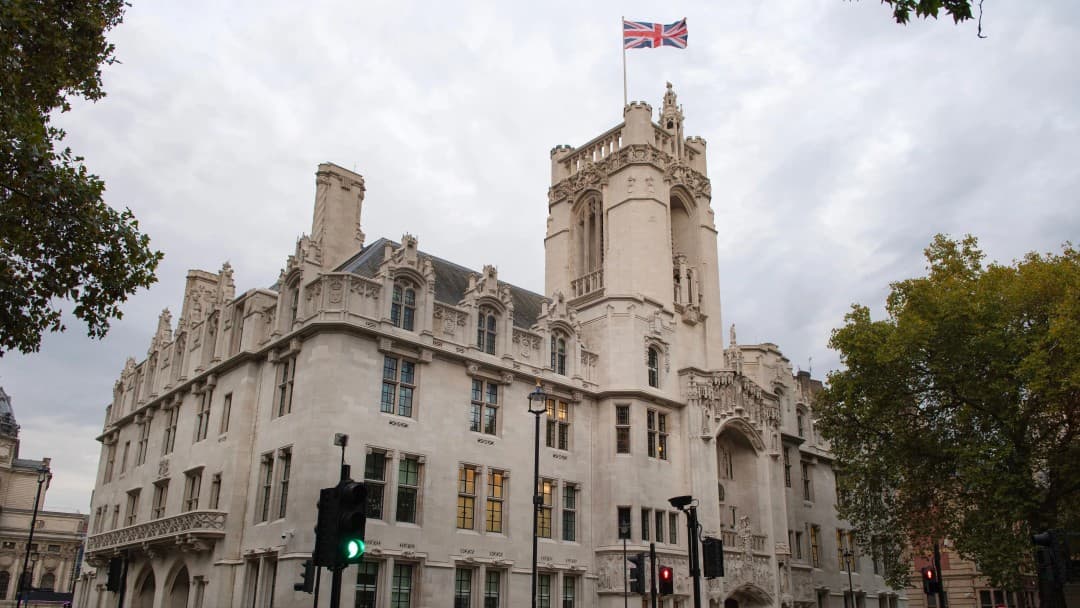
The Supreme Court upholds key legacy incompatibility declarations but overturns the Court of Appeal on next-of-kin participation and Windsor Framework disapplication.
The Supreme Court delivered its judgement on 7 May 2026 in Dillon and others v Secretary of State for Northern Ireland [2026] UKSC 15, resolving a series of fundamental constitutional questions about the Northern Ireland Troubles (Legacy and Reconciliation) Act 2023 ("the 2023 Act"). The proceedings were brought by four victims of Troubles-related violence challenging the Act's immunity scheme, its restrictions on civil proceedings, and the capacity of the Independent Commission for Reconciliation and Information Recovery ("ICRIR") to conduct article 2-compliant investigations.
The Secretary of State's appeal was allowed on two of the three main grounds. The cross-appeal by the applicants was dismissed in its entirety.
Windsor Framework: disapplication refused
The central question under the first ground was whether the immunity provisions of the 2023 Act should be disapplied by virtue of article 2(1) of the Windsor Framework, read with section 7A of the European Union (Withdrawal) Act 2018. The applicants contended that rights under articles 11 and 16 of the Victims Directive — concerning the right to review a decision not to prosecute and the right to a compensation decision within criminal proceedings — had been diminished by the Act.
The court found that neither the Victims Directive nor the broader provisions of the Rights, Safeguards and Equality of Opportunity chapter of the Belfast Agreement gave rise to directly effective rights capable of precluding the immunity scheme. Crucially, articles 11 and 16 of the Directive are concerned with prosecutorial discretion in individual cases, not with national legislative policy on immunity or reconciliation. A parliamentary decision to grant immunity across a class of cases falls outside the Directive's scope entirely. The declarations of disapplication made by the High Court and affirmed by the Court of Appeal were accordingly set aside.
The Charter ground fared no better. The court confirmed that the EU Charter of Fundamental Rights requires an "anchor" in a provision of EU law being implemented before it can apply to member states — a position equally applicable to the United Kingdom under the Windsor Framework framework. No such anchor existed here, and the Charter provided no freestanding justiciable basis for disapplication.
ICRIR: next-of-kin participation and disclosure
The Court of Appeal had granted a "simple declaration" that the ICRIR was presently incapable of discharging the article 2 investigative obligation, citing the absence of legal aid, the lack of express provision for questioning of witnesses, and the Secretary of State's effective veto over the disclosure of sensitive information. A further declaration of incompatibility was made in respect of the disclosure provisions and, consequently, section 44 (which brought legacy inquests to a halt).
The Supreme Court set all three declarations aside. Applying the established ab ante test — requiring the applicants to demonstrate a failure to comply with the investigative obligation "in all or almost all cases" — the court held that the threshold had not been met. The ICRIR operates as an inquisitorial body under a duty in section 13(1) to comply with the Human Rights Act, including the article 2/3 investigative obligation. Whether legal assistance is required, what form it should take, and whether any particular disclosure decision impairs the investigation's independence and effectiveness are all matters to be assessed on the facts of a concluded review.
The court also corrected what it characterised as the Court of Appeal's error in measuring the ICRIR against the adversarial legacy inquest model rather than against the Convention minimum standard itself. There is no Strasbourg authority requiring adversarial proceedings with publicly funded representation and cross-examination of witnesses.
Declarations of incompatibility: undisturbed
The declarations of incompatibility under articles 2, 3 and 6 of the Convention — covering the immunity provisions in sections 7(3), 12, 19–22, 39, 41 and 42(1), the blanket bar on civil claims in section 43, and the evidential exclusion in section 8 — were not challenged on appeal and remain in force. The Secretary of State had abandoned those grounds before the Court of Appeal delivered its judgement following the change of government in July 2024.
The court briefly addressed the Veterans Movement's intervention on the reconciliation exception in Strasbourg jurisprudence. Reviewing Dujardin, Tarbuk, Ould Dah and Marguš, it concluded that the Strasbourg court has left the question open but has not recognised a reconciliation exception. Absent such a ruling, the mirror principle offers no domestic basis for incremental development.
The Northern Ireland Troubles Bill, introduced in Parliament on 14 October 2025 to repeal and replace the 2023 Act, was noted but did not affect the court's determination of the issues.
 Copyright & permissions