Crown Court analysis aims to reduce backlog
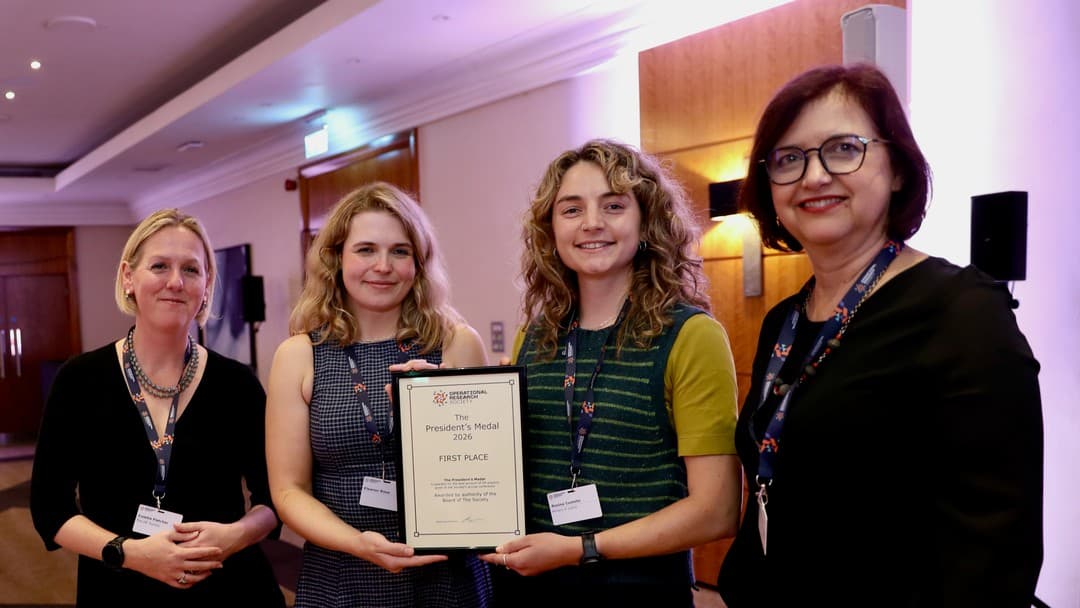
Award-winning analysis from a Ministry of Justice team could potentially free up 27,000 Crown Court sitting days a year
The Ministry of Justice has made a significant impact on the notorious backlog within the Crown Court system, achieving recognition from the Operational Research Society by winning the esteemed President’s Medal. This prestigious accolade acknowledges innovative modelling work that could transform how the criminal justice system in England and Wales processes cases. Presented during the OR Society’s annual conference at the University of Nottingham in September, the award celebrates the leadership and measurable impact of the analysis team, composed of Rosina Costello, Joe Richardson, Eleanor Rose, Jessica Day, and Ceri Cooper.
The analysis team tackled one of the most pressing dilemmas facing the legal system: a climbing backlog that has more than doubled since 2019. The mounting caseload has led to severe delays for victims and defendants alike. Faced with proposed reforms to the criminal courts, the Ministry of Justice team devised a robust microsimulation approach to model how these changes might influence court demand, capacity, and ultimately alleviate the backlog. The modelling was crucial in allowing the government to evaluate the proposed changes quickly and effectively.
Beyond just the courtroom, their comprehensive analysis also considered the repercussions for prisons, examining the potential effects on both remand and sentenced prisoner populations. This wide-ranging impact assessment underpinned government policy, offering critical insights that informed ministers responding to Lord Leveson’s Independent Review of the Criminal Courts. The findings were published when the Court and Tribunal Bill was introduced to Parliament in February 2026, predicting that the proposed reforms might liberate up to 27,000 sitting days annually.
Dr Colette Fletcher, Executive Director of The OR Society, emphasized the importance of this work by stating, “The Crown Court backlog has very real consequences for victims, defendants and everyone working across the criminal justice system." She highlighted how Operational Research techniques could guide decision-makers in understanding the practical implications of different reforms.
Rosina Costello echoed this sentiment, expressing her team’s delight in receiving the President’s Medal. “Behind the numbers are victims and defendants waiting for cases to be resolved,” she noted. “It was important that our modelling helped decision makers understand which reforms could make a real difference.” The acknowledgment of their endeavours and the broader analytical community's supportive work marks a significant commendation of efforts aimed at improving a crucial sector of society.
The Ministry of Justice team received this honour amidst stiff competition from other finalists, showcasing the diverse range of challenges being addressed through Operational Research. Microlise, an AI-driven platform for logistics, and researchers from Aston University and the University of Tokyo, known for their work in cybersecurity and intelligent transport, were also recognised for their innovative contributions. As rightly noted, the successful application of Operational Research continues to hold promising potential for enhancing various facets of government, business, and societal issues.
 Copyright & permissions