

Court of Appeal overturns relocation refusal and travel ban in Re S-O
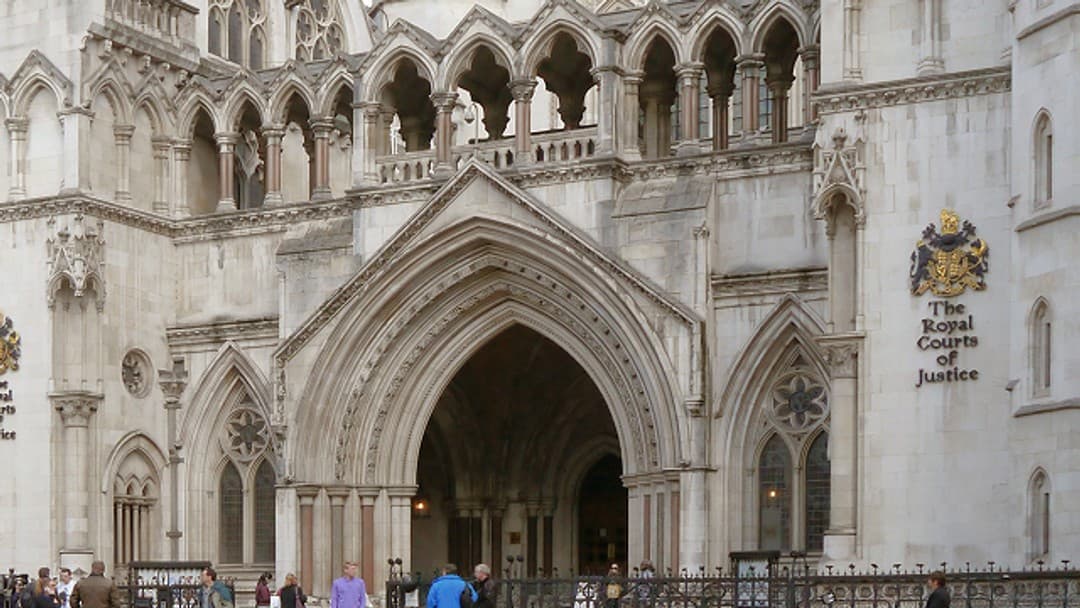
Appeal judges find welfare analysis insufficient and discharge order barring son's travel to see mother abroad.
The Court of Appeal has allowed a mother's appeal against a decision refusing to let her daughter relocate abroad with her and discharged a prohibited steps order preventing her son from visiting her there, finding the trial judge's welfare analysis fell short of what the law requires.
In Re S-O (Children) (Relocation and Prohibited Steps Order) [2026] EWCA Civ 998, Lord Justice Moylan, with whom Lord Justice Lewison and Lord Justice Stuart-Smith agreed, held that Her Honour Judge Major had failed to conduct the comparative welfare balancing exercise required when determining a relocation application, and that her decision to continue a prohibited steps order against the appellant's teenage son was not supported by the evidence.
The case concerned two children, a 14 year old boy referred to as S and his six year old half sister referred to as C, who have different fathers, referred to as F1 and F2. The mother had taken up employment in the Middle East, eventually settling in a Gulf state not party to the 1980 Hague Child Abduction Convention, and applied for both children to relocate to live with her there. An independent social worker recommended that S remain in England with his father while C move with her mother, a recommendation the mother ultimately accepted in relation to S. The trial judge nonetheless refused the relocation application in respect of C and continued a prohibited steps order preventing S from even travelling to visit his mother abroad.
The Court of Appeal found that the trial judge, despite correctly identifying the need for a comprehensive welfare analysis comparing the competing options, had in substance only examined the case for relocation and failed to weigh it against the alternative of the existing arrangements continuing, an approach the judgement held was inconsistent with the guidance set out in Re F (A Child) (International Relocation Case) [2015] EWCA Civ 882 and Re G (Care Proceedings: Welfare Evaluation) [2013] EWCA Civ 965. The judge had also failed to grapple with the independent social worker's evidence that the existing pattern of intermittent maternal care, resulting from the mother's demanding travel schedule, was itself detrimental to the children's welfare, and had not addressed an alternative proposal that C live with her father.
The appellate court further found that several criticisms the trial judge had levelled at the mother, including that she had unilaterally reduced proposed contact and changed school arrangements for C, overlooked that these changes followed the social worker's own recommendations and a prior court order permitting the mother to make educational arrangements without the father's consent.
On the prohibited steps order, the Court of Appeal held that the risk of the mother wrongfully retaining S abroad was not supported by the evidence once she had agreed he would remain in England, and that the judge had failed to weigh the benefits to S of visiting his mother against a risk the "red flags" identified did not substantiate. The court noted that any wrongful retention would still expose the mother to enforceable consequences in England, given her family, assets and career remained rooted there, providing a strong practical disincentive.
Because the trial judge's factual findings, including her rejection of the mother's domestic abuse allegations against F2, were held to be integral to the flawed welfare analysis, the Court of Appeal directed that the relocation application be reheard entirely afresh before a High Court judge, with none of the earlier findings preserved, while ordering that the prohibited steps order be discharged with immediate effect.
 Copyright & permissions










.jpg&w=3840&q=60)

