Chady Aero Developments: High Court orders security for costs against balance sheet insolvent aviation claimant
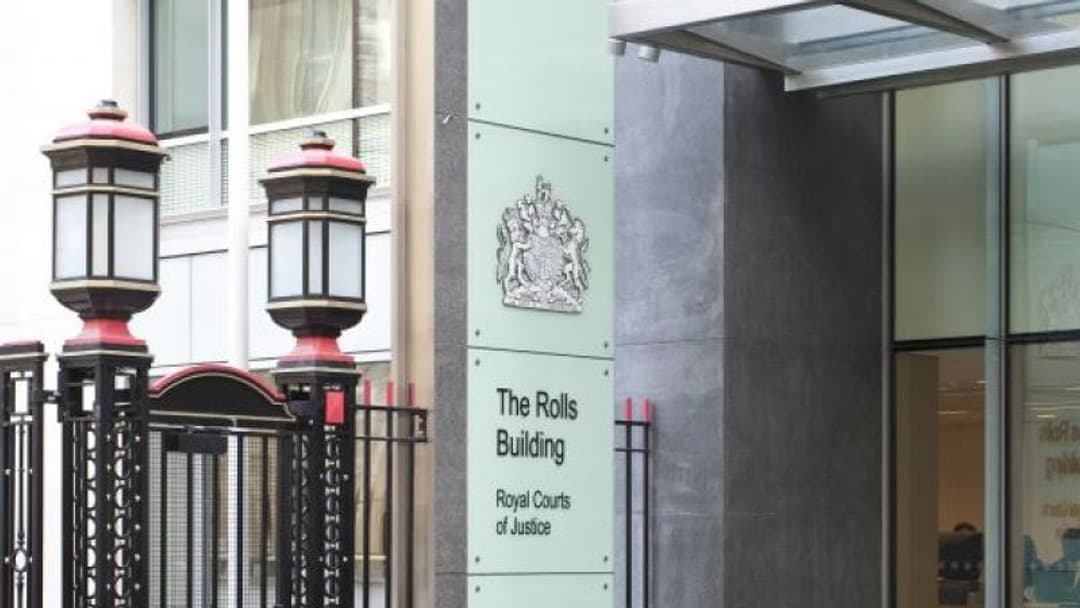
A Scottish aviation company has failed to resist a security for costs order after the High Court found its financial position fundamentally compromised and its directors' undertakings unenforceable.
Master Clark, sitting in the Business and Property Courts, handed down judgement on 5 June 2026 in Chady Aero Developments Ltd v Aero Engine Finance LLP [2026] EWHC 1271 (Ch), ordering security for costs against the claimant following a two-hearing application that exposed significant evidential difficulties on the part of Chady Aero.
The underlying claim, brought in the King's Bench Division in April 2023 and later transferred to the Chancery Division, seeks some £1.18 million arising from two aviation investment projects managed through the defendant limited liability partnership: a flight simulator project (the SIM project) and an aircraft engine parts resale venture (the AJ Walters project). The defendant contests the majority of the claim and seeks to set off losses from a further project involving a loan agreement with Air Méditerranée.
Impecuniosity and the collapse of the claimant's evidence
The application was grounded in the non-residence condition under CPR 25.27(b)(i), accepted at the first hearing without contest, and the impecuniosity condition under CPR 25.27(b)(ii). A forensic report from insolvency practitioner Ian Yerrill concluded that Chady Aero was balance sheet insolvent, its principal apparent asset being a shareholding in Natterbox Limited, itself insolvent and dependent on group support from a heavily indebted holding company.
That picture deteriorated further between hearings. Following the first hearing, the defendant obtained evidence demonstrating that Chady Aero was not in fact a shareholder in Natterbox at all. The claimant's director, Henry Page, acknowledged in a subsequent witness statement that this contradicted both his earlier recollection and the company's filed accounts, though he offered no explanation for the discrepancy. Any reliance on the value of shares in Natterbox's holding company was expressly abandoned at the second hearing.
The claimant advanced three further arguments against a finding of impecuniosity. Cash at bank of £56,000, diminished by £24,000 on the prior year, was found insufficient. A debt of £308,254 said to be owed by Natterbox's CEO personally was unsupported by the company's accounts, which characterised the relevant entry as a "deferred tax asset" rather than a personal debtor. Master Clark declined to accept the debt as a realisable asset.
Directors' undertakings not to call in loans totalling over £2.39 million were found to provide no adequate protection. Henry Page is resident in France and Diane Roth le Gentil in Switzerland. The enforceability of the 1934 UK-France Convention on the recognition of judgements was found uncertain in the post-Brussels Regulation, post-Brexit landscape, and no Swiss enforcement mechanism was placed before the court. The undertakings were in any event vulnerable to assignment, breach without notice, and the supervening effect of personal insolvency proceedings.
The Crabtree question
The claimant raised the well-established principle from B.J. Crabtree v GPT Communication Systems (1990), arguing that the defendant's counterclaim arose from the same accounting exercise as the claim itself, making a security order unjust. Master Clark acknowledged the submission had force. He resolved it by making the grant conditional on the defendant undertaking to consent to dismissal of its counterclaim should the claim be struck out for non-compliance with the security order, following the approach taken in Cedar Mundi (Holding) SAL v Attieh [2025] EWHC 1930 (Comm).
On delay, the court accepted that the defendant had not acted with full promptness, noting the claim had been issued in April 2023. However, the claimant indicated through counsel that it would pay any security ordered rather than allow the claim to be struck out, which effectively negated any prejudice argument.
The amount of security and method of provision were reserved for further submissions.
 Copyright & permissions
.png&w=3840&q=60)








.jpg&w=3840&q=60)