Carl v Limbani: Court of Appeal upholds no order as to costs against dishonest but successful defendant
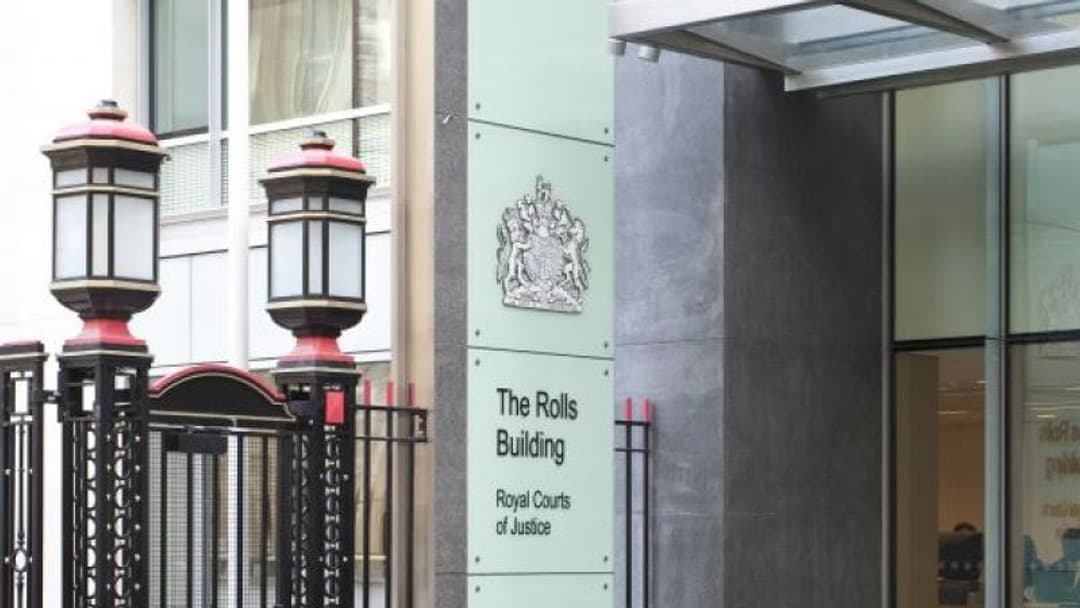
Successful defendant denied costs for dishonest conduct despite a procedural error at the consequentials hearing.
The Court of Appeal has upheld an order denying a successful defendant his costs, holding that although the trial judge committed a serious procedural error in refusing to hear argument, the same result followed once the discretion was exercised afresh.
In Carl v Limbani [2026] EWCA Civ 856, Mr Limbani had successfully defended a claim arising from an elaborate fraud involving historic sports cars, in which the principal wrongdoer, a car dealer named Richard Edwards, took money for vehicles and diverted it. Mr Carl's claim against Mr Limbani in conversion and conspiracy failed for want of sufficient evidence and because of findings as to the limited capacity in which he had acted. Despite that success, the deputy judge indicated that there should be no order as to costs.
The costs indication had been expressed as a preliminary view, given before any submissions, on the basis that Mr Limbani had escaped scrutiny of his conduct through evasion and non-disclosure. At the consequentials hearing five months later, however, the judge treated the point as already decided and declined to hear counsel for Mr Limbani on it, telling him the door was closed and that his remedy lay in the Court of Appeal.
Giving the leading judgement, Foxton LJ accepted that this was a serious procedural irregularity within CPR 52.21(3)(b). A provisional view reached without argument was precisely that, and refusing to hear the submissions the parties had been promised required the order to be set aside. The court therefore approached costs afresh, declining Mr Carl's suggestion that the judge's provisional view should serve as a starting point, since a view expressed without hearing argument could not shape the appellate task.
The factual findings about Mr Limbani's conduct remained binding unless independently displaced, and his challenges to them largely failed. The dishonesty findings concerned pleaded issues on which he had been cross-examined, and rested on the improbability of his explanations rather than his demeanour, so his medical evidence provided no answer. An attempt to characterise a police officer's account of a recorded telephone conversation as inadmissible hearsay was dismissed as devoid of merit, the authenticity of the document never having been challenged and the judge having relied on it only to establish undisputed facts. Findings about disclosure failures were left aside, but the more fundamental point stood: Mr Limbani's defence and witness statement had given a misleading, minimalist account of an involvement that was in fact far greater.
Surveying the authorities, including Widlake, Ward v Donnellan and Bank of Tokyo-Mitsubishi, Foxton LJ reaffirmed that a successful party's reprehensible conduct may justify departing from the ordinary rule, whether to address the costs consequences of dishonesty, as a proportionate sanction irrespective of those consequences, or because the conduct led the other side to bring or pursue the claim. The court must weigh the conduct of the party seeking the order too.
Applied here, both strands pointed the same way. Mr Limbani's false account to the police, including a statement about a Ferrari that had never existed, was an important reason Mr Carl pursued him and could be said to have brought the proceedings on himself, while his dishonest evidence at trial warranted a sanction in any event. Mr Carl, by contrast, had been found blameless, and his hope of settling the claim in exchange for evidence against others did not taint an otherwise viable action that had succeeded factually to a significant extent.
Reaching the same conclusion as the judge, the court dismissed the appeal.
 Copyright & permissions