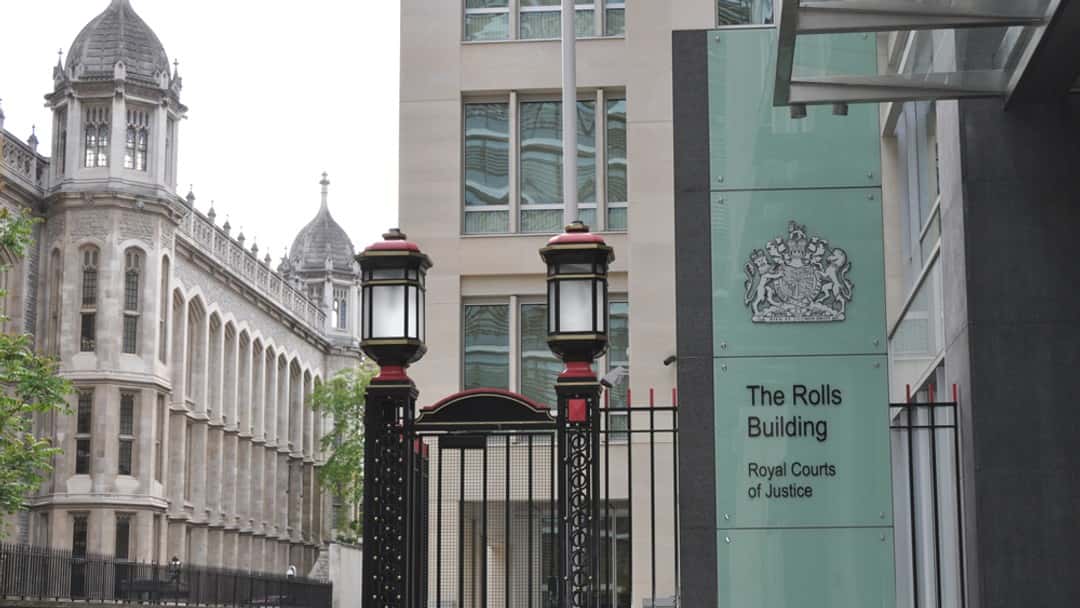
Bargain Busting Limited v Shenzhen SKE Technology: Court of Appeal clarifies section 12(3) threshold for unjustified threats injunctions
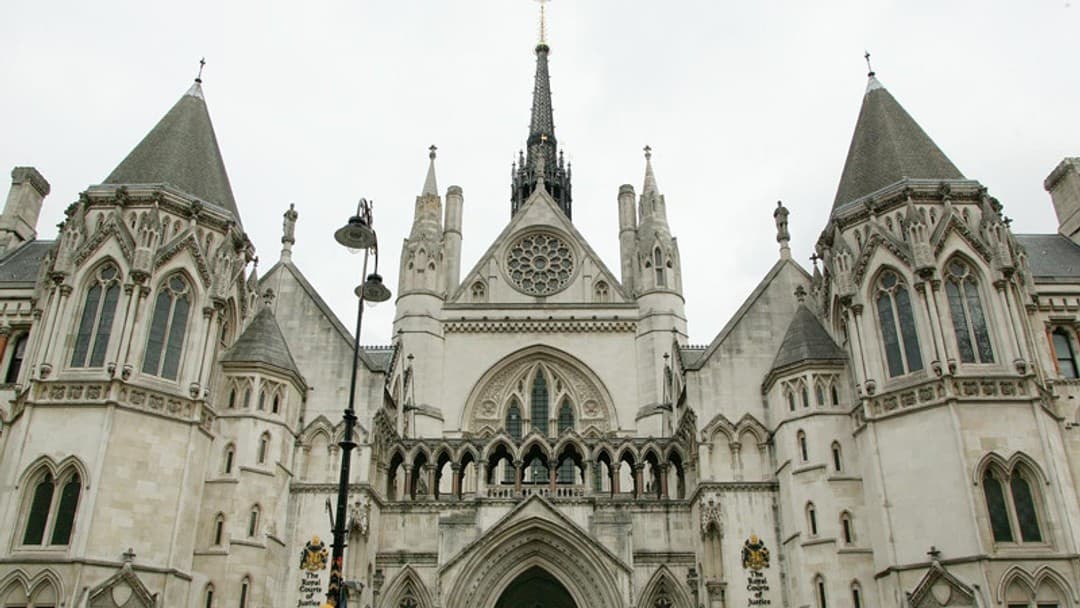
Court of Appeal holds that the "more likely than not" standard under the Human Rights Act 1998 applies to interim injunctions restraining trade mark threats.
The Court of Appeal has allowed an appeal by Bargain Busting Limited ("BBL") against an interim injunction that had restrained it from making threats of trade mark infringement proceedings against distributors of a rival vaping brand. The judgement, handed down on 8 May 2026 ([2026] EWCA Civ 532), resolves what appears to be the first reported case in which section 12(3) of the Human Rights Act 1998 has been considered in the context of an application to restrain allegedly unjustified threats under the Trade Marks Act 1994.
BBL, the registered proprietor of three United Kingdom trade marks relating to electronic cigarettes — including marks incorporating the words CRYSTAL CLEAR VAPOURS and CRYSTAL BAR — had written letters before claim to eleven distributors, wholesalers and retailers of products supplied by the respondent, Shenzhen SKE Technology Co Ltd ("SKE"). Those December 2024 letters asserted infringement and threatened joinder proceedings. SKE, whose validity challenges to the marks raised serious issues to be tried, applied for an interim injunction to restrain further threats.
Miles J granted the injunction at first instance, having proceeded on the basis that section 12(3) applied but that the circumstances warranted a lower merits threshold than the "more likely than not" standard ordinarily required under Cream Holdings Ltd v Bannerjee [2004] UKHL 44. The judge reasoned that unjustified threats cases were likely to fall within an exceptional category, given that losses could be rapid and a higher threshold would place too significant a barrier before applicants.
The Court of Appeal, comprising Lord Justice Arnold, Lady Justice Elisabeth Laing and Lord Justice Warby, disagreed. Delivering the leading judgement with which both Lady Justice Laing and Lord Justice Warby agreed, Lord Justice Arnold confirmed that the principles articulated in Cream Holdings apply with full force in this context. The general rule — that a court should be exceedingly slow to grant interim restraint where the applicant has not demonstrated it will probably succeed at trial — admits of exceptions, but only where the potential adverse consequences are particularly grave, or where a short-lived order is needed to enable a properly constituted application to be heard.
Neither exception was engaged on the facts. SKE had adduced no evidence of actual sales lost following the December 2024 letters. The judge had not found either a strong likelihood of further threats being made or a strong risk of lost sales, and had made no finding that any consequences would be particularly grave. The urgency with which SKE had pursued relief — filing its application in January 2025 without seeking expedited hearing or interim measures pending determination — was itself inconsistent with the kind of grave potential consequences that would justify departure from the general rule.
Lord Justice Arnold also rejected two further arguments advanced for SKE. The suggestion that the restraint on expression was only limited in this context, and therefore warranted a modified approach, found no support in Lord Nicholls' speech in Cream Holdings, which framed section 12(3) as a matter of statutory interpretation intended to be of general application. Equally, the concern that applying the higher threshold would turn interim applications into mini-trials was dismissed: section 12(3) necessarily requires the court to assess relative prospects of success, and courts retain appropriate case management discretion to keep such hearings proportionate.
The appeal was allowed and the injunction set aside. The underlying proceedings — including BBL's infringement claims and SKE's validity challenges across all three marks — remain listed for trial in March 2027.
The case is significant in confirming that applicants for interim injunctions to restrain trade mark threats face the same substantive merits threshold under section 12(3) as applicants in other restraint-of-publication contexts. The unjustified threats regime, however important as a protection against tactical misuse of intellectual property rights, does not of itself create the kind of particular gravity that would lower the bar set by Cream Holdings.
 Copyright & permissions