ABC v Huntercombe: Court of Appeal rules vicarious liability does not transfer under TUPE
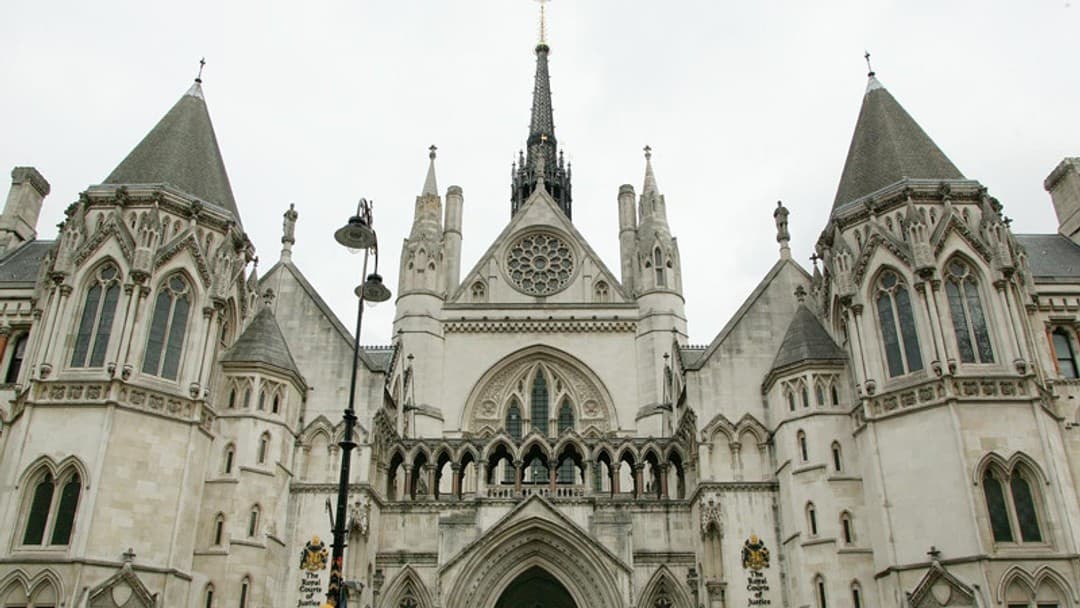
Court of Appeal confirms employers' vicarious liability to third parties is not transferred under TUPE.
The Court of Appeal has ruled that an employer's vicarious liability to a third party for the alleged torts of its staff does not pass to a new employer following a TUPE transfer, in a judgement expected to shape more than 50 related claims arising from alleged abuse at a former psychiatric hospital.
In ABC v Huntercombe (No.12) Limited & Ors [2026] EWCA Civ 1161, the appellant, referred to as ABC, brought a claim for damages over alleged mistreatment during a four month placement at Huntercombe Hospital in Maidenhead in 2018 and 2019. She alleges she was mentally and verbally abused and restrained on more than 200 occasions.
Huntercombe, the hospital's former operator, is now in liquidation, and its public liability insurance carries a £250,000 deductible per claim, a sum expected to absorb most or all of any award. ABC therefore joined Active Young People Limited (AYPL), which took over operations under a TUPE transfer in March 2021, along with the two doctors alleged to have been responsible for her care. Her case rested on the argument that AYPL had inherited Huntercombe's vicarious liability for the doctors' alleged conduct by virtue of Regulation 4(2)(a) of the Transfer of Undertakings (Protection of Employment) Regulations 2006.
HHJ Bird, sitting in the King's Bench Division, had rejected that argument on preliminary issues, finding no transfer of liability, though he indicated that any right to claim on Huntercombe's insurance policy would have transferred had he found otherwise. ABC appealed with permission granted by Singh LJ.
Giving the leading judgement, with which Bean LJ and Sir Launcelot Henderson agreed, Coulson LJ dismissed the appeal. He held that the Acquired Rights Directive, from which the TUPE Regulations derive, exists primarily to safeguard rights that employees can enforce against their employer, and that vicarious liability creates no such right. As he put it, an employee has no entitlement to their employer being vicariously liable for their own acts and omissions; the liability is instead a secondary one owed to the third party claimant, distinct from any protection afforded to the employee.
Coulson LJ also pointed to the structure of the Regulations themselves. Regulation 11 requires a transferor to disclose to the transferee detailed information about claims brought by employees, with sanctions for non-compliance, yet no equivalent mechanism exists for claims brought by third parties. He regarded that omission as deliberate rather than accidental, noting it would be anomalous for a transferee to inherit potentially substantial liabilities about which it had no right to be informed.
The court distinguished the authorities relied upon by the appellant, including Bernadone and Baker v British Gas Services, on the basis that those cases concerned liabilities owed directly by employers to their own employees, rather than liabilities owed to unconnected third parties. A county court decision reaching the opposite conclusion, Doane v Wimbledon FC, was considered and declined to be followed, with Coulson LJ finding it failed to grapple with the absence of any underlying employee right capable of transfer.
With a case management conference for the wider group of claims due in the autumn, the judgement was handed down with that timetable specifically in mind, and is likely to inform how claimants navigate corporate insolvency and historic institutional abuse allegations in similar contexts going forward.
 Copyright & permissions





.jpg&w=3840&q=60)