

ZZZ v Ministry of Defence: Court of Appeal affirms occupier's duty to soldier after barracks fall
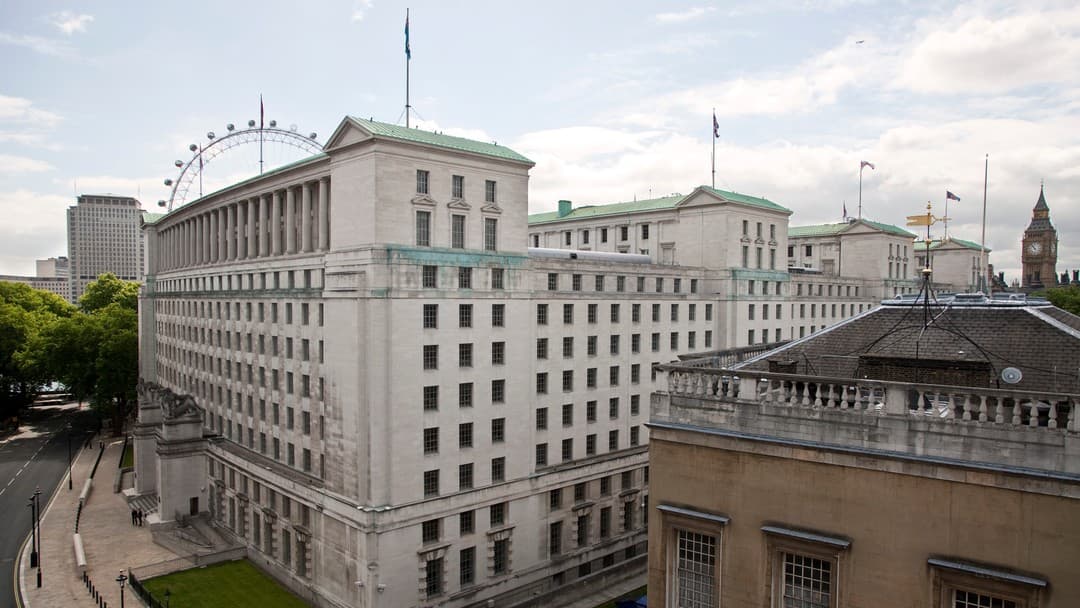
Court of Appeal dismisses MoD appeal over Rifleman's barracks fall and affirms occupier's duty.
The Court of Appeal has upheld a finding that the Ministry of Defence breached its duty to an 18-year-old soldier who suffered a serious brain injury falling over a low landing balustrade at his barracks, rejecting the argument that his conduct had stripped him of the protection of the Occupiers' Liability Act 1957.
In ZZZ v Ministry of Defence [2026] EWCA Civ 875, Lord Justice Stuart-Smith, with whom King and Falk LJJ agreed, dismissed all six grounds of appeal against the decision of HHJ Simon, who had found for the claimant with no reduction for contributory negligence. The Rifleman fell in the early hours at Bulford Army Base in March 2019, after a night's drinking, when he and a fellow soldier became entangled in what the judge characterised as intoxicated horseplay on a second-floor landing. The balustrade guarding it, installed around 1939, stood at roughly 900 millimetres.
The central challenge was to the judge's findings of fact. Applying the familiar restraint articulated in Fage v Chobani and Prescott v Potamianos, the court held that the judge had been entitled to find the incident a playfight involving no great force and no malice, despite the claimant's own inconsistent accounts. Those inconsistencies, the product of a brain injury and alcohol, did not undermine the hearsay statements of two fellow Riflemen that supported the finding. The court noted pointedly that the Ministry had served those statements yet declined to call their makers or supply contact details, leaving them untested, and had chosen not to serve its own falls expert. Stuart-Smith LJ declined to draw an adverse inference, finding it unnecessary, but recorded that the claimant's expert evidence on fall mechanics stood uncontroverted.
On the occupiers' liability ground, the court rejected the contention that the claimant had become a trespasser by misbehaving. The proposition that a lawful visitor forfeits the occupier's duty whenever he does something the occupier would ask him to stop was, the court held, far too wide, and James v White Lion Hotel did not support it. The result would be unworkable: the duty in respect of the balustrade could not sensibly vanish only for the seconds of the struggle and revive the next morning had the soldier stumbled against the same rail. The common duty of care was owed throughout. With that conclusion, and the finding that no criminal offence had been committed, the ex turpi causa ground fell away, and would have failed in any event where any illegality was merely one of several causes.
The court was equally firm that the balustrade presented a danger the Ministry should have identified. The evidence was described as overwhelming, including the post-accident risk assessment rating a fall from height in the highest categories for likelihood and severity, the safety officer's acceptance that the risk looked "horribly obvious" once seen, and an internal notice recording that low bannisters across the retained estate posed a severe risk. The finding was not the product of hindsight; the question was whether the danger should have been recognised.
The causation challenge failed because it rested on a premise of a forceful push that the judge had not found, and the contributory negligence ground did not survive either. The claimant's use of a headlock accorded with his training in de-escalation, and he could not be faulted for failing to perceive a danger that the Ministry's own risk assessments had missed.
 Copyright & permissions








.jpg&w=3840&q=60)


