Wood v Fleming: Court of Appeal dismisses contempt appeal and calls for reform of contemnors' right of appeal
Court of Appeal dismisses contempt appeal as totally without merit and calls for long-overdue law reform.
The Court of Appeal (Civil Division) has dismissed an appeal by Sophie Fleming against suspended committal orders imposed for contempt of court arising from multiple breaches of harassment injunctions obtained by the executors and administrators of her late partner's estate, in a judgement handed down on 25 June 2026 ([2026] EWCA Civ 780). The appeal was certified as totally without merit.
The proceedings have their origin in the death on 31 December 2023 of Brendan Fleming, a prominent Birmingham solicitor described by the trial judge as "a giant of the Birmingham legal community." Mr Fleming left a will appointing his accountant Richard Wood and a colleague, Rebecca Ward, as executors, and placing the residue of his estate on trust for his six children with Ms Fleming. Her sole interest under the will was a right to occupy certain Turkish property.
Following Mr Fleming's death, Ms Fleming mounted a series of challenges to the administration of his estate, contending variously that the English courts lacked jurisdiction, that the will was invalid, and that the executors had conspired to defraud her children. Those challenges were dismissed at every turn by HHJ Tindal sitting as a judge of the High Court, who also found Ms Fleming liable for harassment and granted injunctions restraining her from harassing the executors and, later, the court-appointed administrators.
At the committal hearing in January 2026, HHJ Tindal imposed two suspended sentences: 28 days for 23 proved breaches of the executors' injunction and seven days (concurrent) for four proved breaches of the administrators' injunction. Ms Fleming did not attend the hearing, having apparently made a deliberate decision to remain abroad ahead of proceedings in Turkey.
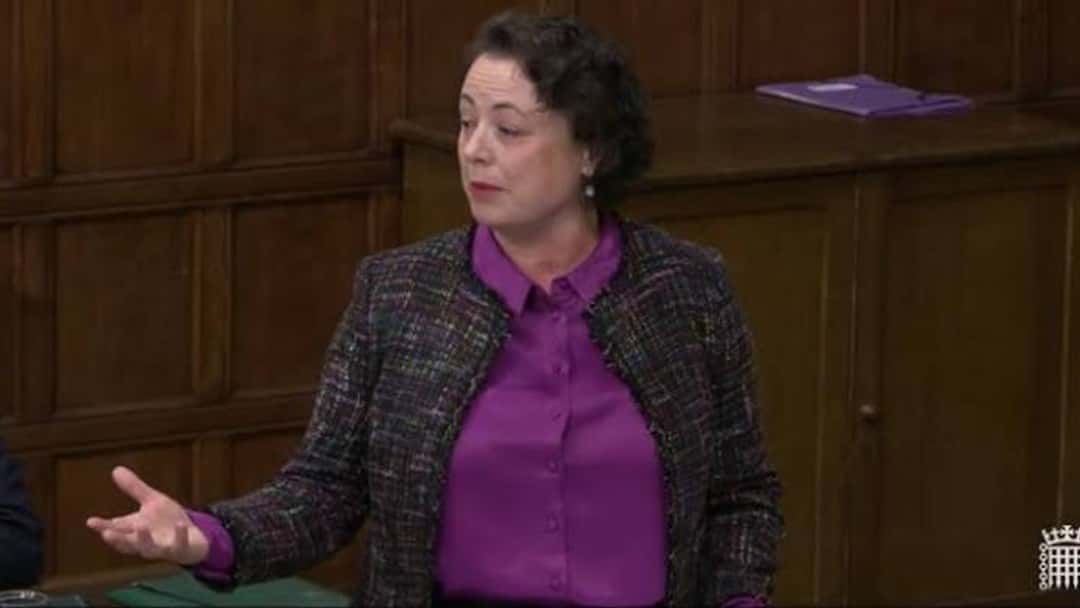
Ms Fleming appealed as of right, no permission requirement applying to committal appeals. She appeared before the Court of Appeal by video link from an undisclosed location. Her solicitors had applied to come off the record shortly before the hearing, citing professional embarrassment, having filed a skeleton argument that pursued only a procedural fairness complaint and only in respect of the administrators' committal. Ms Fleming was unhappy with that approach and sought to advance wider arguments herself.
Lord Justice Arnold, with whom Lady Justice Asplin agreed, rejected all seven grounds of appeal. The central submission, that all High Court orders in the proceedings were ultra vires for want of jurisdiction, was dismissed on multiple grounds. The Court had no power on a committal appeal to revisit earlier orders not under appeal; the harassment injunctions had been made under the Protection from Harassment Act 1997, which provided a wholly separate jurisdictional basis; and, in any event, even an order that is ultra vires must be complied with unless and until it is set aside, applying M v Home Office [1994] 1 AC 377. The procedural complaint concerning the administrators' committal, which turned on the use of Form N244 rather than Form N600, was equally rejected, the Court finding HHJ Tindal's reasoning on that point unimpeachable.
In a postscript, Arnold LJ returned to an issue raised by Jackson LJ in Thursfield v Thursfield [2013] EWCA Civ 840: the incongruity of a contemnor being able to flout court orders, absent herself from the committal hearing, evade her sentence and then invoke Court of Appeal procedures from the safety of an overseas location. Noting that 13 years had elapsed since those observations were made, Arnold LJ concluded that reform of this aspect of the law was long overdue.
The appeal was dismissed.
[2026] EWCA Civ 780 | Court of Appeal (Civil Division) | Lord Justice Arnold, Lady Justice Asplin | Decided: 25 June 2026
 Copyright & permissions