Weis v Greater Manchester Combined Authority: Court of Appeal defines CAT's review powers in landmark Subsidy Control Act ruling
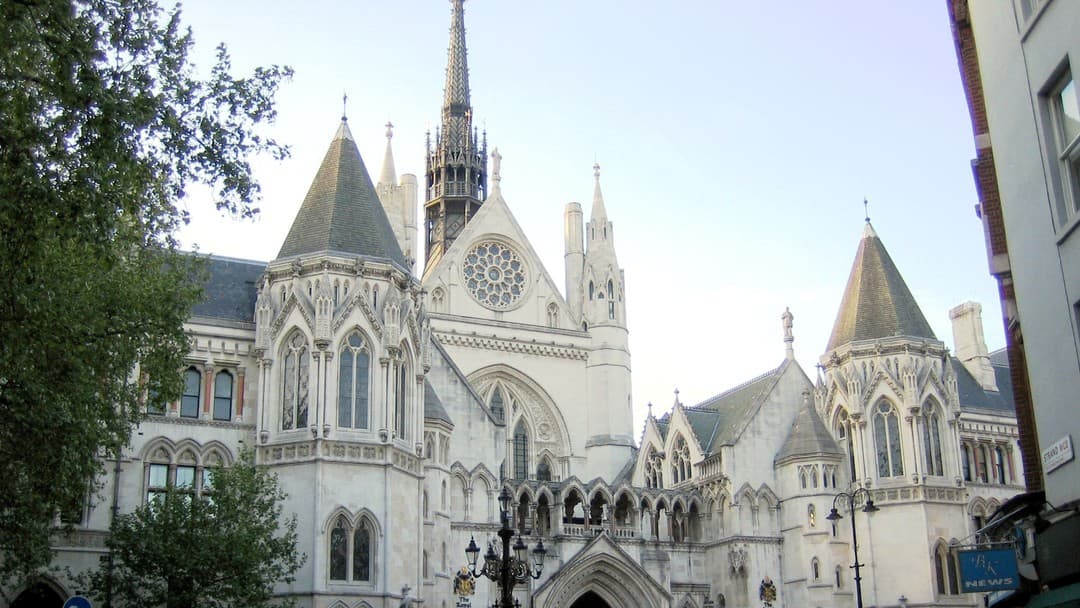
First Court of Appeal decision under the 2022 Act confirms the CAT determines for itself whether a subsidy exists.
The Court of Appeal has dismissed a challenge to two loans totalling £120 million made by the Greater Manchester Combined Authority to fund high-rise residential developments, handing down the first appellate judgement under the Subsidy Control Act 2022 and resolving a fundamental question about the Competition Appeal Tribunal's jurisdiction.
In Aubrey Weis v Greater Manchester Combined Authority [2026] EWCA Civ 825, Lord Justice Zacaroli, with whom Lord Justice Nugee and Lord Justice Miles agreed, held that the CAT is not confined to reviewing a public authority's subsidy decision on traditional judicial review grounds. Where the question is whether financial assistance constitutes a subsidy at all, the CAT must determine that question for itself.
Background
On 22 November 2024, the GMCA advanced £60.7 million to Trinity Developments (Manchester) Limited and £59.3 million to New Jackson (Contour) Investments Limited, both special purpose vehicles within the Renaker group ultimately owned by developer Daren Whitaker, to finance two high-rise tower blocks in Manchester's Great Jackson Street area. The loans were made from the Greater Manchester Housing Investment Loan Fund, a central government-provided fund with a primary objective of creating new homes, of which approximately £300 million remained undeployed at the time.
The appellant, Aubrey Weis, himself a substantial property developer in the Manchester market, applied to the CAT contending that the loans constituted an unlawful subsidy within the meaning of the 2022 Act. The CAT dismissed his application in July 2025, concluding that the loans fell within the commercial market operator ("CMO") principle under section 3(2) of the Act and therefore did not confer an economic advantage on the borrowers. Mr Weis appealed.
The jurisdiction question
The central issue was whether the CAT had been entitled to determine for itself whether the loans constituted a subsidy, or whether it was limited to reviewing the GMCA's decision on rationality grounds, applying the judicial review principles mandated by section 70(5) of the Act. Mr Barrett KC, for the appellant, argued that, because the CMO Principle admits of a range of reasonable answers, the GMCA's decision could only be displaced if it was irrational, drawing on Lord Mustill's analysis in R v Monopolies and Mergers Commission ex parte South Yorkshire Transport Ltd [1993] 1 WLR 23.
The Court of Appeal rejected that submission. Zacaroli LJ reasoned that the CAT's jurisdiction under section 70(1) to review a "subsidy decision" required it first to be satisfied that the decision under review was indeed a decision to give a subsidy. That prior question, concerning whether the terms of the financial assistance were more favourable than those reasonably available on the market, was an objective one, distinguishable from the downstream question of whether a subsidy complied with the subsidy control principles. The latter involves policy judgements Parliament has vested in elected public authority officials; the former does not.
The court further held that, even if the correct approach were to treat the CMO question as subject to rationality review, the CAT would still be required to determine whether the GMCA's conclusion fell within the range of reasonable answers, which is itself an objective question for the tribunal. Whichever route was taken, the conclusion was the same: the CAT was both entitled and obliged to determine for itself whether a subsidy existed.
Since Mr Barrett had accepted that there was no appeal against the substance of the CAT's finding that the loans did not constitute a subsidy, the remaining grounds fell away once ground 1 was resolved against the appellant.
Procedural concerns noted
The court nonetheless recorded observations of potential significance. The GMCA had not expressly considered section 3(2) of the 2022 Act or the statutory Guidance at the time of its decision in March 2024. The Interest Rate Setting Paper, relied upon by the CAT, was prepared only after the decision and in part prompted by Mr Weis's own information request under section 76. Zacaroli LJ also accepted that the CAT had misconstrued the EU Reference Rate Communication, holding that the minimum addition for SPVs without an independent credit history was 400 basis points, not 100 as the GMCA had applied. These criticisms, though well-founded in the court's view, carried no present consequence given the CAT's unchallenged substantive finding. The court noted that failures by the GMCA to follow its own procedures, irrespective of the subsidy question, could in principle ground a separate judicial review application to the Administrative Court.
The appeal was dismissed unanimously.
Joseph Barrett KC and Oliver Jackson (instructed by Walker Morris LLP) appeared for the appellant. Aiden Robertson KC (instructed by DLA Piper UK LLP) appeared for the respondent.
 Copyright & permissions









.jpg&w=3840&q=60)