Ward v Rai: Court of Appeal restores costs judge and warns against appealing case management decisions
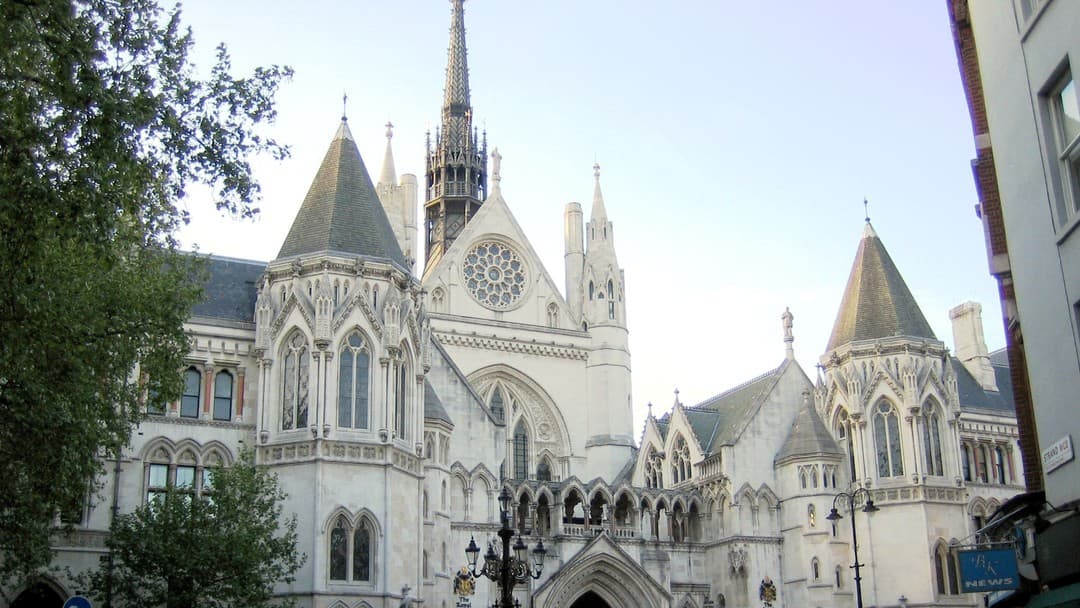
The Court of Appeal reinstates a deputy costs judge's ruling and cautions against uneconomic second appeals.
The Court of Appeal has allowed an appeal in Ward v Rai [2026] EWCA Civ 816, restoring a case management decision of a deputy costs judge that the High Court had set aside, and delivering a pointed reminder about the limits of appellate interference in detailed assessment.
Background
The dispute arose from a road traffic accident in September 2019. Mr Rai admitted liability, and Mr Ward's claim settled in January 2023 through acceptance of a Part 36 offer of £546,984. Detailed assessment of Mr Ward's costs followed.
The contested item was work on documents, which claimed 134.1 hours across a 24-page schedule and accounted for roughly half the profit costs. Mr Rai's points of dispute included Point 23, which criticised the entries in general terms and foreshadowed reliance on an annotated schedule of objections. That schedule, identifying the individual items challenged for the first time, was not served until around 4.45pm two working days before the two-day hearing.
Deputy Costs Judge Friston declined to strike out Point 23 and, "very reluctantly", permitted reliance on the late schedule, adjourning the assessment to a third day with costs sanctions to follow. The bill was ultimately assessed at £89,032.62. Because Mr Ward failed to beat Mr Rai's Part 36 offer, the costs consequences, and the narrow gap between the parties' final offers of £105,000 and £100,000, went some way to explaining what followed.
The High Court decision
Mr Ward appealed on five grounds. Hill J, sitting with Costs Judge Leonard, rejected each individual complaint but allowed the appeal on an "overarching" basis, concluding that the costs judge's approach was wrong. She held that Point 23 did not comply with paragraph 8.2(b) of Practice Direction 47 or with Ainsworth v Stewarts Law LLP [2020] EWCA Civ 178, struck it out, and refused permission to rely on the annotated schedule. In her view the adjournment had been necessitated by the defendant's default, and the costs judge had given insufficient weight to the compliance requirements and the overriding objective.
The appeal
Giving the leading judgement, Lady Justice Falk allowed the appeal, with Jeremy Baker and Foxton LJJ agreeing. This was a second appeal against a discretionary case management decision, and the governing question, drawn from Broughton v Kop Football (Cayman) Ltd [2012] EWCA Civ 1743 and Global Torch Ltd v Apex Global Management Ltd (No 2) [2014] UKSC 64, was whether the decision could properly have been made, not whether the appellate court would have decided differently.
Falk LJ accepted that Point 23 was non-compliant and that the schedule was served unacceptably late. But the costs judge had plainly proceeded on the basis of that non-compliance, had the explanation for the delay in mind, and was entitled to weigh it. Crucially, a third day would have been required in any event, so the adjournment did not flow solely from the default. Questions of weight were pre-eminently for the first instance judge, and his decision disclosed no error of principle.
She added several observations of wider resonance: ex tempore judgements should be read as a whole rather than dissected; advocates must raise perceived deficiencies with the judge at the time; and appeals on case management issues that raise no material point of principle do the justice system no credit, particularly where the costs risk dwarfing the sums at stake.
Paying parties, she cautioned, should not assume that a lenient approach to non-compliant points of dispute or late variations will be taken.
 Copyright & permissions