Vince v Associated Newspapers: Charleston does not defeat an unfair processing claim
Court of Appeal grants first successful UK GDPR fairness claim against a newspaper.
The Court of Appeal has allowed Dale Vince's appeal in Dale Vince v Associated Newspapers Limited [2026] EWCA Civ 899, restoring an unfair processing claim struck out as abusive and entering summary judgement in his favour for damages to be assessed. Neither party could point to any previous claim of this kind succeeding here or in Europe. Sir Geoffrey Vos MR gave the judgement, with Warby and Whipple LJJ agreeing.
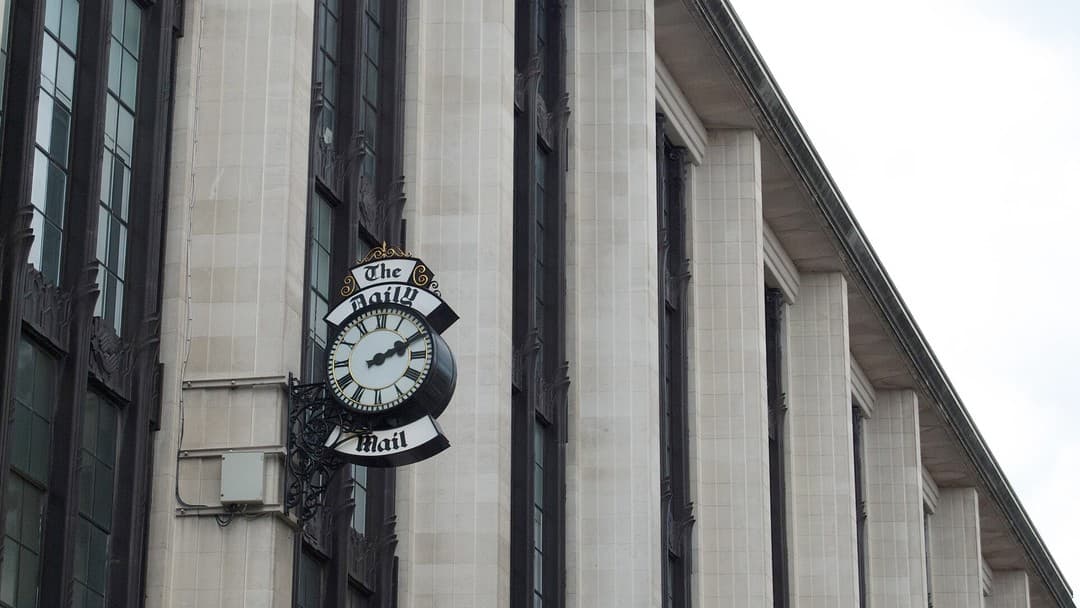
The Daily Mail and Mail+ carried the headline "Labour repays £100,000 to 'sex harassment' donor" above two photographs of Mr Vince at Just Stop Oil demonstrations. The donor in question was Davide Serra. The text distinguished the two men, and the photographs were removed online within 47 minutes, though the print facsimile remained on PressReader until October 2023.
Mr Vince's defamation claim was struck out by HHJ Lewis in July 2024 on the Charleston principle, that libel may only be founded on the whole of an article. Permission to appeal was refused by Warby LJ. Swift J then struck out the data protection claim as an abuse and would in any event have granted the publisher summary judgement, holding that fairness fell to be assessed by reference to the entire publication.
On abuse, the Master of the Rolls accepted the respondent's notice: nothing in Orji creates an arbitrary rule excluding Henderson principles where the determination postdates issue of the second claim. It would be absurd if they could be circumvented by issuing precautionary proceedings weeks before an expected adverse ruling. That did not save the strike out. Applying Lord Bingham's broad, merits-based judgement in Johnson v Gore-Wood, nine factors told against abuse, among them that the claim had been intimated from the first letter before action, that the change of course followed advice from newly instructed counsel without lengthy delay, that the claim was novel, and that Associated Newspapers is a seasoned litigant able to be compensated in costs.
On fairness, Vos MR declined to lay down any generally applicable test, including the three-stage formulation drawn from Arden LJ's dissent in Johnson v Medical Defence Union and the Information Commissioner's 2024 journalism code. Fairness under article 5(1)(a) depends on context.
The context here was decisive. The Editors' Code of Practice is a relevant privacy code to which section 12 of the Human Rights Act requires regard, following Sicri. Clause 1(i) obliges the press to take care not to publish inaccurate, misleading or distorted information or images, including headlines not supported by the text. That obligation goes beyond accuracy. Warby LJ's view in NT1 and Aven that Charleston applies to inaccuracy claims under article 5(1)(d) does not read across. Whether or not the juxtaposition was inaccurate by reason of Charleston, it was certainly misleading, the court taking judicial notice that many readers go no further than headlines and pictures.
The night editor's evidence, that he combined the stories for reasons of space and that Mr Vince had invited attention by attending a protest that day, was found unconvincing. Mr Vince was entitled to exercise his article 10 and 11 rights. The judgement is careful to add that an unconvincing explanation does not itself create a cause of action.
The journalism exemption in paragraph 26 of Part 5 of Schedule 2 to the Data Protection Act 2018 was addressed unprompted and rejected: having regard to the Editors' Code as paragraph 26(5) requires, the publisher could never show a reasonable belief that publishing the juxtaposition was in the public interest. IPSO's rejection of Mr Vince's complaint was irrelevant, having addressed only inaccuracy.
Questions of reputational and distress damages remain open. Material harm was conceded.
 Copyright & permissions






.jpg&w=3840&q=60)