United Utilities v Farrans Construction: when CEMAR dates conflict with bespoke payment terms
A High Court ruling clarifies that adjudication enforcement survives a Part 8 challenge where insufficient evidence prevents resolution of contractual interpretation disputes.
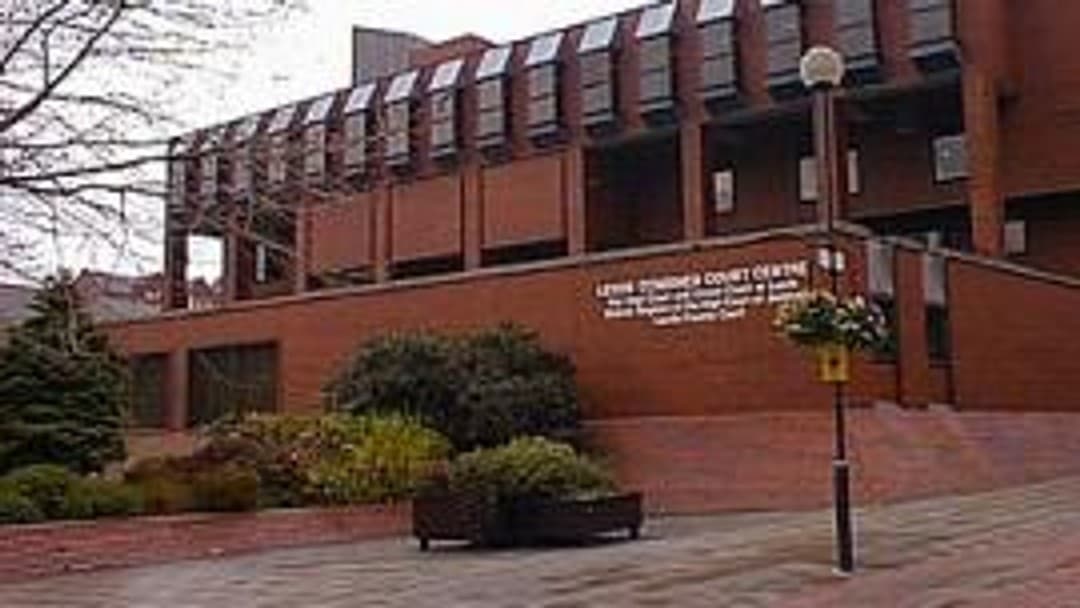
In United Utilities Water Limited v Northstone (NI) Limited (trading as Farrans Construction) [2026] EWHC 1057 (TCC), Her Honour Judge Kelly, sitting as a Judge of the High Court in the Technology and Construction Court in Leeds, granted summary judgement enforcing an adjudication award of £3,269,328.05 plus VAT against Farrans, whilst declining to resolve the underlying contractual issues through Part 8 proceedings.
Background
United Utilities Water Limited ("UU"), a water and wastewater undertaker under the Water Industry Act 1991, engaged Farrans as part of a joint venture to construct 32 kilometres of cross-country raw water aqueduct and associated mains pipelines in West Cumbria. The original NEC3 Engineering and Construction Contract Option C, valued at £85m, was subsequently amended by a Settlement Agreement and a Deed of Variation, ultimately increasing the contract sum to £131.6m and converting the payment basis to Option A with an accelerated 15-day milestone payment cycle.
A dispute arose from payment notice PA-70, issued on 11 October 2024 in response to applications AFP77 and AFP78. The Project Manager assessed the amount due as minus £3,269,328.05. UU contended that Farrans was required to serve a pay less notice by 12 October 2024 — just one day later — and that the purported payment reduction notice served on 18 October 2024 was six days out of time. The matter was referred to adjudication, where the adjudicator found in UU's favour. Farrans did not pay, prompting enforcement proceedings.
The Part 8 challenge
Farrans issued a Part 8 claim seeking declarations on two issues: whether PA-70 was a valid payment notice, and whether it was obliged to serve a pay less notice at all. Central to its challenge was a discrepancy between the contractual payment timeline and the date displayed on CEMAR — the cloud-based contract management platform used throughout the project — which showed a due date of 8 November 2024 rather than 13 October 2024. Farrans argued this inconsistency rendered the notice ambiguous and therefore invalid.
The court's analysis
Judge Kelly rejected the characterisation of the issues as straightforward. Drawing on the principles in Advance JV v Enisca Limited [2022] EWHC 1152 (TCC), the court confirmed that payment notices must be construed objectively, through the eyes of a reasonable recipient "circumstanced as the actual parties were." That assessment, critically, requires engagement with the full factual matrix, including the background to contractual amendments and how the parties had operated the payment mechanism in practice.
Farrans' witnesses failed to address UU's evidence — given by Mr Steven Crist — that all parties understood CEMAR's automatically generated dates did not reflect the amended payment terms, and that reprogramming the system was not feasible without corrupting historical records. In the absence of any contrary evidence, the court found it could not determine how a reasonable recipient would have understood the notices.
The court also noted that Farrans was alive to the accelerated payment cycle it had accepted under the Deed of Variation. The amendments had been commercially advantageous to the contractor, providing extended time for works, accelerated cash flow, and reduced financial risk. The suggestion that PA-70 lacked clarity was, in the court's view, difficult to reconcile with that context — though it stopped short of resolving the point in the absence of sufficient evidence.
The Part 8 proceedings were accordingly unsuitable for determining either issue. Summary judgement enforcing the adjudication award was nonetheless granted in full, with interest at 8.1% accruing from 3 April 2025.
Significance
The case reinforces that the contextual scene — including the reasons for contractual amendments and the parties' shared understanding of system limitations — is indispensable to the interpretation of payment notices. Challenges to adjudication enforcement via Part 8 will founder where the factual matrix is inadequately evidenced. Parties operating bespoke payment regimes through automated platforms would do well to ensure that any known discrepancies between system-generated data and contractual timescales are clearly documented and acknowledged throughout the project lifecycle.
 Copyright & permissions