Twigg and Bedford v R: Court of Appeal clarifies "in charge" under the Dangerous Dogs Act 1991
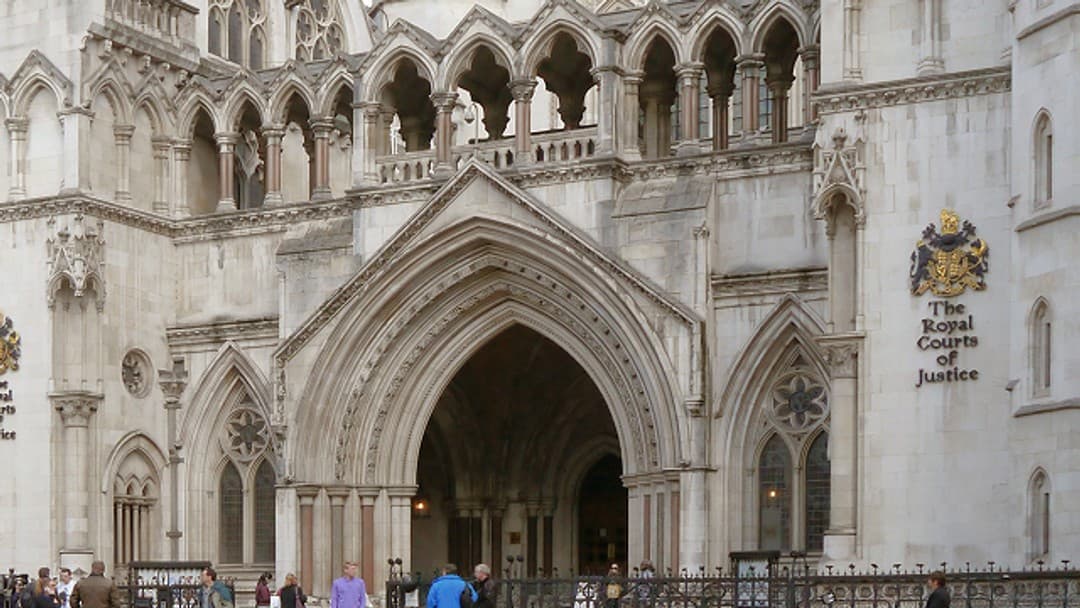
Two people in different locations can simultaneously be in charge of a dangerous dog.
The Court of Appeal (Criminal Division) has dismissed applications for leave to appeal against both conviction and sentence in Mark Twigg and Joanne Bedford v R [2026] EWCA Crim 587, delivering an important clarification of section 3(1) of the Dangerous Dogs Act 1991. The judgement confirms that more than one person can be "for the time being in charge" of a dog simultaneously, even where those persons are in different locations and responsible on different factual bases.
Background
In March 2022, the applicants moved into a property at Carr Farm in Rochdale at the request of the farm's owner, Matthew Brown, who had been remanded in custody. They were asked to look after the farm's security and its dogs, including a male Cane Corso named Sid and a female Boerboel named Tiny. The dogs had a documented history of aggressive behaviour. In the weeks before the fatal incident, both an RSPCA officer and social workers had raised concerns about the safety of leaving young children in proximity to the animals. Those concerns were not acted upon.
On 15 May 2022, the first applicant left for work at 10.36am. Shortly after 1pm, the applicants' three-year-old son, Daniel, entered the dogs' pen. He was found face down and critically injured. He was pronounced dead at hospital that afternoon. A veterinary expert concluded Daniel had sustained 50 puncture wounds consistent with a sustained attack lasting at least several minutes.
Both applicants were convicted at Manchester Crown Court of an offence under section 3(1) and (4) of the 1991 Act. Both were acquitted of gross negligence manslaughter. The first applicant was sentenced to 2 years and 8 months' imprisonment; the second applicant to 3 years and 6 months'.
The appeal against conviction
The first applicant sought leave to appeal on three grounds: that the judge was wrong to refuse a submission of no case to answer; that the jury directions were deficient; and that the verdicts were inconsistent.
Counsel for the first applicant argued that the ordinary meaning of "the person for the time being in charge" is confined to those with immediate, physical control of the dog. It was submitted that when the first applicant left for work and left the second applicant responsible, he relinquished his charge. Reliance was placed on Robinson-Pierre [2014] 1 WLR 2638 and Rawlings [1994] Crim LR 433, as well as the road traffic case of DPP v Watkins [1989] 89 Cr App R 112, in which a person was found capable of relinquishing charge of a motor vehicle.
Lord Justice Jeremy Baker, giving the judgement of the court, rejected each of those grounds. The court affirmed the principles drawn from Robinson-Pierre: the offence requires proof of an act or omission by the defendant, with or without fault, that to some more than minimal degree caused or permitted the dog to become dangerously out of control. That causal link was plainly established on the facts.
Turning to the question of simultaneous charge, the court noted the decision in L v CPS [2010] EWCA 341 (Admin), in which it was held that both a person who had handed a dog lead to another and the person who received it could be in charge of the dog at the same time. The court confirmed that Rawlings did not assist the first applicant: Kennedy LJ had found "powerful evidence" that the defendant there remained in charge despite leaving the property, and the question was one of fact.
The court was clear that whether a person is for the time being in charge of a dog is always a question of fact and degree for the jury. The first applicant had retained responsibility for the security of the pen, was aware Daniel had previously been able to open the gate, and his act or omission in failing to secure it adequately was causally connected to the attack. The trial judge's directions, which invited the jury to consider whether the first applicant's departure had transferred sole charge to the second applicant or whether both remained jointly in charge, accurately reflected the law.
The appeal against sentence
The second applicant accepted that the offence fell within category B of the relevant offence-specific sentencing guideline, with a starting point of four years' custody and a range of two to seven years. The appeal was confined to the contention that the upward adjustment before mitigation was unjustified and that a suspended sentence ought to have been imposed.
The court dismissed that submission. All five factors indicating medium culpability were present: failure to act on others' expressed concerns about the dogs' behaviour; failure to act on prior knowledge of their aggression; the absence of adequate safety measures; failure to intervene; and failure to meet the welfare needs of the animals. Those factors, taken together, placed the second applicant's culpability at or near the top of the category range. The court accepted the significant weight of the mitigation, including previous good character, pregnancy at the time, deafness, genuine remorse, the devastating loss of her son and ongoing care responsibilities for three surviving children, and found that the judge's reduction adequately reflected it. A sentence of 3½ years was neither wrong in principle nor manifestly excessive.
Both applications for leave were refused.
 Copyright & permissions
.png&w=3840&q=60)








.jpg&w=3840&q=60)