LoginSubscribe Now
Follow Us
Sign up to our free newsletter
Solicitors Journal LogoInforming the legal profession since 1856

Find the knowledge you need from the SJ library of over 20,000 legal articles

Search now
Solicitors Journal Logo
  • Legal News
  • Opinion
  • Features
  • Practice Notes
  • Business
  • International
  • Court Reports
  • AI Search
  • Digital Edition
  • Subscription Options
  • Advertise with Us
    • About Us
    • Contact Us
    • FAQ
    • Guide to Authors
Solicitors Journal

Informing the legal profession since 1856.

Follow us

Topics

  • Legal News
  • Opinion
  • Features
  • Practice Notes
  • Business
  • International
  • Court Reports

About

  • About Us
  • Contact Us
  • Advertise with Us
  • FAQ
  • Guide to Authors

Subscribe

  • Subscription Options
  • Digital Edition
  • Free Newsletter

Editorial

editorial@solicitorsjournal.com+44 (0)1223 750 755

Subscriptions

subscriptions@solicitorsjournal.com+44 (0)1223 750 755

Advertising

Advertise with usadvertising@solicitorsjournal.com+44 (0)1223 750 755

© 2026 Solicitors Journal in partnership with the International In-house Counsel Journal

ISSN 0038-1047  ·  Images: Freepix, Unsplash and by permission of the authors

Terms and ConditionsCookie PolicyPrivacy PolicyPLS Clear logoCopyright & permissions

The Kingdom of Bahrain v Shehabi: Supreme Court allows spyware hacking claim to proceed
28 Jul 2026|Court Report|Add your comment
Share:
The Kingdom of Bahrain v Shehabi: Supreme Court allows spyware hacking claim to proceed

Divided Supreme Court rules foreign states cannot claim immunity for remote computer hacking.

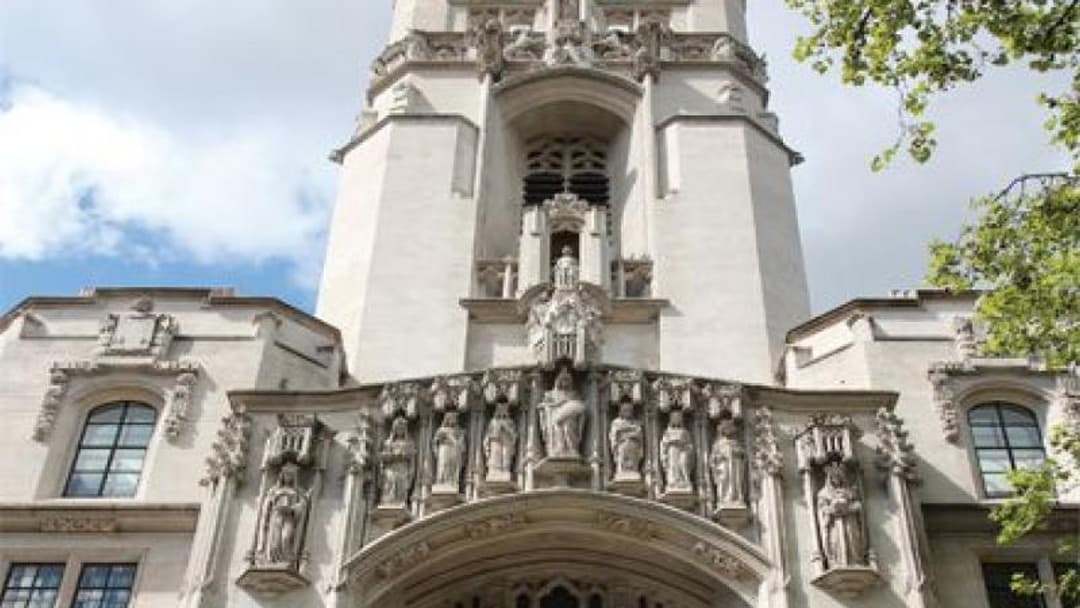
The Supreme Court has ruled by a three to two majority that the Kingdom of Bahrain cannot claim state immunity from a civil claim brought by two London-based pro-democracy activists who allege its agents hacked their computers using spyware, in a judgement that clarifies how far state immunity extends to conduct carried out remotely from abroad.

In The Kingdom of Bahrain v Shehabi and another [2026] UKSC 25, Lord Lloyd-Jones, Lord Hamblen and Lady Simler, forming the majority, held that section 5 of the State Immunity Act 1978, which removes immunity for proceedings concerning personal injury or property damage "caused by an act or omission in the United Kingdom," applies even where the individuals responsible for the act were never physically present in the country. Lord Leggatt and Lord Burrows dissented, each delivering separate judgements.

Dr Saeed Shehabi and Mr Moosa Mohammed, both long-term UK residents with refugee or citizenship status, allege that from 2011 agents of Bahrain, operating from a server located there, infected their computers with spyware known as FinSpy, allowing covert access to their data, communications, and device cameras and microphones over a three-year period. They claim to have developed psychiatric injuries after learning of the surveillance in 2014 through information published by WikiLeaks and Bahrain Watch. Bahrain sought a declaration of immunity, arguing that because its agents operated the spyware from outside the UK, no relevant act occurred within the jurisdiction.

The majority rejected that argument, endorsing the Court of Appeal's finding that the remote manipulation of a computer located in England amounts to an act "in the United Kingdom" as a matter of ordinary language, regardless of where the person issuing the instructions happened to be sitting. Drawing a comparison to a burglar remotely disabling a safe's locking mechanism, the majority held that treating what happens abroad as "the act" and what happens in England as merely its "effect" was artificial. They also rejected Bahrain's argument that section 5 should be read as containing an implicit requirement that the perpetrator be physically present in the UK at the time of the act, noting that unlike the equivalent provision in the European Convention on State Immunity, which Parliament had before it when drafting the 1978 Act, section 5 contains no such express presence requirement, and that this omission was, in the majority's view, deliberate.

Lord Leggatt, dissenting, argued the majority had blurred a fundamental distinction between an act and its effects, and that the natural and grammatically correct reading of "an act... in the United Kingdom" refers to conduct performed by a person physically located there, consistent with the wording of both the European and United Nations conventions on state immunity, both of which expressly require the presence of the author of the harm in the forum state. He warned that departing from this settled international consensus without clear parliamentary intention risked placing the UK in breach of its treaty obligations. Lord Burrows likewise dissented, finding the statutory language at least ambiguous and that any ambiguity should be resolved in favour of consistency with Britain's international obligations under the established presumption that legislation implementing a treaty should, where reasonably possible, be read compatibly with it.

The majority further rejected Bahrain's contention that customary international law required a presence requirement, finding a substantial and growing body of state practice supporting a broader territorial exception applicable to sovereign as well as private acts, though they acknowledged no prior case had extended immunity's removal to circumstances where the wrongdoer was never present in the forum state.

The appeal was dismissed, and the claimants' proceedings against Bahrain may now proceed to trial.

Comments

Latest Articles

The Supreme Court has ruled by a three to two majority that the Kingdom of Bahrain cannot claim state immunity from a civil claim brought by two London-based pro-democracy activists who allege its agents hacked their computers using spyware, in a judgement that clarifies how far state immunity extends to conduct carried out remotely from abroad.

In The Kingdom of Bahrain v Shehabi and another [2026] UKSC 25, Lord Lloyd-Jones, Lord Hamblen and Lady Simler, forming the majority, held that section 5 of the State Immunity Act 1978, which removes immunity for proceedings concerning personal injury or property damage "caused by an act or omission in the United Kingdom," applies even where the individuals responsible for the act were never physically present in the country. Lord Leggatt and Lord Burrows dissented, each delivering separate judgements.

Dr Saeed Shehabi and Mr Moosa Mohammed, both long-term UK residents with refugee or citizenship status, allege that from 2011 agents of Bahrain, operating from a server located there, infected their computers with spyware known as FinSpy, allowing covert access to their data, communications, and device cameras and microphones over a three-year period. They claim to have developed psychiatric injuries after learning of the surveillance in 2014 through information published by WikiLeaks and Bahrain Watch. Bahrain sought a declaration of immunity, arguing that because its agents operated the spyware from outside the UK, no relevant act occurred within the jurisdiction.

The majority rejected that argument, endorsing the Court of Appeal's finding that the remote manipulation of a computer located in England amounts to an act "in the United Kingdom" as a matter of ordinary language, regardless of where the person issuing the instructions happened to be sitting. Drawing a comparison to a burglar remotely disabling a safe's locking mechanism, the majority held that treating what happens abroad as "the act" and what happens in England as merely its "effect" was artificial. They also rejected Bahrain's argument that section 5 should be read as containing an implicit requirement that the perpetrator be physically present in the UK at the time of the act, noting that unlike the equivalent provision in the European Convention on State Immunity, which Parliament had before it when drafting the 1978 Act, section 5 contains no such express presence requirement, and that this omission was, in the majority's view, deliberate.

Lord Leggatt, dissenting, argued the majority had blurred a fundamental distinction between an act and its effects, and that the natural and grammatically correct reading of "an act... in the United Kingdom" refers to conduct performed by a person physically located there, consistent with the wording of both the European and United Nations conventions on state immunity, both of which expressly require the presence of the author of the harm in the forum state. He warned that departing from this settled international consensus without clear parliamentary intention risked placing the UK in breach of its treaty obligations. Lord Burrows likewise dissented, finding the statutory language at least ambiguous and that any ambiguity should be resolved in favour of consistency with Britain's international obligations under the established presumption that legislation implementing a treaty should, where reasonably possible, be read compatibly with it.

The majority further rejected Bahrain's contention that customary international law required a presence requirement, finding a substantial and growing body of state practice supporting a broader territorial exception applicable to sovereign as well as private acts, though they acknowledged no prior case had extended immunity's removal to circumstances where the wrongdoer was never present in the forum state.

The appeal was dismissed, and the claimants' proceedings against Bahrain may now proceed to trial.

Legal News desk contact: editorial@solicitorsjournal.com|PLS LogoCopyright & permissions
Regulators join forces to enhance guidance
Solicitors Journal

Regulators join forces to enhance guidance

The Legal Services Board has published a review addressing litigation guidance clarity and consistency for legal professionals
News28 Jul 2026
Business relationship manager jailed for fraud
Solicitors Journal

Business relationship manager jailed for fraud

Liridon Neziri has been jailed for stealing £105,000 from clients at Nedbank Private Wealth
News28 Jul 2026
Without a regional GC: managing cross-border legal risk
Solicitors Journal

Without a regional GC: managing cross-border legal risk

The disappearance of regional general counsel roles is creating gaps in cross-border legal judgment, coordination and regulatory oversight
International27 Jul 2026
Tesla v InterDigital: Supreme Court revives FRAND claim over 5G patent licensing platform
Solicitors Journal

Tesla v InterDigital: Supreme Court revives FRAND claim over 5G patent licensing platform

Supreme Court allows Tesla to challenge Avanci's patent pool rates as not FRAND.
Court Report28 Jul 2026
AXA Insurance v HMRC: Supreme Court clarifies when group litigation test case rulings can be overridden
Solicitors Journal

AXA Insurance v HMRC: Supreme Court clarifies when group litigation test case rulings can be overridden

Supreme Court permits departure from binding test case ruling shown wrong in law.
Court Report28 Jul 2026
Jackson v Chief Constable of Greater Manchester Police: EAT dismisses whistleblowing appeal
Solicitors Journal

Jackson v Chief Constable of Greater Manchester Police: EAT dismisses whistleblowing appeal

EAT upholds tribunal's rejection of former officer's 19 alleged whistleblowing disclosures to IPCC.
Court Report28 Jul 2026
R v Sheikh: Supreme Court restores convictions in landmark domestic abuse ruling
Solicitors Journal

R v Sheikh: Supreme Court restores convictions in landmark domestic abuse ruling

Supreme Court clarifies foreseeability test under Domestic Violence, Crime and Victims Act 2004.
Court Report28 Jul 2026
Drelle v Servis-Terminal: Supreme Court allows bankruptcy petitions based on unrecognised foreign judgements
Solicitors Journal

Drelle v Servis-Terminal: Supreme Court allows bankruptcy petitions based on unrecognised foreign judgements

Supreme Court rules foreign judgement debts can found UK bankruptcy petitions without recognition.
Court Report28 Jul 2026
Akbars Restaurant v Secretary of State for the Home Department: Supreme Court quashes illegal working penalty notice
Solicitors Journal

Akbars Restaurant v Secretary of State for the Home Department: Supreme Court quashes illegal working penalty notice

Supreme Court rules Home Office must specify exact ground for imposing illegal working penalties.
Court Report28 Jul 2026
Stanford v Klotho Brands: High Court strikes out AllSaints founder's fraud claim and imposes restraint order
Solicitors Journal

Stanford v Klotho Brands: High Court strikes out AllSaints founder's fraud claim and imposes restraint order

Court finds bankrupt claimant lacked standing to challenge 2022 order, bars further litigation.
Court Report28 Jul 2026
Fenech v Financial Conduct Authority: Upper Tribunal slashes pension transfer penalties
Solicitors Journal

Fenech v Financial Conduct Authority: Upper Tribunal slashes pension transfer penalties

Tribunal upholds prohibition orders but cuts FCA penalties over disgorgement and delay.
Court Report28 Jul 2026
Lufthansa Technik v Astronics: Court of Appeal clarifies approach to patent profit apportionment
Solicitors Journal

Lufthansa Technik v Astronics: Court of Appeal clarifies approach to patent profit apportionment

Court of Appeal rejects differential profits approach, upholding apportionment in landmark aircraft patent case.
Court Report28 Jul 2026
SJ Interview: Sohail Ali
Solicitors Journal

SJ Interview: Sohail Ali

Sohail Ali is a Disputes partner at DLA Piper, advising clients on complex cross-border litigation and arbitration matters. Alongside his practice, is also is a...
Interview7 Jul 2026
Matters of judgement
Solicitors Journal

Matters of judgement

Foreword1 Jul 2026