TG Jones High Street: court sanctions restructuring plans for former WH Smith business
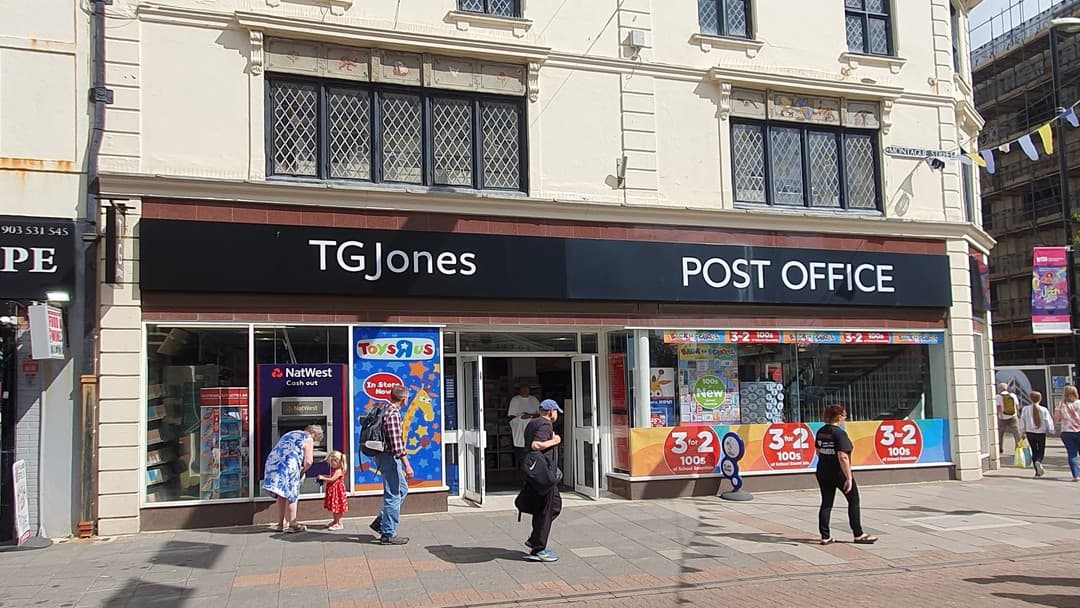
High Court sanctions restructuring plans rescuing the TG Jones high street business from insolvency.
The Chancery Division has sanctioned two restructuring plans rescuing TG Jones, the rebranded former high street arm of WH Smith, exercising its cross-class cramdown power to bind a majority of dissenting landlord creditors to reduced rents.
In Re TG Jones High Street Limited [2026] EWHC 2079 (Ch), Mr Justice Hildyard gave detailed reasons for sanctioning restructuring plans proposed under Part 26A of the Companies Act 2006 by TG Jones High Street Limited and TG Jones Retail Holdings Limited, the two principal operating companies within the group acquired by Modella Capital Limited in 2025. WH Smith PLC retained its travel business and trading name on the sale, requiring the high street stores to be rebranded.
The judge accepted unchallenged evidence that years of underinvestment, combined with wider pressures on UK retail, had left the companies facing a projected funding shortfall rising to £26.3 million by early August 2026, with the alternative being a value destructive administration yielding unsecured creditors a fraction of their claims. The plans, covering secured lenders, the Post Office, eleven classes of landlord creditors and various unsecured creditors, were designed to reduce rents across a rationalised estate while channelling savings into overdue capital expenditure.
Several classes, including nearly all landlord classes under the retail holding company's plan, voted against the proposals, requiring the court to exercise its cross-class cramdown jurisdiction. Applying the now-settled approach derived from the Court of Appeal's trilogy of decisions in Adler, Thames Water and Petrofac, the judge confirmed that none of the dissenting classes would be worse off than under the relevant alternative of insolvent administration, and that the plans had been approved by a class with a genuine economic interest, satisfying the statutory preconditions for cramdown.
The judgement gives particular attention to negotiations conducted after the convening hearing with the British Land landlords, who had objected that the original proposals allocated the overwhelming majority of any recovery to Modella while requiring landlords to fund most of the turnaround through rent reductions. Following extended negotiation, the companies agreed to defer rather than extinguish a portion of the first year's rent reductions, secured by charge, substantially increase a profit-sharing mechanism tied to future earnings, and reduce certain intra-group licence fees to nil. The landlords subsequently withdrew their opposition, though they maintained a narrower argument, ultimately rejected by the judge, that the deferred rent should be treated as equivalent to new money justifying more favourable treatment.
A further focus of the judgement was Modella's retention of full equity ownership of the group. While acknowledging initial scepticism, the judge accepted expert valuation evidence placing the retained equity at between nil and £3 million, and found that Modella's contributions, including writing off debts it would have recovered in full in an insolvency and providing new secured funding, justified the arrangement, particularly given restrictions preventing any distribution to Modella during the restructuring period.
Separate objections from St Albans City and District Council concerning the release of business rates liabilities were also rejected.
Beyond the substantive decision, the judge used the judgement to caution against an expectation that courts will deliver rulings on complex restructuring plans immediately following the hearing, observing that adequate time must be built into plan timetables for judicial consideration of increasingly dense and technical material.
 Copyright & permissions