TCC refuses summary judgement in building safety remediation dispute Durkan v Wallace
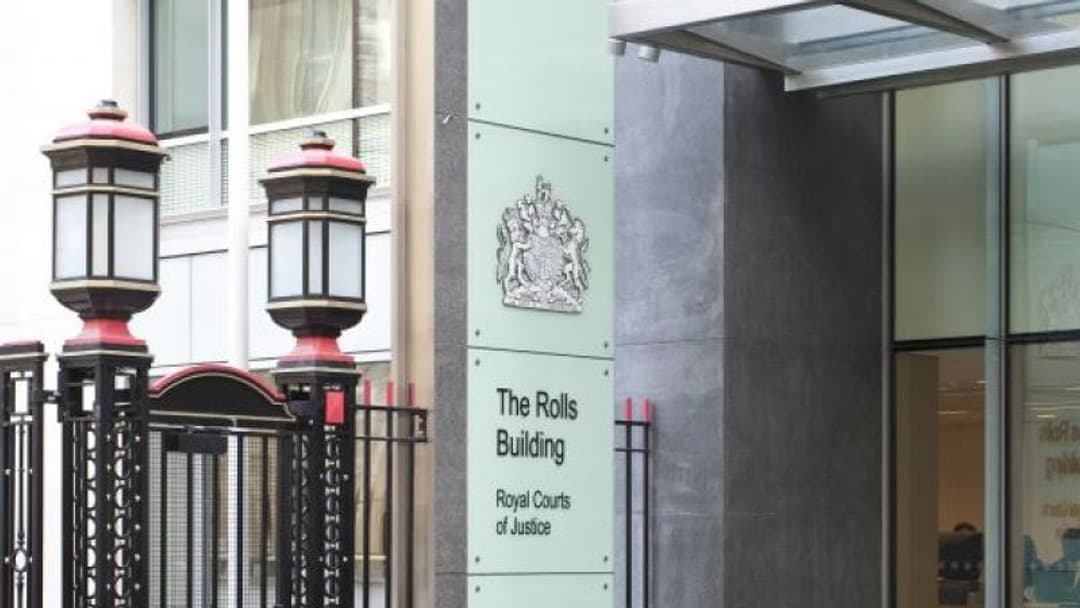
Court finds repudiatory breach claim over cladding remediation too fact-sensitive for summary disposal.
The Technology and Construction Court has dismissed a developer's application for summary judgement in a dispute over the termination of a building safety remediation agreement, finding that whether delays to fire safety works amounted to a repudiatory breach could only be resolved at trial.
In Durkan Estates Limited v Wallace Estates Limited [2026] EWHC 2003 (TCC), Mr Justice Constable refused Wallace Estates Limited's application for reverse summary judgement against Durkan Estates Limited, holding that Durkan's claim that its termination was unlawful had a real prospect of success requiring full factual investigation.
The dispute concerned a remediation agreement entered into in July 2024, under which Durkan agreed to remedy fire safety defects at Centrillion Point, a residential development in Croydon, following a remediation order made against Wallace, the freeholder, under section 123 of the Building Safety Act 2022. Although the order required compliance by 31 May 2025, the agreement set a later completion date of 19 September 2025 or such other date as the parties might agree. After the First-tier Tribunal refused Wallace's application to extend the statutory deadline in June 2026, on the basis that no Gateway 2 application had yet been made to the Building Safety Regulator, Wallace terminated the agreement two days later, alleging both contractual and common law repudiatory breach. Wallace subsequently sought a remediation contribution order against Durkan worth over £13.5 million, which Durkan resists on the basis that the termination was itself unlawful.
Wallace's summary judgement application was confined to the common law repudiation argument, contending that Durkan's failure to progress the design and Gateway 2 submission had deprived it of substantially the whole benefit of the agreement. The judge rejected this, applying the established test from Hongkong Fir Shipping Co Ltd v Kawasaki Kisen Kaisha Ltd [1962] 2 QB 26 and the guidance of Lewison LJ in Ampurius Nu Homes Holdings Ltd v Telford Homes (Creekside) Ltd [2013] EWCA Civ 577, both of which emphasise the acutely fact-sensitive nature of the enquiry. Since it was common ground that time was not of the essence under the agreement, Wallace faced a high bar in establishing that delay alone was repudiatory, and the judge held that the reasons for delay, the extent of Durkan's efforts to perform, and the practical consequences of termination were all matters requiring evidence and cross-examination rather than summary determination.
The judge also found a real prospect that Durkan could establish an estoppel preventing Wallace from relying on the original completion date, given evidence that both parties had, over a series of meetings, proceeded on the basis that the date was effectively at large pending Gateway 2 approval, notwithstanding Wallace's contractual argument that any variation required a formal submission under the agreement's design procedure.
Perhaps most strikingly, the judgement highlighted a sequence of events immediately preceding termination, in which Wallace's own barrister told the tribunal only two days earlier that terminating the agreement was not a "panacea" and that Wallace intended to continue working with Durkan. The judge found this raised a real prospect that Wallace had affirmed the agreement, waiving any right to treat Durkan's prior conduct as repudiatory, and that Wallace's own clause purporting to require affirmation to be recorded in writing might not, on a proper construction, defeat that argument.
Concluding that the dispute demanded full disclosure and trial, the judge dismissed Wallace's application for both reverse summary judgement on the claim and summary judgement on its counterclaim.
 Copyright & permissions










.jpg&w=3840&q=60)