Swindon Borough Council v Thames Water: Court of Appeal allows permit fees to recover past deficits
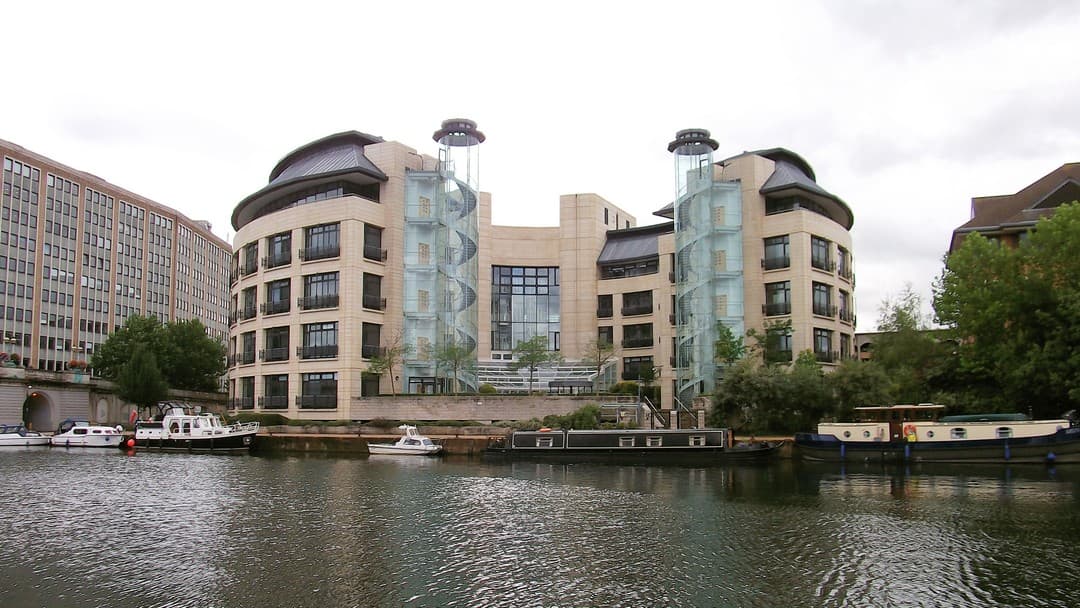
Court of Appeal rules highway authorities may set street works permit fees to recover deficits.
The Court of Appeal has ruled that local highway authorities may set street works permit fees at a level that recovers deficits from earlier years, overturning a High Court decision that had quashed Swindon Borough Council's permit scheme.
In R (Thames Water Utilities Ltd) v Swindon Borough Council [2026] EWCA Civ 1464, Lady Justice Lieven gave the lead judgement on 19 November 2026, with Lord Justice Miles and Lord Justice Newey agreeing.
The council's 2025 permit scheme, made under section 33 of the Traffic Management Act 2004, sharply increased the fees payable by undertakers carrying out street works in its area. Following consultation in February 2025, the fee for a major provisional advance authorisation on a category 0 to 2 street rose from £21 to £74, and the fee for other major works from £48 to £168. The overall increase was around 350%.
The council explained that the new fees were intended to recover a running deficit of £139,577 accumulated over the first three years of its original 2021 scheme. Thames Water challenged the scheme by way of judicial review, arguing that fees could only be set to achieve cost neutrality on an annual basis.
In May 2026, Mrs Justice Dias accepted that argument. She found an ambiguity between regulations 29 and 32 of the Traffic Management Permit Scheme (England) Regulations 2007, turned to the statutory guidance, and concluded that fees and costs were intended to be assessed annually. Raising fees to cover earlier deficits would, she said, unfairly penalise later applicants to subsidise earlier ones. She quashed the scheme.
The construction of the Regulations
For the council, Morag Ellis KC argued that regulation 29 merely defined prescribed costs by reference to a financial year for calculation purposes, while regulation 32, which governs how fee income is applied, contained no temporal restriction.
For Thames Water, Jamas Hodivala KC contended that the absence of any express "taking one year with another" provision, of the kind found in other statutes such as the Local Government Act 2003, reflected a deliberate choice by Parliament. He also relied on regulation 28, which permits fixed penalty income to be used to meet residual scheme costs.
Lady Justice Lieven agreed with the council. Section 37(9) of the 2004 Act said nothing about the period over which fees must not exceed prescribed costs, and there was no general principle requiring annual balancing simply because other statutes made express provision. Regulation 29 set out how prescribed costs are calculated, not how they may be met. Regulation 32 did not confine fee income to costs arising in the same year, and the drafter would probably have said so had that been intended.
Regulation 28 was concerned with fixed penalty income and added nothing to the analysis. A fundamental difficulty with Thames Water's case was that it offered no coherent treatment of surpluses, which cannot be left "in some form of legal limbo". The suggestion that surplus fees could be applied under regulation 28 was described as plainly wrong. Requiring rolling in-year reviews to keep fees balanced would be unrealistic and costly, and sat uneasily with the review cycle in regulation 16A. A fallback reliance on section 111 of the Local Government Act 1972 failed, following Credit Suisse v Allerdale DC [1997] QB 307.
Extrinsic materials
Although the court found the Regulations clear, it held that the extrinsic materials supported the same conclusion. The Explanatory Memorandum's regulatory impact assessment expressly anticipated adjustments in later years to offset any surplus or deficit, and stated that the Department did not intend to place unfunded costs on local government.
The statutory guidance, while not a source of law and of lesser weight on a question of vires, pointed strongly against Thames Water's construction. It refers to surpluses being carried forward and to the balance of costs and income being achieved over several years.
The appeal was allowed and the order quashing the permit scheme was set aside.
 Copyright & permissions