Supreme Court overrules Cheshire West in landmark deprivation of liberty ruling
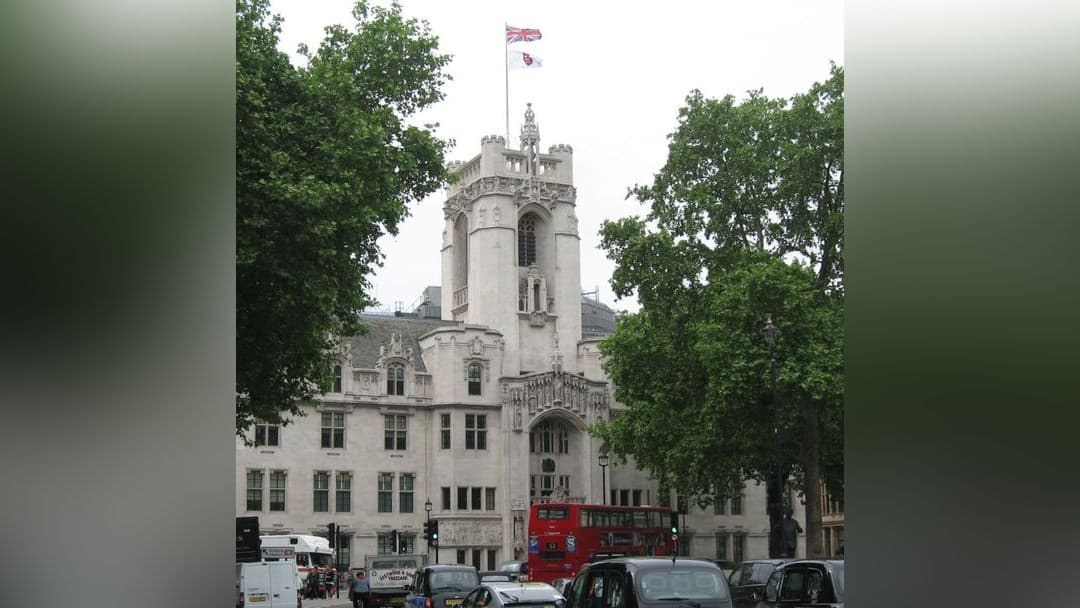
A decade-old test for deprivation of liberty has been dismantled, with far-reaching consequences across health and social care law in all four nations.
The Supreme Court has overruled its 2014 decision in Surrey County Council v P; Cheshire West and Chester Council v P [2014] UKSC 19, holding that the so-called "acid test" for deprivation of liberty under Article 5 of the European Convention on Human Rights was wrong in law. The judgement, handed down on 2 June 2026 in A Reference by the Attorney General for Northern Ireland [2026] UKSC 16, was unanimous.
The reference arose from a proposal by the Northern Ireland Minister of Health to issue a revised Code of Practice under the Mental Capacity Act (Northern Ireland) 2016, departing from the Cheshire West approach. The Attorney General for Northern Ireland referred the matter to the Supreme Court to determine whether doing so would be incompatible with Article 5 and therefore outside the Minister's competence under section 24 of the Northern Ireland Act 1998.
The acid test and its consequences
Cheshire West had established that the decisive question in assessing deprivation of liberty was whether an individual was under "continuous supervision and control" and "not free to leave." Critically, factors including the individual's compliance, the normality of the placement, and the purpose of the confinement were held to be irrelevant. The subjective element of the Storck test, requiring an absence of valid consent, was effectively collapsed into the question of legal capacity: because the individuals concerned lacked mental capacity under domestic law, they were treated as incapable of giving valid consent.
The consequences were substantial. DOLS authorisation referrals in England rose from around 13,700 in the year before the judgement to 332,455 in 2023/24, with a backlog of over 123,000 cases. The Law Commission estimated full compliance would cost approximately £2.2 billion per year.
The court's reasoning
Lords Sales and Lady Simler, giving the lead judgement with which all seven justices agreed, applied the 1966 Practice Statement to depart from Cheshire West, finding the majority had misread the Strasbourg jurisprudence as it stood in 2014 and as it remains today.
The court reaffirmed the longstanding multifactorial approach derived from Engel v The Netherlands and Guzzardi v Italy, requiring assessment of an individual's "concrete situation" by reference to the type, duration, effects and manner of implementation of the measures in question. No single factor is determinative.
On the subjective element, the court held that valid consent is an autonomous Convention concept entirely distinct from legal capacity under domestic law. An individual who lacks capacity under the Mental Capacity Act but who nonetheless has a basic awareness of their living circumstances and can express contentment with them may give valid consent sufficient to negate a finding of deprivation of liberty. Where there is serious doubt, no inference of consent should be drawn.
The court also clarified that individuals who are catatonic, in a minimally conscious state, or so profoundly disabled as to be incapable of forming any wish to leave are not, as a matter of Convention law, being deprived of physical liberty at all.
Applying this framework, the court held that MIG and MEG, two of the three individuals in the original Cheshire West appeals, were not deprived of their liberty. The position of P was reserved, though the court expressed sympathy with the dissenting Court of Appeal view that he too was not so deprived.
The Revised Code proposed by the Northern Ireland Minister was found to be within competence and compatible with Article 5, though the court noted it will require revision in light of the judgement's full reasoning. Given that both the MCA 2005 and MCA 2016 define deprivation of liberty by direct reference to Article 5, the ruling carries equivalent implications for England, Wales, and, through the devolution framework, Scotland.
 Copyright & permissions







.jpg&w=3840&q=60)