Summerson and Brown convictions upheld despite missing mens rea direction in Palestine Action affray case
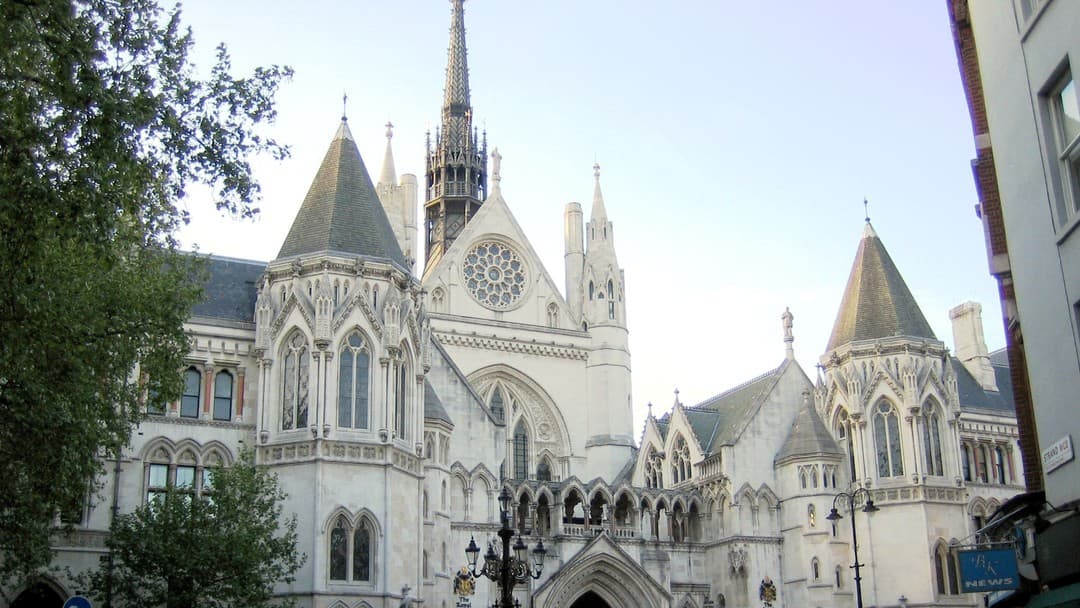
Court of Appeal confirms affray convictions safe where jury's factual findings make intent inevitable
The Court of Appeal (Criminal Division) has dismissed the appeals of Iona Summerson and Harvey Brown against their convictions for affray arising from a Palestine Action protest at a Mayfair office block in September 2021. The judgement, handed down on 19 May 2026 by Lord Justice Holgate, Mr Justice Wall and His Honour Judge Timothy Spencer KC, confirms that the absence of a discrete legal direction on the mental element of affray does not automatically render a conviction unsafe where the jury's factual conclusions make the requisite intent inevitable.
Summerson and Brown were among a group who protested outside 1 Curzon Street, London, the premises of Jones Lang LaSalle, which provided services to defence technology company Elbit Systems Ltd. The group activated smoke flares during a confrontation with the building's security manager, Antonio Da Silva, who was exposed to the smoke for approximately two minutes, struggled to breathe and reported tasting sulphur for seven days afterwards. Both appellants were convicted of affray contrary to section 3(1) of the Public Order Act 1986 and sentenced to community orders.
The sole ground of appeal was that the trial judge at Isleworth Crown Court had failed to give a discrete legal direction on the mental element of affray as required by section 6(2) of the 1986 Act, which provides that a defendant is guilty only if they intend to use or threaten violence, or are aware that their conduct may be violent or threaten violence. The route to verdict similarly omitted any question directed to mens rea, and the word "deliberately" in paragraph 43 of the written legal directions was the prosecution's only foothold.
The court was unpersuaded that this single word sufficed. Applying R v Mann [2002] EWCA Crim 3045 and R v Stevens [2023] EWCA Crim 1182, Lord Justice Holgate observed that the jury had been given separate mens rea directions on the other two counts and corresponding questions in the route to verdict. The structural contrast made it entirely reasonable for a juror to conclude that intention was simply not an issue requiring resolution on the affray count. The Crown Court Compendium itself states that it is of crucial importance that a route to verdict encompasses all contestable elements of an offence.
Nevertheless, the court declined to quash the convictions. The critical question, drawn directly from Mann, was whether it followed inevitably from the jury's finding that the actus reus had been committed that each appellant must also have had the necessary mens rea. The court held that it did. By answering question one of the route to verdict in the affirmative, the jury had necessarily accepted Da Silva's account that flares were held close to his face for a prolonged period, and rejected both appellants' evidence that the flares were held at a safe distance and directed away from those present.
On those accepted facts, the court held that an intention to use or threaten violence was inescapable. The manner of use described by Da Silva was wholly inconsistent with the appellants' stated purpose of creating striking imagery for a photographer. This was not a case, like Mann, where the jury's factual conclusions left any meaningful room for a different conclusion on intent.
All counsel accepted responsibility for the oversight. The court acknowledged the error was inadvertent, arising during complex drafting discussions, and that no party had withheld the point for tactical advantage.
The appeals were dismissed.
 Copyright & permissions
.png&w=3840&q=60)








.jpg&w=3840&q=60)