

Sucden Financial v TMT Metals: Court of Appeal orders defence served despite pending Supreme Court appeal
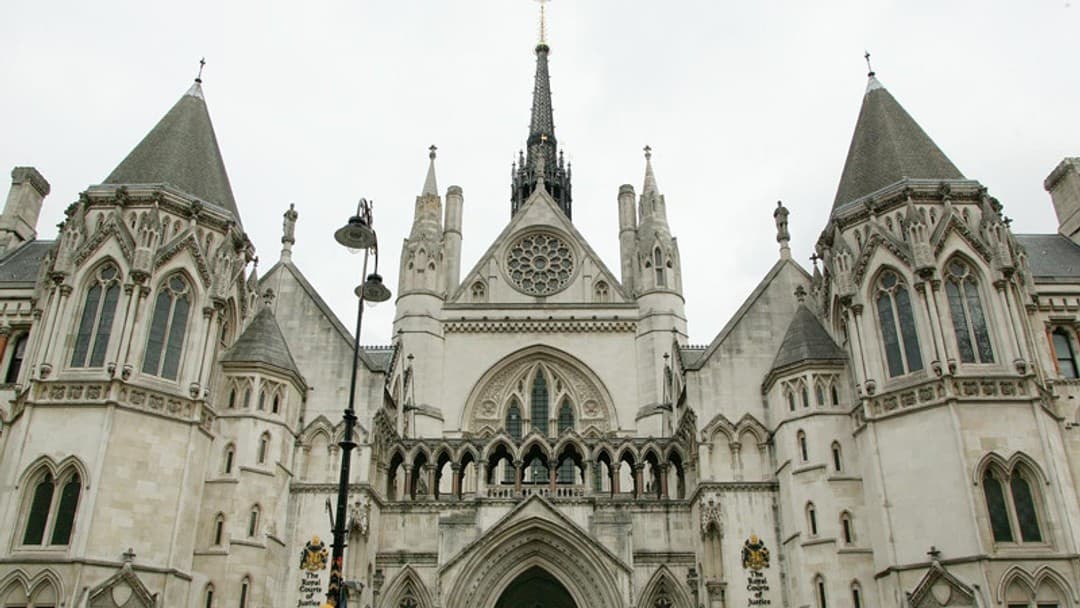
Court of Appeal balances jurisdiction appeal rights against need to progress underlying fraud claim proceedings.
The Court of Appeal has ruled that a defendant who has twice failed in a challenge to the jurisdiction of the English courts must serve his defence to a claim, notwithstanding a prospective application for permission to appeal to the Supreme Court, subject to protective undertakings from the claimant.
In Sucden Financial Ltd v TMT Metals AG & Ors [2026] EWCA Civ 1080, Lord Justice Foxton, with whom Sir Geoffrey Vos, Master of the Rolls, and Lady Justice Elisabeth Laing agreed, gave directions for the progression of Sucden's claim against Prateek Gupta, the second defendant, following the dismissal of Mr Gupta's jurisdiction challenge at first instance and on appeal.
Background
The proceedings arise from events said to have occurred more than four years ago and involve allegations of dishonesty. Mr Justice Robin Knowles dismissed Mr Gupta's application to set aside permission for Sucden to serve proceedings on him out of the jurisdiction, and the Court of Appeal dismissed his subsequent appeal on 31 July 2026. Mr Gupta indicated he wished to seek permission to appeal to the Supreme Court, and asked the court to extend time for filing a further acknowledgement of service and defence until that process had concluded.
His concern stemmed from CPR 11, under which a defendant who loses a jurisdiction challenge and then files a second acknowledgement of service is treated as having submitted to the court's jurisdiction, potentially undermining any subsequent appeal.
The court's approach
Lord Justice Foxton reviewed a line of authorities addressing how courts should manage proceedings while a jurisdictional appeal is pending, including Deutsche Bank AG London Branch v Petromena ASA, Toshiba Carrier UK Ltd v KME Yorkshire Ltd, Goldman Sachs International v Novo Banco SA and Município de Mariana v BHP Group (UK) Ltd. He noted that while courts have consistently extended time for filing a second acknowledgement of service to avoid prejudicing a defendant's appeal rights, no equivalent difficulty arises in requiring a defence to be served, since CPR 11(8) applies only to acknowledgements of service.
Given that the jurisdiction challenge had already failed twice, on two independent grounds, and that the underlying claim had made no substantive progress in three years, Lord Justice Foxton considered it undesirable for the proceedings to remain in what he termed stasis pending any Supreme Court application.
The court therefore extended time for filing a further acknowledgement of service until 14 days after the final resolution of any Supreme Court appeal process, preserving Mr Gupta's right to decide, once that process concludes, whether to defend the claim at all. However, it ordered that his defence be served within 28 days of the Court of Appeal's order, conditional on Sucden undertaking not to treat compliance with the court's directions as a submission to jurisdiction, and to indemnify Mr Gupta for costs reasonably incurred should his challenge ultimately succeed before the Supreme Court.
If Sucden declines to offer those undertakings, the deadline for the defence will instead run from 14 days after any further acknowledgement of service is filed.
The judgement provides a clear illustration of how the courts balance a defendant's right to pursue a jurisdictional challenge to the highest level against the wider interest in the efficient progression of litigation, particularly in cases already delayed by extended procedural disputes.
 Copyright & permissions










.jpg&w=3840&q=60)