Strand Hanson v Conduit Pharmaceuticals: financial adviser recovers fees despite transaction switch

Engagement letter's "equivalent transaction" clause triggered despite different deal completion
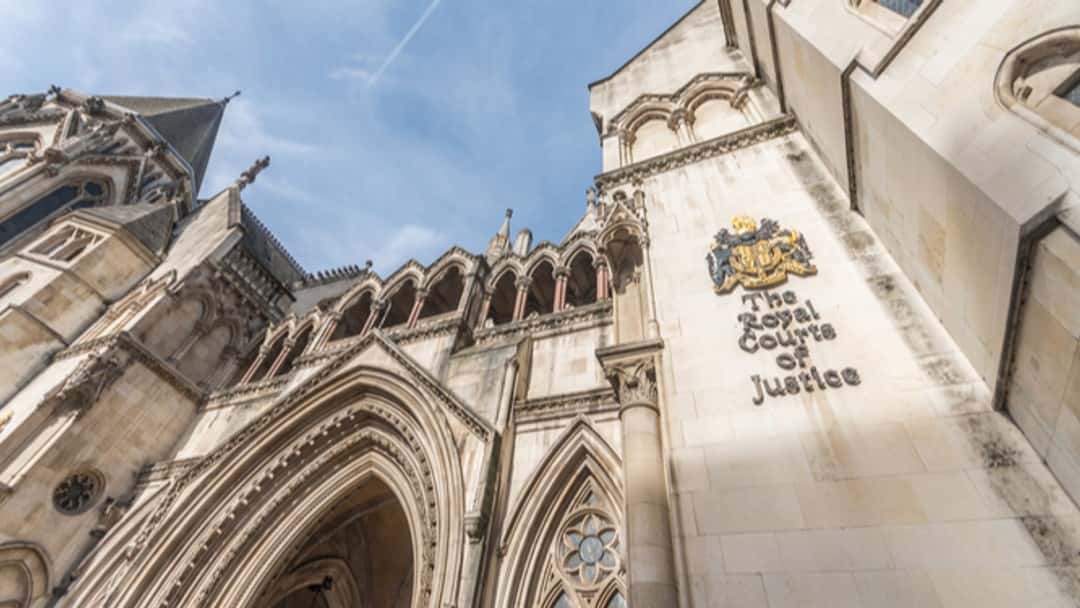
The High Court has awarded Strand Hanson Limited US$7 million in unpaid advisory fees following a de-SPAC merger that proceeded with different advisers, finding that contractual protection for "equivalent transactions" applied even where the original transaction collapsed and the engagement naturally expired.
Mr Justice Adam Johnson's judgement in Strand Hanson Limited v Conduit Pharmaceuticals Limited [2025] EWHC 3287 (Ch) centres on the proper construction of clause 5.6 in Strand Hanson's standard terms, which protected the financial adviser's remuneration where an "equivalent transaction" completed after termination of the engagement.
Strand Hanson was appointed in July 2022 to advise Conduit on a proposed reverse takeover by Galmed Pharmaceuticals, a NASDAQ-listed company. The twelve-month engagement letter provided for a US$2 million cash fee and 10% of shares issued (6.5 million shares) upon completion. When negotiations with Galmed stalled and terminated, Conduit instead pursued a de-SPAC merger with Murphy Canyon Acquisition Corporation (MURF), assisted primarily by US advisers Alliance Global Partners. The Merger Agreement was signed in November 2022, with the transaction completing in September 2023.
Conduit argued that Strand Hanson's entitlement to payment required early termination of the engagement during its twelve-month term, which had not occurred. The engagement had simply expired by effluxion of time in July 2023. Strand Hanson contended that clause 5.6 contained two distinct limbs: one triggered by early termination and subsequent completion, another triggered where an agreement was entered into during the engagement term that later resulted in completion of an equivalent transaction.
The court adopted Strand Hanson's construction. Adam Johnson J held that the phrase "or if an agreement is entered into during the term of the Appointment" created a disjunctive reading requiring the two limbs to operate separately. The second limb was designed to protect against Conduit avoiding payment by engineering a rival transaction with different advisers, even if the engagement ran its full course. The Merger Agreement of 8 November 2022 fell squarely within the engagement's twelve-month term, and the subsequent MURF transaction constituted an equivalent transaction to the original Galmed proposal.
Conduit's alternative submissions failed. The court rejected arguments that clause 5.6's opening reference to termination necessarily applied to both limbs, that the tail period language rendered the second limb contingent on termination, or that commercial logic required limiting the provision to early termination scenarios. The judgement emphasised that anti-avoidance provisions must be read according to their protective purpose, not artificially constrained by over-technical construction.
On the question whether MURF constituted an equivalent transaction, the court adopted a high-level comparison focusing on overall economic effect rather than mechanical details. Both transactions aimed to achieve a NASDAQ listing for Conduit at a US$650 million valuation through reverse takeover structures. Dr Regan's contemporaneous view that either route would achieve his commercial objectives supported this conclusion.
The quantum assessment produced US$5 million damages for the undelivered shares, assessed as at March 2024 when any lock-up period would have expired. Rejecting Conduit's submission that damages required proof of what Strand Hanson would actually have done with the shares, the court held the proper measure was the monetary value of what was not delivered. Expert evidence pointing to values between US$4.22 million and US$7.54 million for private sale or pledge arrangements supported the US$5 million assessment.
The case demonstrates the courts' willingness to give full effect to tail fee provisions in advisory engagements, particularly where designed to prevent circumvention of fee arrangements through technical arguments about contractual mechanics.
 Copyright & permissions