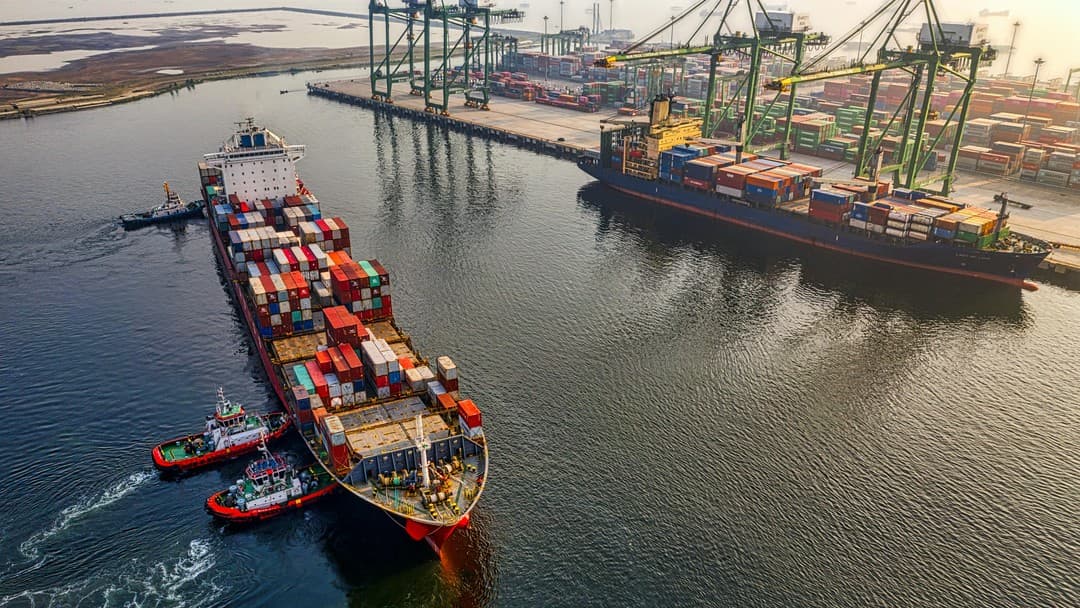
Following the outbreak of hostilities involving Iran on February 28, shipping through the Strait of Hormuz, through which roughly one-fifth of global oil and LNG shipments normally pass, was severely disrupted. Commercial traffic fell sharply within days, major carriers suspended transits, and war-risk premiums and other shipping costs rose significantly.
Within weeks of the outbreak, more than 44,000 businesses across 174 economies were linked to at least one affected shipment, reflecting a collapse in shipping bookings into the Gulf and a corresponding spike in cancellations. The disruption was only partially mitigated by diversions via alternative routes, including the Cape of Good Hope, adding at least 3,000 nautical miles to some journeys and generating further costs.
The position remains uncertain and further disruption cannot be discounted. The impacts on insurance, sanctions and infrastructure are covered in the recent DWF report, Conflict without borders and the illusion of distance. From a litigation perspective, disruption of this kind heightens the risk of contractual disputes, including disputes concerning failed or delayed performance, additional costs and the allocation of risk.
What, then, should practitioners advise affected parties to do to protect their position?
2. Worked example: disruption and non-performance
The following hypothetical illustrates the issues.
A seller agrees to supply fuel from the Gulf to a European buyer at a fixed price, under a contract governed by English law with exclusive English court jurisdiction. It does not contain a hardship or price-adjustment clause. The parties arbitrated an unrelated dispute under a previous contract ten years ago.
Following the disruption in and around the Strait of Hormuz, freight rates and war risk insurance premiums rise sharply and ships are diverted, adding weeks to transit times. The seller refuses to ship, arguing that the disruption entitles it to relief under the contract’s force majeure provisions, which do not expressly address disruption of this kind, or, alternatively, that the contract has been frustrated. The buyer purchases replacement fuel from another supplier at a much higher price and commences proceedings in the English High Court claiming £2 million in “loss of bargain” damages, representing the difference between the contract price and the replacement price.
Which of the following best explains whether the buyer can recover its loss of bargain damages in the action?
(a) No, because the seller can successfully argue that the contract was frustrated.
(b) No, because the seller can rely on the force majeure clause to discharge its obligations.
(c) No, because the parties’ prior use of arbitration means the dispute must be arbitrated, not litigated.
(d) No, because the circumstances have introduced excessive hardship or, at the very least, entitled the seller to more money to compensate for the increased cost of delivery.
(e) Yes, the buyer is entitled to loss of bargain damages.
3. Analysis
The answer is (e), and here is why, option by option:
(a) Frustration: the doctrine is narrowly construed and rarely succeeds in practice. For example, in Tsakiroglou & Co Ltd v Noblee Thorl GmbH [1962] AC 93, the House of Lords held that there was no frustration arising from the closure of the Suez Canal because shipment via the Cape of Good Hope remained possible, meaning that the canal closure did not render performance fundamentally different.
(b) Force majeure: outcomes turn entirely on the wording of the specific contract, and the starting point is the ordinary meaning of the words used. In NKD Maritime Ltd v Bart Maritime (No 2) Inc [2022] EWHC 1615 (Comm), the court held that there was no force majeure because Covid-19 restrictions may have delayed or hindered performance but did not amount to an “inability” to perform. As a force majeure clause’s scope depends entirely on its drafting, the information provided is insufficient to determine whether the clause applies.
(c) Arbitration: a dispute resolution clause will be enforced according to its terms, so a court will stay proceedings in favour of arbitration only if the governing contract itself provides for arbitration. A prior arbitrated dispute under an earlier contract is irrelevant where the governing contract provides for litigation, as it does here.
(d) Excessive hardship and price adjustment: a hardship clause may permit renegotiation, or termination or expert review, where market changes cause severe hardship. A price-adjustment clause instead permits the price to be adjusted to reflect the supplier’s increased costs. Neither applies here.
(e) Causation and loss: none of the seller’s defences is available, so the buyer is entitled to loss of bargain damages, but it must still show that its loss flowed from the seller’s breach.
For practitioners advising parties exposed to potential disruption arising from the Strait, what should be front of mind?
4. Advising affected parties: practical considerations
(a) Review the client’s contract or contracts, focusing in particular on:
- The core provisions, including insurance, risk allocation, force majeure, frustration, dispute resolution and jurisdiction, and taking account of governing law.
- Where multiple agreements apply, for example supplier, manufacturing and distribution agreements, read them together and look for any inconsistencies. Do they provide for different laws, dispute resolution mechanisms or risk allocation? Do different terms and conditions apply?
- Consider pass-through claims: where a client sits in the middle of a contractual chain, for example as a distributor buying from a supplier and selling on to a customer, a claim made against the client may in turn support a claim against its own supplier for the same loss. Take care not to adopt inconsistent positions, for example as to causation or the applicability of force majeure, as between the client’s upstream claim and downstream exposure.
- Differing dispute resolution mechanisms, such as arbitration and litigation before national courts, across otherwise broadly back-to-back chains of contracts can increase levels of complexity in dealing with such claims.
- Even where all contracts in a chain contain arbitration clauses, it does not follow that multiple disputes will be dealt with together by the same tribunal.
(b) Act early and comply with contract mechanics:
- Check notice provisions, timing requirements and any conditions precedent, including whether the client must take any prescribed steps before exercising a contractual right and whether those steps must be taken by a particular date, and ensure strict compliance without inadvertently triggering notices, affirming contracts or waiving rights.
- Advise the client to preserve evidence and maintain a clear audit trail, including evidence of delays, routing decisions, market conditions and costs. The client should take reasonable steps to mitigate its loss, for example through alternative routes or sources of supply, as a failure to do so may reduce recovery. Ensure that relevant and appropriate correspondence is sent in a timely manner. Explain that the client’s conduct may subsequently be scrutinised by the court or tribunal.
(c) Define the dispute strategy early, including:
- Determine how any claim or defence will be framed, advanced and evidenced, taking into account any pre-action or escalation requirements.
- Ensure internal alignment by identifying and retaining key documents. The client will likely need to suspend any document auto-deletion policies in the run-up to litigation. Identify key personnel and potential witnesses, including those with specialist knowledge.
- As a general matter, avoid commencing litigation or asserting rights prematurely. Gather the factual background, secure the evidence and consider advising the client to open a dialogue with its counterparty, without waiving rights and with the benefit of legal advice. Practitioners should also consider whether concepts such as “without prejudice” communications will be recognised in every relevant jurisdiction.
5. Case to monitor
Mercuria Energy Trading SA v Baltic Exchange Information Services Ltd (2026) Case No. FL-2026-000015, reported to be the first major UK litigation arising out of the current conflict, is listed for trial in October 2026. Mercuria alleges that the effective closure of the Strait of Hormuz led to distorted freight pricing because a widely used industry benchmark continued to be published even though the underlying shipping route had effectively ceased to function, and that the resulting distortion caused losses on both physical shipping contracts and related financial positions.
Mercuria’s CFO has publicly warned of a wider wave of disputes, including force majeure claims, so this case may be an early indicator of claims to come and should be monitored for developments ahead of trial.


.jpg&w=256&q=75)


 Copyright & permissions


-cropped-a0w29ejw.jpg&w=3840&q=60)