Staniak v District Court of Lublin: High Court refuses permission on passage of time in Polish extradition appeal
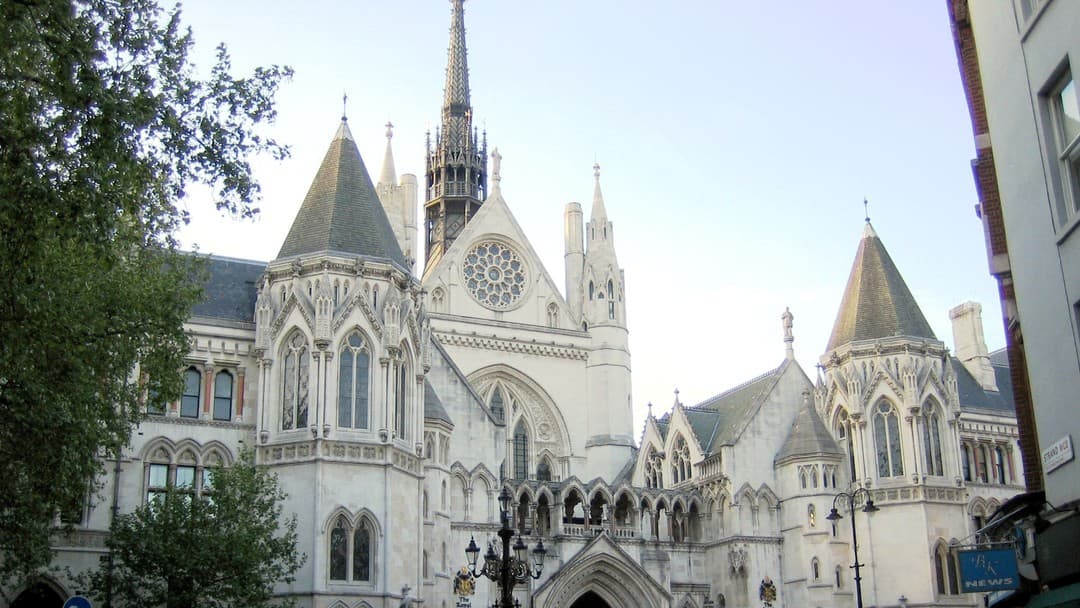
Permission refused on fugitivity, exceptional circumstances and oppression in long-running Poland extradition case.
The High Court has refused a renewed application for permission to appeal against extradition to Poland, finding that none of the three passage-of-time arguments advanced on behalf of the appellant disclosed a reasonably arguable ground of challenge.
Mr Justice Sweeting handed down his judgement on 24 June 2026 in Marek Krzysztof Staniak v The District Court of Lublin [2026] EWHC 1570 (Admin), dismissing the renewed application under CrimPR 50.22 following an earlier refusal on the papers by Mr Justice Mould in March 2026.
Background
The case arose from two offences committed in Poland in September 2003. Mr Staniak misappropriated a passport issued in another person's name and, three days later, used it in an attempt to cross illegally from Poland into Germany. He was detained, charged and interrogated on the same day, admitting the offences. After an indictment was filed and a summons issued, he failed to attend trial on 14 June 2004 and was convicted in his absence, receiving a suspended sentence of one year and eight months' imprisonment.
The suspension was activated in July 2005 after the probation officer reported that Mr Staniak could not be located. He failed to surrender to custody and was treated as unlawfully at large. A series of European Arrest Warrants followed, one of which resulted in his return to Poland around 2006 to 2008, but enforcement was ultimately suspended in December 2010. A fresh conviction arrest warrant was issued in September 2019, certified by the National Crime Agency in January 2025, and extradition was ordered by District Judge Bristow on 21 August 2025.
The three grounds
Mr Staniak's renewed application rested on three arguments under sections 11(1)(c) and 14 of the Extradition Act 2003.
First, he contended that the fugitivity finding was not properly open to the district judge. Sweeting J disagreed, holding that the judge had correctly applied the criminal standard and was entitled to draw the inference that Mr Staniak had knowingly placed himself beyond the reach of the Polish authorities. Expert evidence from a Polish advocate, which addressed procedural notification obligations and stopped short of concluding that evasion was intentional, did not prevent the judge from reaching his own evaluative conclusion on the totality of the material.
Second, Mr Staniak argued that even accepting the fugitivity finding, exceptional circumstances justified reliance on the passage of time. Sweeting J applied the stringent threshold established in Gomes v Trinidad and Tobago [2009] UKHL 21, observing that a fugitive may resist extradition on this basis only in the most exceptional circumstances. Neither the length of the delay nor the appellant's settled life in the United Kingdom, matters frequently encountered in fugitive cases, came close to satisfying that test. The history disclosed no culpable inactivity on the part of the Polish authorities capable of altering the analysis.
The oppression argument fared no better. Sweeting J cited Bean LJ's summary in Scott v Government of the Commonwealth of Australia [2020] EWHC 2924 (Admin) and affirmed that hardship, a commonplace consequence of extradition, is insufficient without something more. The material before the district judge relating to Mr Staniak's residence and employment in the United Kingdom did not rise to that level. The judge had engaged with the effect of delay and was entitled to conclude it fell short of the requisite threshold.
Sweeting J concluded that all three bases were unarguable and refused permission on Ground 1. The section 20 ground, on which permission was granted in March 2026, remains live.
Mr Staniak was represented by James Meredith (Sperrin Law). The respondent was represented by Adam Squibbs (CPS Extradition Unit).
 Copyright & permissions





.jpg&w=3840&q=60)