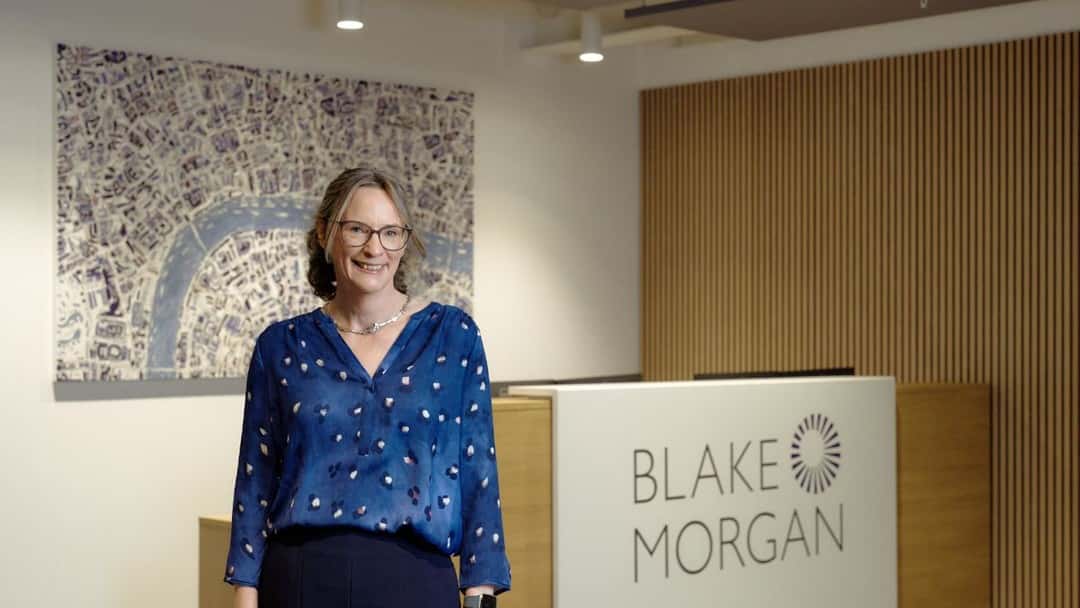
Looking back to when you qualified in 2008, what is the single biggest shift you have witnessed in how cross-border commercial litigation is conducted?
Without a doubt, the single biggest shift over the last couple of decades has been the role of technology, and more recently AI in how litigation is being conducted. When I first started my career, much of the work revolved around reviewing hard-copy documents, endless bundling and manual pagination and carrying a lot of boxes to the court room. In fact, most of my time as a trainee in the litigation department of another international firm was spent in the copying room!
There are now so many tools and platforms available to ensure that exercises such as disclosure and bundling are done far more efficiently than they were twenty years ago. I have no doubt AI is going to accelerate this shift even further. The pace of change and developments over the last couple of years has been staggering. From a law firm perspective, there is an absolute requirement to embrace this change to remain competitive amongst peers, whilst clients are now demanding that law firms demonstrate the cost savings to them from the deployment of AI in the way litigation is being conducted.
We also saw a significant change in the way litigation was conducted during and post COVID. There had always been a perception that the judiciary were too "old school" to part with traditional ways in which litigation had been conducted. Online and hybrid hearings were almost non-existent pre-COVID. However, during the pandemic everyone had to learn to adapt, including the judiciary who embraced new ways of working. Remote and hybrid hearings became much more common, and the courts became much more accepting of cross-examination of witnesses being done online. That trend has continued post-COVID and now it is not uncommon to have online hearings and/or for witnesses not to be asked to travel thousands of miles to attend a court room to give evidence. I see all of this as a real welcome change: litigation can be stressful and costly, and anything that can assist in efficiently resolving matters has to be in the interests of justice.
When acting on a very large dispute which can span several jurisdictions, how do you go about building a cohesive global strategy without losing control of local nuances?
In a multi-jurisdictional dispute clients value a firm that can manage the entire process and be more than just legal advisors. Clients are increasingly looking for lawyers to provide strategic business counsel and be a single point of contact rather than have to deal with multiple lawyers across different offices or law firms.
Communication is key both with the client and internally. Inevitably, practices and norms across different jurisdictions will vary. However, there needs to be absolute clarity on the strategy to ensure everyone is clear on the aims and objectives in the litigation. A balance needs to be struck between not undermining local counsel and local nuances, whilst ensuring they are not operating in a silo or without appropriate direction and visibility of the overall litigation.
I often work with our Legal Project Managers who coordinate counsel across the various jurisdictions and ensure that, ultimately, what the client receives is a seamless service and the execution of a cohesive global strategy through a single point of contact.
Are you seeing clients shifting their preference away from London toward fast-growing international arbitration hubs like Dubai and Singapore?
There's no doubt that over the last decade Dubai and Singapore have grown significantly in popularity and importance as international arbitration hubs. We've seen, for example, a rise in contracts which are governed by DIAC and SIAC arbitration rules. That is inevitable given the growth in international trade and investment in the Middle East and Asia over the past couple of decades. Clients sometimes prefer DIAC or SIAC arbitration centres due to proximity (e.g. Indian and Asian clients have a strong preference for Singapore for dispute resolution based on proximity, as well as a perceived sense that Singapore would be a more neutral seat to the parties than London).
That said, London remains undoubtedly the preferred destination for big ticket international disputes. Even where a dispute is governed by DIAC or SIAC rules, the governing law is often English law. The English legal system remains as the gold standard because of its years of history, the quality of the judiciary and English law judgments, and the certainty that it is perceived to provide. I don't see that changing any time soon. Indeed, often you see highly reputable English judges or KCs being flown out to places like Dubai and Qatar to sit as judges or arbitrators to help build out those legal centres. So, London very much remains the home and focal point for high profile international disputes.
What do you envisage the landscape looking like for lawyers in terms of key litigation trends and risks over the next few years?
It's always difficult to predict trends with certainty and what types of disputes will emerge in the future, and things can change very quickly. But what can safely be said is that we're living in a hugely fractious and geopolitically disruptive world and disruption inevitably leads to uncertainty and disputes. With the scale and nature of global conflicts, I expect we will see a lot of companies over the coming months and years grappling with issues around supply chain disputes, force majeure, sanctions, and governance and regulatory compliance.
The other major area of risk arises out of technology. Given the rise of AI in recent years, litigation risk is inevitable. We're already talking to clients grappling with issues around privilege, AI hallucinations and liability. We've even seen law firms being sanctioned over the use of AI. This will be a significant area of risk as the use of AI continues to become more pervasive.
People have also talked a lot about sustainability risks, something I expect will continue. We're already seeing scrutiny of sustainability and greenwashing claims, as well climate-related disclosures. In a similar vein, with a continued drive to cut costs and remain competitive, supply chain risks could be a major area of disputes going forwards, particularly around forced labour/modern slavery. The International Labour Organization, for example, estimates that around 28 million people are in forced slavery worldwide, a sobering statistic which creates litigation and reputational risks for international organizations.
What structural changes must law firms implement to ensure diverse entry-level talent actually progresses into senior partner roles?
The key for any organisation is to ensure that you have a structure that allows the best talent to rise to the top regardless of race, colour, faith, gender, or background.
When our clients come to us with their most complex, sensitive, and high-stakes issues, the composition of the team in some respects is academic - what they need and expect is the best quality advice from the best people. Our objective, therefore, must be to ensure there are no structural or practical barriers that limit how talent progresses. That requires firms to build a deeper understanding of how careers actually develop in practice, to ensure opportunities, visibility and support are consistently accessible, and to equip people to succeed and fulfil their potential.
You live between Leeds and London. How have you found your experience working between the different offices?
I joined DLA Piper almost 16 years ago from another international firm, and was originally based in the Leeds office, though I now spend most of my time in the London office. I really enjoy having the ability to work at a firm where I can seamlessly work out of different offices and alongside colleagues from across offices at any given time.
London is, of course, one of the key global financial centres, but one of our great strengths as a firm compared to our competitors has always been our ability to work cohesively as a truly one global firm.
Having multiple offices in the UK, and indeed across the world, gives us a much deeper bench and access to a much larger talent pool compared to our competitors. I work alongside some of the most exceptional lawyers our industry has, but who choose to live in Leeds, Manchester or Birmingham rather than in London. As most of our competitors don't have a presence outside of London, we attract the best talent as they wish to benefit from our firm's global brand and platform. More importantly, it is totally irrelevant to our clients in which city someone sleeps; what they really want is the best people with the deepest sector knowledge and ability to advise them on their most pressing matters.
How does your work as a UK Board Member for UNHCR influence your approach to leadership and social responsibility within corporate law?
My time at UNHCR has been an incredibly humbling experience. As corporate lawyers, we can often find ourselves living in a bubble, working on some of the largest deals or disputes for blue chip clients. It is easy sometimes to forget that there is a world where there are people who have no access to clean drinking water, or a roof over their heads – things we take for granted.
My experience with UNHCR has certainly grounded me as a leader and made me a more rounded human being whilst also providing a real sense of perspective. During the course of a day, I can come from a board meeting at UNHCR having been briefed on the latest statistics of young children and babies who have been made orphans as a result of conflict or a natural disaster and walk straight into a work leadership meeting to discuss our people, or growth strategy for the next five years for the group. Inevitably, you cannot help but be more human, supportive and empathetic in those meetings as a result of the earlier experiences that you have had. Supporting UNHCR has also made me far more committed to supporting similar initiatives from a work perspective, whether that is in the form of corporate giving, pro bono advice or wider CSR support.
What is the most critical piece of career advice you would offer to aspiring solicitors entering the profession today?
I would give two pieces of advice.
The first would be to pursue a career based on an area that the person is genuinely passionate about. Within law there are so many different areas – different groups and sectors. It goes without saying, that you are far more likely to excel in something you enjoy and have a passion for. That passion will give longevity; it will make you want to go the extra mile as well as carry you through the inevitable difficult times.
The second would be to invest in people and in building relationships. Experience has taught me that it isn't necessarily the people with the best CV's or academic qualifications who go furthest in their career, but those who have learnt to build deep, meaningful and trusted relationships whether that is internally within their organisations or with clients. Working hard will only get you so far.
Law is ultimately a people business. People want to work with people they like, who they get on with and who they trust. It requires time and investment. It is more than just exchanging a business card. Inevitably, the most successful leaders tend to have the most expansive networks and the strongest relationships. Learning to build those relationships is a skill and you can never start too early.




 Copyright & permissions







.jpg&w=3840&q=60)