

SJ Interview: Helen Bunker
By Helen Bunker
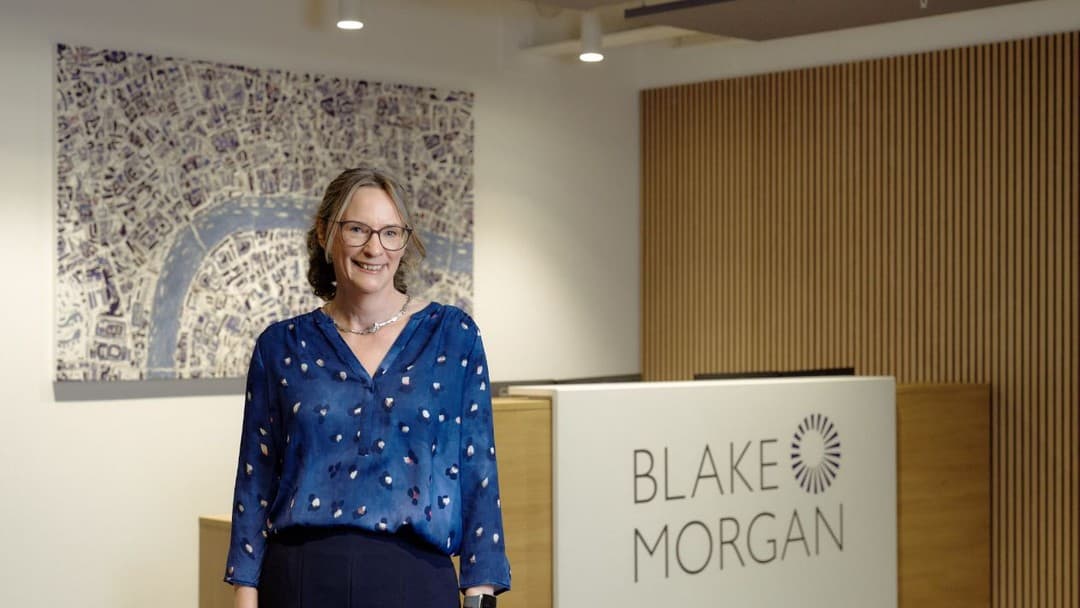
Helen Bunker, chair of Blake Morgan, speaks to Solicitors Journal
Helen Bunker is chair of Blake Morgan and also heads the firm’s private client business group and London office. With more than 30 years in practice, she combines longstanding client relationships with the practical realities of running a national law firm. In this interview, we speak about the changing demands on lawyers, responsible business, AI and the importance of human judgment. We also discuss the growing complexity of international private wealth, building a strong firm culture and the lessons her career has taught her about leadership.
What has changed most about running a law firm since you assumed your current position?
Perhaps I’ll set the scene a little bit. I’m chair of the firm, and I also head up the private client business group and the London office. That mix of roles means I’m connected to clients, but also very much embedded in the realities of running the firm day to day. It probably gives me a good foot in both camps.
It’s a really exciting time. We’ve had a lot of growth across the firm over the last year or so, particularly here in London. This is officially day seven in our new London office. We were across the road before, so we’ve hopped across the zebra crossing for more space in an eco building.
I suppose the obvious answer is the pace of change. I’ve been practising for more than 30 years, and for most of that, change was quite incremental, whether in regulation, technology or client expectations. You had time to absorb it as you went along. Certainly, that has sped up.
Technology is an obvious change, but for Blake Morgan, our approach to responsible business resonates most. I joined Blake Morgan more than 11 years ago, when I merged the firm I was managing partner of into it in 2015. The focus the firm had on EDI and ESG, even then, was something I thought stood out. I trained as a mental health first aider and menopause mentor, and supported the health and wellbeing workstream.
As chair, I’m now responsible for our responsible business strategy, so I understand how deeply connected it is to our culture and the way we do things around here. Our colleagues expect us to be a responsible business, and our clients expect it too, whether in the public or private sector.
Are law firms adapting quickly enough?
Yes and no, probably. From the inside, I know how much is changing. We’re forever implementing new systems, adopting new technology and managing risks. There’s a lot of work involved in preparing the firm for the future and meeting client standards. All of that takes time and effort, particularly bringing people with you.
From the outside, clients judge us by what they can see and experience. They don’t necessarily see everything going on behind the scenes. I think firms probably are changing quickly enough. Certainly, we’re investing in technology, our offices and our people. Ultimately, it’s got to improve outcomes for clients and colleagues. It’s only worthwhile change if it does that.
What are clients demanding from their lawyers that they weren’t five or ten years ago?
They probably expect greater responsiveness than ten years ago. We’ve all adapted, haven’t we, to wanting everything instantly. That expectation around speed has definitely changed.
But what they really value, ultimately, is having lawyers they can trust. They want us to understand their businesses or their families, depending on whom we’re advising, and provide clear, practical advice. Technology can help deliver efficiencies, but ultimately it’s about the relationship.
I’ve been a private client lawyer for more than 30 years and worked for more than one generation of the families we advise. More than once, my team has got a will out of the archives and been amused to find I witnessed it as a trainee.
That’s one of the strengths of a firm like ours. Those relationships go back decades and generations, across private clients and the public and private sectors. It’s about the advice you can give, including that commercial advice, through knowing clients really well. We use technology as an enabler, not a replacement.
How do you approach that balance between technology and the human role?
There’s no question that technology, particularly AI, is changing the way we work. That’s why we’ve invested and continue to invest in it. But it hasn’t changed why clients need lawyers.
We’ve got technology running in the background, supporting our legal teams and business services. Ultimately, it can’t provide the judgment, empathy and reassurance that humans can provide.
I think it is positive, and it’s great to see colleagues adapt. It’s partly driven by using AI outside the workplace, knowing what’s possible and then wanting to see how we can use it inside the workplace safely.
Will AI fundamentally change what it means to be a lawyer?
Being a technical expert is a given as a lawyer. But you need business skills, whether that’s being up to speed with technology, having commercial awareness or understanding the regulatory landscape and making sure we’re acting in a compliant way.
It’s not just about the law; it’s about the business of law. When I qualified and came into the workplace, the profession almost seemed separate from the world of business. You learn very quickly that isn’t the case.
We’re training new lawyers and people in business services much earlier in their careers about the business side of things. That absolutely includes technology, but it isn’t only technology.
What do lawyers often misunderstand about the business of law?
Commercial awareness is something we pride ourselves on. Our values, which we wear on our lanyards, include being astute commercially. That comes from building relationships with clients.
I think it’s about constantly evolving and adapting, and never stopping learning. That means the business fundamentals as well as the legal side.
As I always tell my teams, it’s knowing what you don’t know. We’re not expected to be experts in absolutely everything, but we need to know enough about what we do and what our colleagues do to recognise when we need to talk to someone, whether they’re in the office with us or at a desk in Cardiff or Southampton.
That’s where you see opportunities for clients and give the joined-up advice they come to us for.
Private wealth has become increasingly international. How has that changed the job of a private client lawyer?
It’s undoubtedly increased the complexity. We act for high-net-worth and ultra-high-net-worth clients, whose affairs have always been complex. The international element has added to that, but in many ways that’s what makes it interesting and where we can add value.
They might have international assets or businesses, or family members living in different jurisdictions. We need a broad understanding of international tax and succession, and to work with their advisers internationally or our own network.
We’re part of the TAGLaw network, which gives us access to professional advisers across the globe, so we can support clients with that advice. Quite often, we almost act as project managers, coordinating that advice and giving clients the solutions they’re looking for.
Are clients finding tax and estate planning more complicated than a decade ago?
There’s definitely more complexity. Nobody ever seems to simplify legislation and tax, but there’s also a lot more noise. With that constant stream of information, it can be hard for clients to know what’s fact and what’s fiction, or understand the particular nuances affecting their family.
Everyone’s got a different situation, and it’s important to understand what that means for the particular family. We have plenty of clients who say, “Oh, it’s really simple”, and then start talking about a blended family or a cross-border situation.
Ultimately, they want reassurance and peace of mind. We can give them that by joining the dots, working with their local advisers and providing strategic advice with an understanding of what they need.
Where do the biggest risks or misunderstandings arise when families have assets across several jurisdictions?
Probably assumptions and a lack of communication. To be honest, that’s the case whatever the size of an estate. Families can assume a will drafted in one jurisdiction is valid in another, or that tax and succession rules are the same everywhere. There are also different understandings of the rights of cohabitees.
More broadly, families find it difficult to talk about money, succession and death. The will, power of attorney or other document you end up with is only the tip of the iceberg. What really matters is making sure the family understands your wishes and why you’ve done certain things.
That’s where we often see the biggest issues. I’m sorry to say contentious private client work, the disputes around private client matters, has been the biggest growth area in my time in practice as a private client lawyer. Sadly, people are increasingly falling out, particularly after a death.
So often, it can be misunderstandings, or simply not knowing whether the painting on the wall is the incredibly valuable artwork a grandparent said it was, or not, for example.
What makes a good law firm leader, and how does that differ from being a good lawyer?
For me, you’ve got to really care about the organisation and its people. Leadership starts with values. I’d find it very hard to lead a firm whose values and culture weren’t aligned with my own, particularly around how people are treated and what success looks like for the long term.
I’ve always been about creating something for the future. As partners, we’re the stewards of the firm for the time being. It’s about the legacy we leave. Leading Blake Morgan matters so much to me because it has a strong culture and is somewhere people can grow and thrive. We work hard at that, prioritising the three Cs: our clients, our colleagues and the community.
You also need deep commercial understanding. You probably need an element of resilience, and to make decisions when there isn’t necessarily a perfect answer.
I actually studied for an MBA specifically in law firm management more than 20 years ago. It was a massive commitment while working full time, but fundamentally changed how I think about leadership and running a firm. There was a particular module on change management, which people weren’t talking about so much then, but is fundamental.
The skill sets are similar, and there’s definitely overlap with being a good lawyer. You need to be curious, exercise good judgment and build strong relationships. As a private client lawyer, it always comes down to people. I’ve spent my career helping people make decisions at really important times in their lives. There are very similar skills in that and being a firm leader.
How important are people skills for lawyers who want to move into leadership?
People skills are absolutely vital, but they can look different for different people. One of the great things about the leadership team here at Blake Morgan is that we’re a group of really different individuals, including lawyers and people from business services across the firm.
Ultimately, our values and culture keep us connected. That’s the north star, if you like, when we’re making decisions, because it is about people, whether our colleagues or our clients.
What does it take to build and maintain a strong culture?
A lot of it is about really embedding it in our DNA. We’ve got our ACTS values, and we literally wear them around our necks all the time. Our EDI and ESG commitments contribute to that culture too.
This week, we’ve updated our website pages around EDI. We were doing a huge amount internally, but realised what we were telling the world was lagging behind.
We have a large number of public sector clients with specific goals for their advisers around social value. Increasingly, we’re seeing that with private sector clients as well. We have a fantastic initiative called Growing Ambitions, which provides work experience for young people through our social housing clients. Those things contribute to the culture because they’re opportunities to get involved and make a difference. Blake Morgan
You can never take culture for granted. Do that at your peril. It’s about constantly doing small things to reinforce it. We have a BM Connect group in each office, which nominates an office charity to support and organises fundraising.
Those small, incremental things are the foundation that allows us to build strategic growth. When new people come into the firm, they buy into that culture because it’s embedded. All those things contribute, and you have to keep working at them.
If you were starting your legal career again today, what would you do differently?
I’d probably tell my younger self to step forward a bit sooner and speak up. I’m a shy introvert by design, but I didn’t get to be chair of a national law firm by leaning into that. I’ve had to challenge myself and not let it hold me back.
For a long time, I assumed leadership meant being the loudest voice in the room. I’ve really learned that a lot comes from being a really good listener and reflecting.
Of course, you still need to be willing to step up, contribute and make decisions, but there’s space for everyone to contribute. My younger self might have got there a little quicker if I hadn’t let that hold me back.
 Copyright & permissions
.jpg&w=3840&q=60)

-cropped-6au25meu.jpg&w=3840&q=60)




.JPEG&w=3840&q=60)